Get Full Government Meeting Transcripts, Videos, & Alerts Forever!
Get email alerts on the Transportation Safety topic
No spam. Unsubscribe anytime.
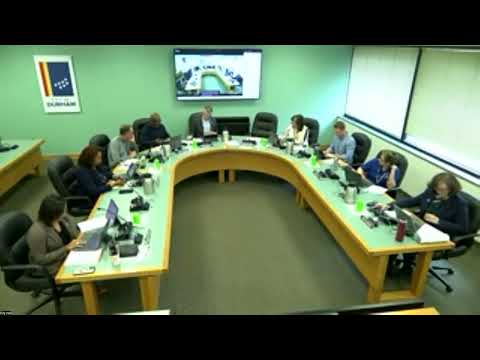
Durham council hears Vision Zero action plan aimed at halving serious traffic injuries by 2035
Summary
City staff presented a draft Vision Zero action plan that prioritizes traffic safety investments on a small share of streets that account for most severe collisions, proposes audits, updated development standards and a dedicated coordinator and funding. Councilmembers and advocates pressed for measurable timelines and community outreach.
City staff presented a final draft Vision Zero action plan and asked the Durham City Council to approve it as a framework for reducing serious traffic injuries and deaths.
The plan, presented by Vision Zero coordinator Lauren Krom, proposes concentrating resources on a small “high-injury” network of streets, implementing a program of safety audits, updating land-use and design standards, and dedicating staff and sustained funding to implement improvements. Krom said the plan’s working target is to cut serious injuries and fatalities 50% by 2035.
The plan’s nut graf: staff told council members that instead of spreading small investments across the entire street network, the city should focus on corridors that account for a disproportionate share of harm. Krom said 10% of Durham’s streets are responsible for 74% of severe traffic injuries and that the city has about 809 miles of roads in total. She described the action plan as an integrated program of policy, engineering, enforcement and community engagement designed to produce measurable safety gains.
Among the recommended actions are: updating the Unified Development Ordinance to prioritize multimodal street design; creating a street-design manual with context-sensitive typologies; implementing an annual program of multidisciplinary safety audits that produce near-term and long-term recommendations; developing a “quick-build” toolkit for rapid, low-cost interventions; and establishing a public dashboard and regular reporting cadence on Vision Zero progress. Krom said the staff will report quarterly and annually on outcomes.
Community advocates who testified before the presentation urged the council to back the plan and to move swiftly. John Talmich, executive director of BikeDuram, thanked council and staff and said the plan and the new Vision Zero coordinator represent “a milestone” but cautioned that substantial work remains to achieve measurable reductions.
Councilmembers pressed staff on program scale, metrics and implementation details. Councilmember Freeman asked how many miles the proposed audits would cover; staff said audits can be scoped by corridor or intersection and that a corridor audit can cover multiple miles depending on approach. Councilmember Baker emphasized the urgency and urged prioritizing early, high-impact actions; staff described a programmatic approach with annual audit cycles and a pipeline of projects identified by data and community input.
Councilmember Cook asked about including automated data and performance metrics; staff said the plan includes a public dashboard and proposed metrics such as reductions in severe collisions and speed-management outcomes, plus measures of active-transportation use and community sense of safety.
Staff noted the plan was informed by 12 community outreach events in summer 2024 and more than 550 public comments via an interactive map. Krom highlighted equity findings in the collision data: Black residents, who make up about 36% of Durham’s population, accounted for 53% of serious injuries and 49% of traffic fatalities in the periods analyzed.
Before the council’s vote, staff asked the council to approve the plan and commit to three implementation commitments: (1) prioritize capital improvements on high-injury corridors, (2) dedicate funding for Vision Zero implementation, and (3) assign sufficient staff to support ongoing implementation and evaluation.
The council opened the floor for questions and discussion. Several members praised the data-driven focus and signaled support for moving the plan forward while asking staff to return with more detailed timelines, funding options and an implementation schedule tied to the annual budgeting process.
The presentation concluded with staff offering supplemental resources—an interactive map and draft plan—available on the city’s website and with a proposal to return with implementation details and funding recommendations.
Looking ahead: if the council approves the plan in a future agenda vote, staff said the next steps would include funding requests, staff assignments, and establishing the audit program and quick-build toolkit to deliver near-term safety projects.