Get Full Government Meeting Transcripts, Videos, & Alerts Forever!
Get email alerts on the School Funding Clawback topic
No spam. Unsubscribe anytime.
Olentangy officials say House budget 'clawback' could force fiscal emergency, cost district $91 million
Summary
Board members and district financial leaders told the Olentangy Local School District board that a provision in the Ohio House budget would require districts to return locally voted operating levy dollars above a 30% carryover cap and could push the district into fiscal emergency, cutting state and local revenue.
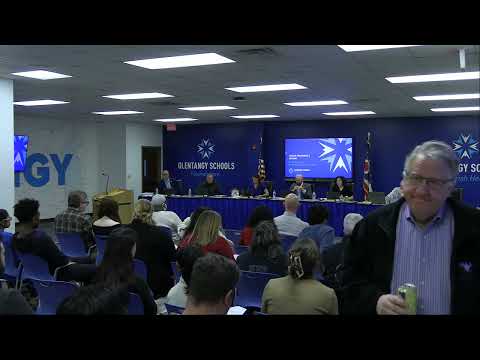
Board President Mister Lester and Treasurer Mister Jenkins warned at the April 10 Olentangy Local School District Board of Education meeting that a provision added to the Ohio House budget could require school districts to return locally approved operating levy dollars above a 30% carryover threshold and might push the district into fiscal emergency.
Treasurer Mister Jenkins walked the board through a hypothetical application of the proposed Ohio Revised Code change, citing district forecasts. "What the law would do is say, well, for every dollar that you are above that, we will take your 2025 pay 2026 levies, and we will reduce them. And so we will, in 2 separate fiscal years, lose $91,000,000," Jenkins said during his presentation. He told the board the district's projected ending cash balance (which he presented as $201,209,464) is above the proposed 30% cap on carryover cash and that forcing a reduction would lower forecasted revenues and create near‑term budget deficits.
Why it matters: Jenkins and other administrators said the change would convert a planned carryover used for multi‑year growth and capital planning into money that must be reduced from future levy collections. Jenkins said the cap, if enforced, could drive the district into the most severe warning category under rules enforced by the Auditor of State—fiscal emergency, which districts can enter if a projected budget shortfall exceeds 15% of that year's revenues. "This would cause our district to go into the most urgent of those fiscal disasters, which is fiscal emergency," Jenkins said.
At the meeting Superintendent Mister Meyer and board members framed the issue as a threat to programs and services currently funded in part by local levies. "This idea of taking funds back from the district is going to create a very different school district if that's ultimately adopted," Board President Mister Lester said. Board members and citizens noted the timing is particularly urgent in a fast‑growing district that uses multi‑year forecasts to plan school construction, staffing and transportation.
Jenkins presented several numeric examples from the district forecast to demonstrate the effect of the proposed rule. Using the figures he presented, he said district general fund expenditures of about $366,231,192 and an ending cash balance shown as $201,209,464 would exceed a 30% carryover threshold and trigger a reduction in levy collections that reduces district revenue to roughly $311,500,000 in the following fiscal year. Jenkins also warned that the district would still face forecasted operating deficits after such reductions because of ongoing growth and planned capital projects.
Board members pressed the point that the proposed carryover cap would apply to school districts only. Jenkins showed carryover percentages for other local governments and entities to underline the difference: he cited Orange Township at 288.61 percent, the City of Powell at 220.72 percent, and the State of Ohio's reported carryover near 31.4 percent (figures were presented by Jenkins during the meeting). Board members asked why the draft law singled out school districts.
Representative Brian Lorenz, who attended the meeting, said he submitted amendments to the House budget to lessen the impact for growing districts and to change the percentage applied to the so‑called ``clawback.'' "I submitted an amendment to annualize the cost sets at 3 percent for Delaware County Schools, which would have generated $10,000,000 over the biennium for our county schools," Lorenz said. He also said he had proposed changes to reduce the clawback percentage in earlier floor amendments before the House settled on a 30 percent figure. Lorenz said the bill now moves to the Ohio Senate.
Members of the public urged action. Virginia Yoder, who identified herself as a parent in the district, told the board that the provision would force repeated ballot measures and cut programs. "With the cap on the district cash reserves and at 30%, we're gonna lose $91,000,000 and potentially more," Yoder said.
District leaders urged community members to contact legislators and follow the issue. Jenkins and Superintendent Meyer said the presentations were intended to educate the public about the mechanics of school levy receipts, cash carryover and multi‑year capital planning; they said the district has used carryover to plan for growth and to avoid abrupt service cuts.
Votes at a glance - Board policy updates (third set, FY25): approved (roll call recorded as unanimous). Motion/second: not specified. Vote: Doctor Wallach, Mister O'Brien, Miss Schreiber, Mister Lester, Doctor Dabrico, Doctor Wallach (record shows unanimous yes votes on roll call). - Resolution adopting special education model policies and procedures (with edits): approved (unanimous roll call). Motion/second: not specified. - Addition of D'Andrew Faust to Facilities Committee: approved (unanimous roll call). Motion/second: not specified. - Treasurer consent items (minutes, donations, February financials, 403(b) restatement, META services schedule): approved as consent slate (unanimous roll call). Motion/second: not specified. - Superintendent consent items (human resources, students for graduation, technology, business/facilities items): approved as consent slate (unanimous roll call). Motion/second: not specified. - Motion to convene executive session (to discuss pending legal matters and personnel): approved; the board returned later and adjourned.
What leaders said next: Jenkins and other board members said they will continue to press the district's case with state legislators and educate residents about how the change would alter local levy revenue collection and planning. Representative Lorenz said he will continue to advocate for Olentangy in the Senate. "The budget now moves to the senate for their consideration," Lorenz said, and he asked for ongoing dialogue with district leaders.
Ending: District officials called the proposal an "unintended consequence" of the budget language and urged residents to contact their lawmakers. The board did not take formal action on the House budget language during the meeting; the discussion was framed as advocacy and informational for the public and the district's policymakers.