Get Full Government Meeting Transcripts, Videos, & Alerts Forever!
Get email alerts on the Cemetery Business Plan topic
No spam. Unsubscribe anytime.
Consultants present business‑plan framework, timeline and cost estimates for new cemetery
Summary
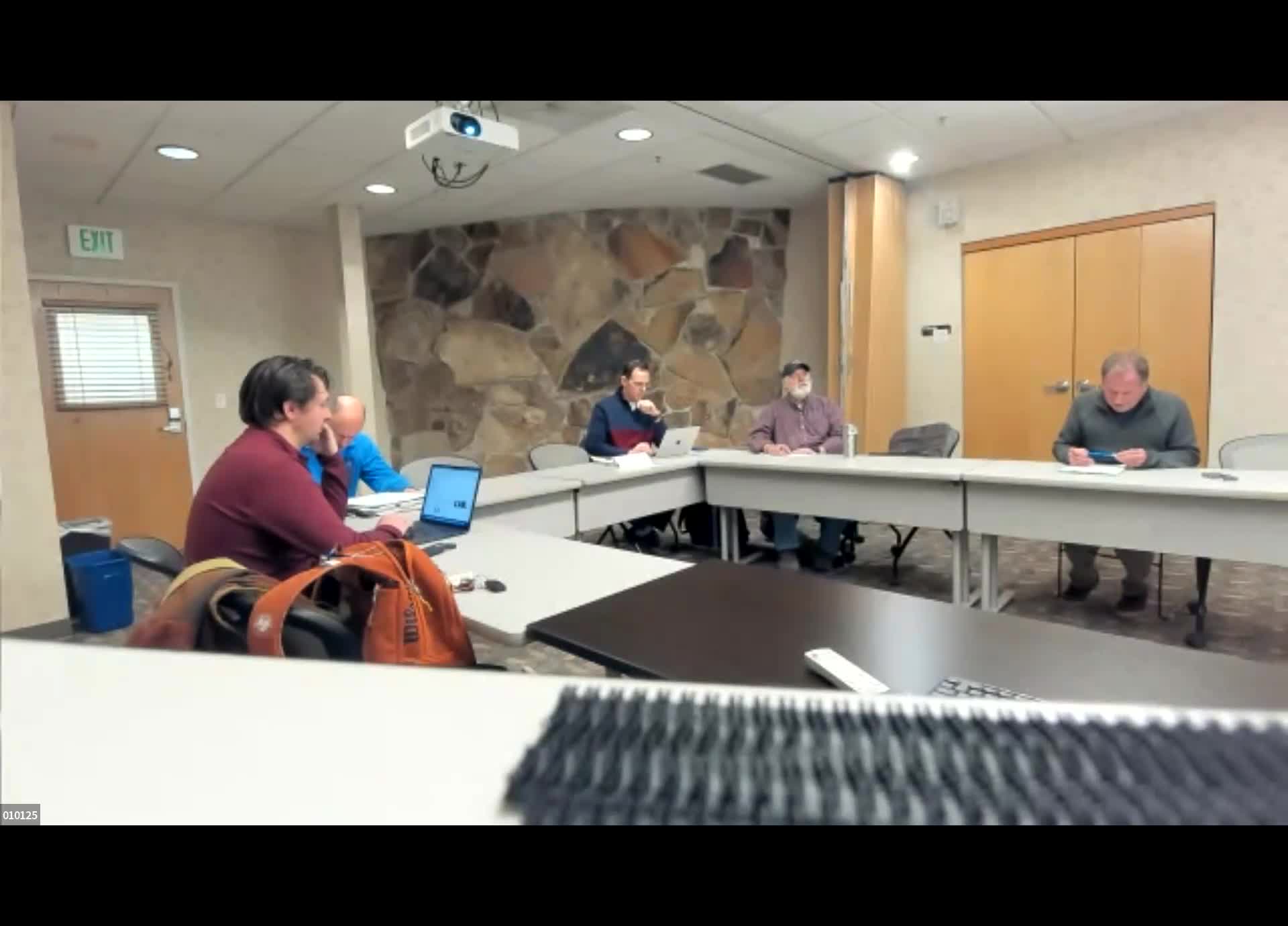
Consultants Stephanie Sloan and Will Sloan of a family cemetery consulting firm outlined a four‑part business‑plan approach for the Snyderville Basin Cemetery District during the district’s May 7 meeting, focusing on market analysis, site planning, operations and a multi‑year financial model.
Consultants Stephanie Sloan and Will Sloan of a family cemetery consulting firm outlined a four‑part business‑plan approach for the Snyderville Basin Cemetery District during the district’s May 7 meeting, focusing on market analysis, site planning, operations and a multi‑year financial model.
The consultants told board members the first step should be a detailed market analysis to forecast absorption and product mix (in‑ground burials, columbarium niches, crypts and cremation options), then a phased site plan tied to those forecasts. They emphasized creating a durable records system, clear rules and procedures, and a financing strategy to fund long‑term perpetual care obligations.
Why it matters: as a municipal cemetery operation the district will hold an ongoing maintenance obligation once burials begin; that perpetual liability affects initial capital choices and pricing. The Sloan consultants said early design and financial assumptions matter because the district cannot later abandon perpetual maintenance responsibilities without significant cost.
Key points from the presentation - Market and site planning: the consultants recommended a robust market analysis to estimate capture/absorption and to inform product mix and phasing. They said site constraints (water table, drainage, utilities, slope and visibility) should drive early decisions about which areas to develop first. - Capacity estimate: the consultants offered a planning rule of thumb of about 800 ground burial units per usable acre as a conservative baseline; they noted denser packings of up to about 1,200 units per acre are possible but reduce open space and circulation. - Cremation and new disposition trends: they said cremation has risen nationally; Utah’s cremation rate was described as low relative to other states (quoted about 41% in 2020), so the district should plan a flexible inventory that can serve both full‑body burial and cremation memorialization. The consultants recommended a modular grid (for example 4x4 modules) that can be used for cremation spaces or combined for full‑body graves to keep future options open. - Operations and records: the firm stressed recordkeeping (burial maps, digital access) and recommended choosing a cemetery records system at the outset to avoid long‑term data problems. - Financials and funding: the consultants said a typical small municipal operation might need on the order of several hundred thousand dollars of annual revenue to support a small staff (they gave a rough rule of thumb that three staff could require roughly $500,000 in annual revenue to breakeven, emphasizing that costs vary widely). They also flagged Utah‑specific perpetual‑care funding rules as a constraint the district must respect. - Cost and timeline for consulting work: the Sloan consultants proposed a range for consultant engagements from about $15,000 (a lighter feasibility/white‑paper level study) up toward $40,000 for a more comprehensive business plan; more exhaustive multi‑component packages can cost substantially more. They said a focused study could be completed in roughly 120 days on an aggressive schedule if the scope is tightly defined.
Board questions and consultant responses Board members asked whether the district should acquire a site before doing studies or do market/site analysis first. The consultants said both approaches are used in the field: jurisdictions sometimes commission high‑level feasibility to screen multiple candidate parcels, and other projects proceed with a site already identified. The consultants recommended earlier analysis when possible to reduce long‑term risk and to scope phased investment. They also advised flexibility in inventory design so the district can respond to shifts (for example green burial or human composting) without costly retrofits.
The consultants offered to provide a limited scope of work and phased options to inform an RFP should the district decide to hire them or to advertise a competitive procurement.
Next steps Board members asked the consultants to share the materials presented and discussed using a short initial feasibility phase (go/no‑go) to limit expense before committing to a full business plan. The district’s next meeting will include further discussion of procurement policy, an RFP timeline and whether to commission a phased feasibility study.