Get Full Government Meeting Transcripts, Videos, & Alerts Forever!
Get email alerts on the Rules Of Procedure topic
No spam. Unsubscribe anytime.
Howard County Board of Appeals adopts revised rules of procedure, sends them to County Council
Summary
At a April 10, 2025 work session the Howard County Board of Appeals approved revised rules of procedure and transmitted them to the County Council for legislative action, after debating sign-up and testimony rules, timelines for issuing signed decisions, and provisions touching on ethics and member qualifications.
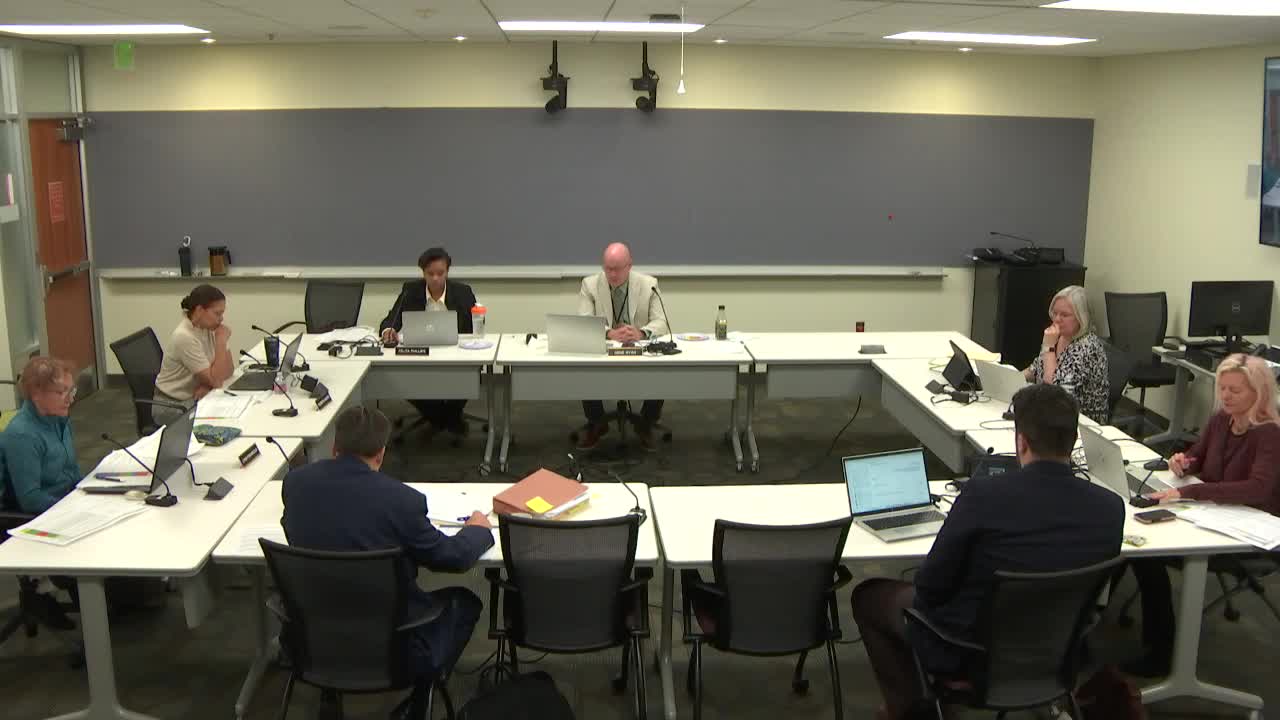
Howard County — On April 10, 2025, the Howard County Board of Appeals voted 4-0 to adopt a package of amendments to its rules of procedure and to transmit the rules to the County Council for enactment. Earlier in the meeting the board also approved minutes from its April 3, 2025 work session by unanimous voice vote.
The adopted draft — approved "as amended" at the board's work session — changes language across the rules of procedure that govern hearing procedures, witness participation, electronic filings, and post‑hearing timelines. The board instructed staff to deliver the rules to the County Council for consideration; if the council adopts the ordinance the board noted the rules will become effective according to the county's legislative timetable (the board clarified the rules become effective only after the council's enactment and the statutory waiting period).
The changes addressed several recurring topics: when public witnesses must sign up, how the board will treat correspondence and technical staff reports from the Department of Planning and Zoning (DPZ), where appeals are routed in accordance with the Howard County Charter, improved wording to clarify categories of cases in Rule 6, and the timeline for issuing fully signed written decisions.
Board members debated witness participation and sign-up language at length. The draft was revised so that people who wish to testify are directed to sign up; several board members and the Office of Law warned against language that would impose substantive duties not authorized in the rules. "I'd like to insert 'must sign up to do so before the end of the appellant's case,'" said Miss Fearcombe, a board member, when proposing one of the witness-related edits. After discussion the board removed or reworded several overlapping provisions that it found confusing and redundant, and consolidated the sign-up requirement into clearer language.
Counsel from the county's Office of Law repeatedly cautioned the board about provisions that could conflict with county code or require legislative changes. On the question of DPZ technical staff reports (TSRs), an Office of Law attorney explained the limits of what the rules can prescribe: "The department's required to do is to prepare findings and analysis in the TSR. That's all it's required to do," the attorney said, emphasizing that the county code — not the board's procedural rules — controls substantive duties of county departments.
The board also debated but ultimately removed a proposed rule that would have required automatic reporting to the Ethics Commission when a member "failed to comply." Counsel advised that the ethics process and mandatory reporting requirements are substantive matters governed elsewhere and would require legislative action to change. The board agreed to strike the language rather than retain a provision its legal advisers said could overstep the board's procedural authority.
Members discussed proposals that would add new qualification or disqualification rules for board membership (the draft's paragraphs labeled F and G). Legal staff advised that adding new qualifications or disqualifications for board membership typically requires changes to the County Charter or other public law; the board left those provisions in the draft as recommendations for council consideration rather than as rules the board could unilaterally enforce.
The board clarified the process and timing for issuing signed decisions. The adopted language requires the board administrator to e-mail fully signed final decisions and orders to named parties within three days after the county solicitor returns the fully executed document for distribution; the rules also specify a separate internal schedule for collecting board signatures before the document is routed to the solicitor for final signature and publication.
Training requirements for board members drew a lengthy discussion. Several members urged clearer, centralized orientation and training materials; legal staff and administrators said those items are more appropriately implemented as policy or by the council and county staff rather than as standalone procedural rules. The board left training recommendations for the council and to staff to coordinate.
Votes and next steps: The motion to adopt the rules as amended was moved and seconded during the session. The roll call recorded: Chair Ryan — approve; Miss Spearcover — approve; Miss Harris — approve; Miss Phillips — approve. The motion carried. The board instructed staff to forward the amended rules to the County Council for legislative action and noted the rules will take effect under the council's enactment timeline.
The board concluded the work session after setting follow-up steps for staff to reconcile the final drafting points and to communicate with County Council staff about items that require charter or code changes.
The board packet and the staff's list of specific line edits will be included in the legislative transmittal to the County Council; the council will determine whether to adopt the draft as sent, modify it, or require a separate charter amendment for items counsel identified as substantive.