Get Full Government Meeting Transcripts, Videos, & Alerts Forever!
Get email alerts on the Humanitarian Crisis Sudan topic
No spam. Unsubscribe anytime.
WFP warns Sudan war risks mass starvation; says $650 million shortfall imperils aid
Summary
World Food Programme official says the two-year war in Sudan has produced the world’s largest humanitarian crisis, with millions displaced and an $800 million funding gap to reach 7 million people over six months; Zamzam Camp remains under siege and convoys have not reached it since October 2024.
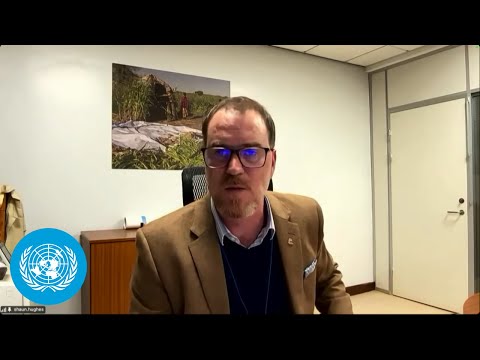
Sean Hugh Hughes, World Food Programme regional emergency coordinator, told reporters that the second year of the war in Sudan has produced “the world’s largest humanitarian crisis.” He said millions are displaced, large parts of Darfur are under siege and humanitarian access and funding are urgently needed.
Hughes said the WFP aims to assist 7 million people over the next six months but currently faces an 80% funding gap, “amounting to $650,000,000,” plus a further $150,000,000 for people fleeing across borders to neighboring countries. “Tens of thousands more people will die in Sudan during a third year of war unless WFP and other humanitarian agencies have the access and the resources to reach those in need,” he said.
Why it matters: Hughes described a combination of large-scale displacement, active sieges and blocked humanitarian access that, he said, makes the crisis man-made rather than a natural disaster. Without more funding and reliable access, WFP has already reduced rations and scaled back distributions in the areas most at risk.
Key facts and figures Hughes gave during the briefing include that about 4,700,000 people have been forcibly displaced from their homes, more than 8,000,000 are displaced internally, and about 4,000,000 have crossed borders into neighboring countries. He said nearly 25,000,000 people — roughly half the country’s population — face extreme hunger and nearly 5,000,000 children and mothers are acutely malnourished. Hughes said famine has been confirmed in at least one location and that a further 17 areas are classified as at risk of famine.
Hughes described operations and constraints: WFP is reaching over 3,000,000 people per month and has expanded digital cash transfers (more than 1,400,000 people received cash transfers in February). He said efforts to reestablish staff presence and reopen offices in Darfur and Kordofan have restored some access. “We have not, as WFP, been able to reach Zamzam overland, with a convoy since October 2024,” Hughes said, and said that Al Fasha, Zamzam and other camps have been under siege, with incoming artillery and aircraft overhead.
On ration levels and program choices, Hughes said that, because of funding shortfalls, rations in famine areas have been reduced to about 70% of needs and to roughly 50% in areas at risk of famine. He said funds are needed not only for food assistance but for logistics and joint services such as humanitarian air services.
Journalists at the briefing pressed for details. Edith Lederer of the Associated Press asked about the overall appeal size after Hughes cited the $650 million gap; Hughes replied, “That’s 80% of the requirements for the next 6 months.” Ahmed Fati of ATN News asked whether cuts in U.S. assistance or recent shifts in control of Khartoum affected WFP funding or operations; Hughes said the U.S. allocations to Sudan remained effective and that WFP is trying to provide assistance “wherever they are, under whatever form of control,” while noting that scale-up in Khartoum remains limited — WFP was reaching about 30,000 people out of a planned 800,000 in the city that month.
Hughes said an urgent operational challenge is the approaching rainy season, beginning in June, which will make many routes impassable and therefore increases the need to pre-position supplies. He urged diplomatic engagement by countries with influence on parties to the conflict to secure visas, customs clearances and safe access for humanitarian staff and convoys.
The briefing closed with Hughes repeating that “above all the people of Sudan need peace,” and taking no formal questions beyond the press exchanges recorded.