Get Full Government Meeting Transcripts, Videos, & Alerts Forever!
Get email alerts on the Public Comments Education Funding topic
No spam. Unsubscribe anytime.
Teachers, union leaders urge Marana Unified to back supports for autistic students and oppose voucher-driven cuts
Summary
During public comment, a Tortolita Middle School ceramics teacher and the Marana Education Association vice president asked the board to protect services for neurodivergent students and urged community action against state voucher expansion that they say diverts funding from public schools.
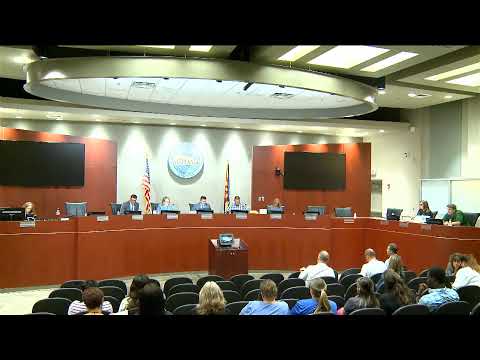
Two members of the Marana community used the district's public-comment period to ask the governing board to sustain services for students with disabilities and to press for stronger public-school funding.
Lily Tate, a ceramics teacher at Tortolita Middle School and a parent of an autistic kindergartner in the district, described her family's experience seeking assessments and services. Tate said the district's early childhood center and Powell staff helped secure an individualized education program (IEP) and provided support she called essential for her child's progress. "I'll forever be grateful to the team at Powell for all the support and care," she said.
Tate told the board the pandemic delayed some early speech milestones for her child and that behavioral indicators, including biting, led the family to seek help. She urged the district to continue to "support and come alongside" students with differing needs as debates over diversity, equity and inclusion continue in public discourse.
Chelsea Acree, vice president of the Marana Education Association, told the board that district staff are working through testing, counseling and end-of-year transitions "without adequate funding." Acree said state voucher programs siphon public dollars from district classrooms. "Every dollar diverted to these programs is a dollar that doesn't reach our classrooms," she said, and called on community members to contact legislators as the state budget was being finalized.
Board members did not respond with substantive policy actions during the public-comment period; the meeting proceeded to the consent agenda and new-business items.