Get Full Government Meeting Transcripts, Videos, & Alerts Forever!
Get email alerts on the Public Safety Fire topic
No spam. Unsubscribe anytime.
Kaysville fire chief reports rising call volume, response-time gap vs. national standard; council discusses west-side station
Summary
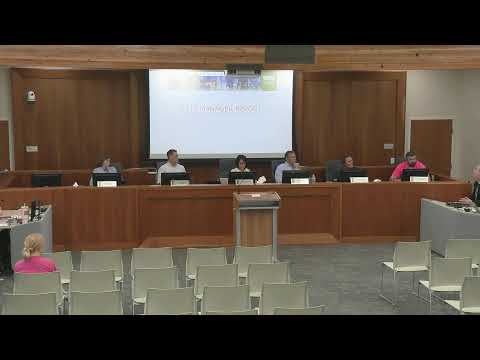
Kaysville Fire Chief Erickson delivered the department's 2024 annual report to the Kaysville City Council on April 10, saying the department answered about 1,961 calls last year, completed 96% of required training, and meets the city's cited response-time standard roughly 60% of the time compared with a 90% goal.
Kaysville Fire Chief Erickson delivered the department's 2024 annual report to the Kaysville City Council on April 10, saying the department answered about 1,961 calls last year, completed 96% of required training, and meets the city's cited response-time standard roughly 60% of the time compared with a 90% goal.
The report: why it matters
Chief Erickson said the department handled roughly 5.2 responses per day in 2024 and described an increase in medical calls and overlapping (“double and triple hit”) incidents that require mutual aid. He said the city met the response-time standard 60% of the time and that the commonly used target in national guidance is 90%.
Key facts and numbers from the presentation
- Total responses in 2024: about 1,961 (Chief Erickson's slides and remarks). That averages roughly 5.2 calls per day. - Training completion: 96% of required training hours among staff, per Erickson. - Apparent mutual-aid tallies given in the presentation: Kaysville provided mutual aid to Fruit Heights and Farmington and received mutual aid from Layton and Farmington. Chief Erickson cited specific counts in his slides (examples shown in the slides cited during the report: Kaysville gave 29 responses to Fruit Heights, 197 to Farmington, and 58 to Layton; Layton responded into Kaysville 79 times and Farmington 38 times). Council members repeatedly raised concern about how those mutual-aid flows affect Kaysville’s capacity. - Response-time standard cited: presentation referenced the response standard shown on the slides as “NFP 17 10”; Chief Erickson stated the department meets the standard approximately 60% of the time (the council and staff discussed this relative to commonly used NFPA guidance). - Longest single unimpeded response time mentioned in discussion: around 12 minutes (chief’s estimate when asked for a high-end case).
What council members asked and how staff responded
Council members pressed on several topics: mutual-aid imbalances with Farmington and Fruit Heights, whether the city is meeting nationally recognized response standards, station siting, and whether a west-side station would improve compliance.
- On mutual aid: multiple council members described the apparent imbalance—Kaysville responding to Farmington/Fruit Heights far more often than it receives help—and asked staff to pursue a formal conversation with Farmington. Council members suggested drafting a letter to Farmington and requested further discussion with mayors and chiefs from neighboring cities to clarify responsibilities and the reason for the call-volume split.
- On standards and performance: Chief Erickson said the department’s recorded compliance with the cited response-time benchmark is about 60% and that the goal shown on the slide is 90% (the 90% figure reflects the target shown in the presented standard). Chief Erickson and councilors discussed how station location and ‘getting out the door’ (turnout times) affect the metric.
- On station siting and capital planning: staff and councilors discussed that placing a station on the west side — including mention of an HOA-owned site discussed in earlier work — would likely raise compliance into the 80% range for the west zones, according to the department’s GIS-driven mapping described by staff. The chief and council discussed capital-plan implications; one councilor referenced a $4.5 million ballpark figure in a lighthearted exchange, and staff agreed that a west-side station should be included in future capital planning and public messaging.
Additional operational notes in the report
Erickson reviewed staffing models (including permanent part-time positions), apparatus status (a new engine noted as “in Murray” and final outfitting underway), training programs and completion rates, annual inspection staffing, community outreach plans (CPR training and a smokehouse for demonstrations), field training officer procedures, and PPE and certification benchmarks. He noted that mutual aid call counts are tracked and that mutual-aid responses were not included in some of the internal response-time calculations shown (staff clarified how mutual-aid calls are treated).
Council direction and next steps
Council members requested follow-up items including: (1) a staff-facilitated conversation with neighboring mayors and chiefs to review mutual-aid arrangements, (2) a possible formal letter or joint meeting to discuss the apparent aid/response imbalance with Farmington and Fruit Heights, (3) inclusion of potential west-side station options in Kaysville’s capital plan and public messaging, and (4) continued monthly reporting on the key response-time and mutual-aid metrics cited in the presentation.
Ending
Chief Erickson closed by thanking council and staff; council members thanked the department for outreach and public information efforts. No ordinance or formal council action was taken on the fire report itself; councilors directed staff to pursue the follow-up items listed above.
Quote attribution
Chief Erickson: “We meet the standard 60% of the time. So out of every 10 calls will be on time 6 of them.” (presentation slide and verbal remark during the April 10 meeting)