Get Full Government Meeting Transcripts, Videos, & Alerts Forever!
Get email alerts on the Infrastructure And Public Works topic
No spam. Unsubscribe anytime.
Residents press city on Serene Hills water project, traffic and H-E-B site; officials explain limits of city authority
Summary
During Q&A, residents asked about the apparent delay at the Serene Hills water project, traffic and water capacity linked to new apartment projects, and the prospect of an H-E-B store; officials said the projects are under WCID 17 or private landowner control and that the city cannot compel independent districts but will seek updates.
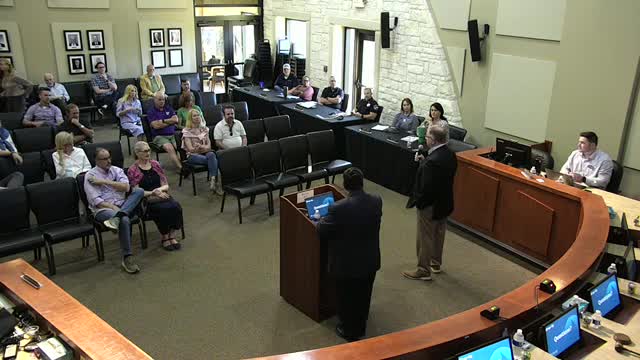
Residents used the question-and-answer portion of the Lakeway State of the City briefing to press city officials for updates on a stalled water project in Serene Hills, the effect of new apartment clusters on traffic and water supply, and the potential for a grocery store at a commercially zoned site.
A Serene Hills resident asked whether the abandoned-looking water tanks project was finished. Mayor Tom Kilgore said the project is not abandoned: the water district (WCID 17) remains active on the work and must complete utility connections, regrading and certificate-of-occupancy steps before the district will declare the project finished. Kilgore said the larger visible construction elements were complete, but the “stuff you don't see” — piping, connections and system commissioning — remains ongoing and controlled by the water district.
When asked whether the city could take ownership of tank sites for park use, Kilgore said the water district is a separate governmental entity and that some critical water infrastructure must be secured under federal and state directives; he added there are examples of cooperation where districts permit trails or irrigation but said security and regulatory constraints sometimes prevent shared recreational use.
Residents asked how the city will ensure adequate water supply for approximately 550 apartment units that residents estimated would be built in the City Center and nearby projects. Kilgore responded that Lakeway itself does not operate a city water utility for every area; water service and capacity are assigned by the local water-control and improvement district (WCID 17) and other providers, and developers secure water permits from those agencies. He said WCID 17 planned for the growth when project layouts were established and that the district previously reserved water and wastewater capacity for the developments.
On traffic concerns and the potential of a grocery store on the Chase Bank corner and across 71, residents asked whether the city could block development. Kilgore explained that landowners who hold approved site plans may be legally entitled to build under those plans; the city can regulate access and road connections, but it cannot unilaterally prevent a landowner from developing where zoning and site approvals already exist. Officials noted Serene Hills residents supported keeping Serene Hills from being widened to four lanes during the transportation-bond process and that any future development might trigger debate over road configurations.
Kilgore also addressed tree buffering and landscaping: the city enforces landscaping requirements for commercial frontage, but state law and private landowner decisions affect which trees remain; he said some local trees (juniper and ash) are susceptible to removal and certain species have environmental and maintenance trade-offs.
City staff offered to follow up with WCID 17 senior management and to provide updates to residents by email or in meeting footnotes; Kilgore asked residents to give staff contact information for follow-up.