Lifetime Citizen Portal Access — AI Briefings, Alerts & Unlimited Follows
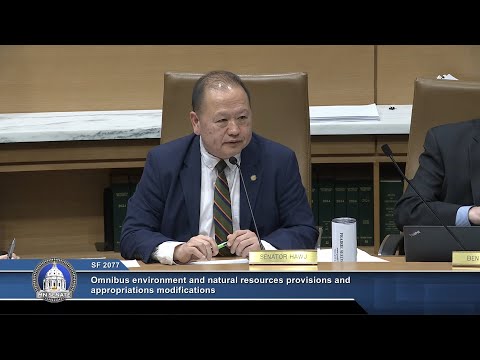
After heated debate Senate committee adopts softened wild‑rice recognition and removes some watercraft limits
Loading...
Summary
The committee adopted an amended version of a wild‑rice policy provision (A7) recognizing the significance of uncultivated wild rice and removing some proposed watercraft speed/propulsion restrictions; advocates and tribal leaders pressed for stronger language while some senators expressed concern about permitting and economic impacts.
The Minnesota Senate Environment and Climate Legacy Committee on April 10 adopted an amended wild‑rice policy amendment (A7) to the omnibus bill, saying the state should “recognize the innate significance of uncultivated wild rice’s ability to exist and thrive in Minnesota.”
The provision originally included explicit limits on operating motorized watercraft through or near uncultivated wild‑rice beds (language that would have prohibited passage except when propelled by hand and created a 50‑foot slow‑no‑wake buffer). That watercraft language was deleted from the amendment before the committee adopted A7 in its amended form.
Senators and witnesses debated for more than an hour on the measure. Supporters — including the amendment’s author and tribal advocates who testified — said the text affirms the cultural, nutritional and ecological importance of manoomin (wild rice) and gives advocates another avenue to raise concerns with permitting authorities. Opponents, principally some northern Minnesota senators and members representing areas with significant watercraft use and economic ties to lakes, warned the original language could be interpreted broadly in litigation and complicate permitting and recreational access. The committee first voted on the unamended A7 and recorded a 5–5 tie that prevented adoption; after a motion to reconsider and an oral amendment to change the wording, the committee adopted the revised A7.
Agency witnesses provided technical cautions. Bob Meyer, assistant commissioner of the Department of Natural Resources, told the committee the DNR and others wanted certainty in the statutory language and warned that broad or shifting standards could create confusion for recreational users and agency enforcement. Tribal and advocacy speakers told the committee that wild rice is a sacred, culturally essential food and that statutory recognition matters.
What the amendment does and does not do - Adopted language: states a policy recognizing the “innate significance” of uncultivated wild rice and its ability to exist and thrive in Minnesota. - Deleted language: an earlier version’s specific operational restrictions on watercraft (propulsion and 50‑foot slow/no‑wake rules) were removed from the adopted amendment; other statutes governing watercraft still apply.
Why it matters: Wild rice plays a central ecological and cultural role in northern Minnesota and is central to treaty‑protected harvesting practices for many tribal nations. The committee’s compromise affirms significance without imposing the stricter boat‑operation prohibitions that were in the original A7 language; that tradeoff means permitting and regulatory responses may be worked out in agency rulemaking or subsequent legislation.
What’s next: The A7 language now sits in SF2077 as adopted by the committee; agency officials and advocates said they would continue discussions about technical protective measures, enforcement and how the policy interacts with existing statutes that govern watercraft and shoreland activities.