Get Full Government Meeting Transcripts, Videos, & Alerts Forever!
Get email alerts on the State Budget And Bonding topic
No spam. Unsubscribe anytime.
Legislative leaders discuss bonding, budget as May 19 session deadline nears
Summary
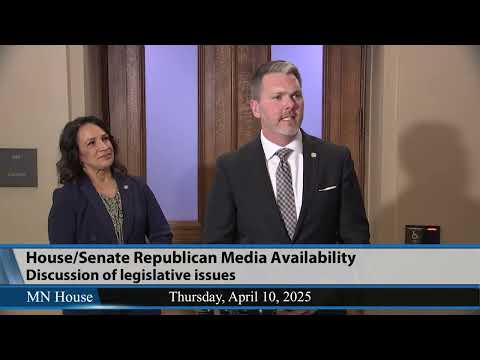
Legislative leaders met with the governor to discuss bonding targets and budget trade-offs, citing a $700 million state debt capacity estimate from MMB and a need to address a budget deficit before an anticipated May 19 end to the session. An ethics inquiry involving Senator Champion is also under review, officials said.
Speaker 1, Legislator (unnamed in transcript), said the group met with the governor to begin laying groundwork on a bonding package and to align leadership ahead of the end of the legislative session: "Well, we had an opportunity to meet with the governor again today. Today, we discussed bonding a little bit and trying to get our leads on the same page on that. ... So we are getting close to the end of session here."
The conversation, Speaker 2, Legislator (unnamed in transcript), said, reflected competing targets from the House, Senate and the governor and left detailed decisions to the committee chairs: "You saw house targets, you saw senate targets, and then, of course, the governor. ... As we come together and try to wrap up this work, obviously, tomorrow is the third deadline, and then we are on Easter Passover break."
Why it matters: bonding authorizations finance capital projects such as drinking water, wastewater, roads and bridges. Officials cited a limit on debt capacity as reported by MMB (Minnesota Management and Budget), saying about $700,000,000 in debt capacity is available and that chairs of relevant committees have been charged with setting specific bonding targets. Speaker 1 said the focus would be on statewide infrastructure priorities "as long as we can afford it."
On the broader budget, speakers emphasized the need to balance a budget they described as constrained by prior spending and tax increases. Speaker 1 said Democrats "over the last 2 years have raised taxes by $10,000,000,000, spent down the budget surplus," and said Republicans are "not looking to raise taxes." The same speaker added that, in their view, the legislature must "go with the dollars and the data that we have" while completing the budget and that if significant federal changes occur the governor could call the legislature back.
The officials said they expect increased floor activity after the short recess and that the co-chairs working on conference issues for education and health were continuing to finalize bills. Speaker 2 described the current moment as the beginning of the detailed work: "This is the very beginning of that work. And, again, having regular conversations, 4 leaders together along with the governor, this is a good place for us to be because it's opening that dialogue that we have needed for so long."
Ethics inquiry: Speaker 1 confirmed that allegations involving Senator Champion and funding ties to certain organizations are being reviewed and that ethics action "is a possibility": "We are we're looking into that, but I think, you know, as we dig into it, we we might have more ideas going forward. But ethics is is a possibility." The remarks did not identify a formal complaint, a statute, or a timeline for any committee action.
On federal changes and Medicaid: when asked how the legislature is accounting for potential large federal cuts, Speaker 2 said the budget work uses current available figures and that if Congress makes changes the governor could call the legislature back to adjust appropriations.
Officials repeatedly tied progress to work by committee chairs rather than leadership-level agreement, saying the chairs will refine targets and priorities and that nothing had been finalized at the leadership level. The speakers indicated an aim to finish work by May 19 but did not announce any formal votes or enacted measures in the recorded discussion.
Ending
Leaders described the briefing as an early-stage coordination step rather than a set of final decisions. They said co-chairs and committee work will determine bonding amounts and bill text, while ethics inquiries and any federal funding changes could prompt additional follow-up.