
California Assembly adopts resolution designating April 14 as Sylvia Mendez Day after heated debate
Get AI-powered insights, summaries, and transcripts
Sign Up Free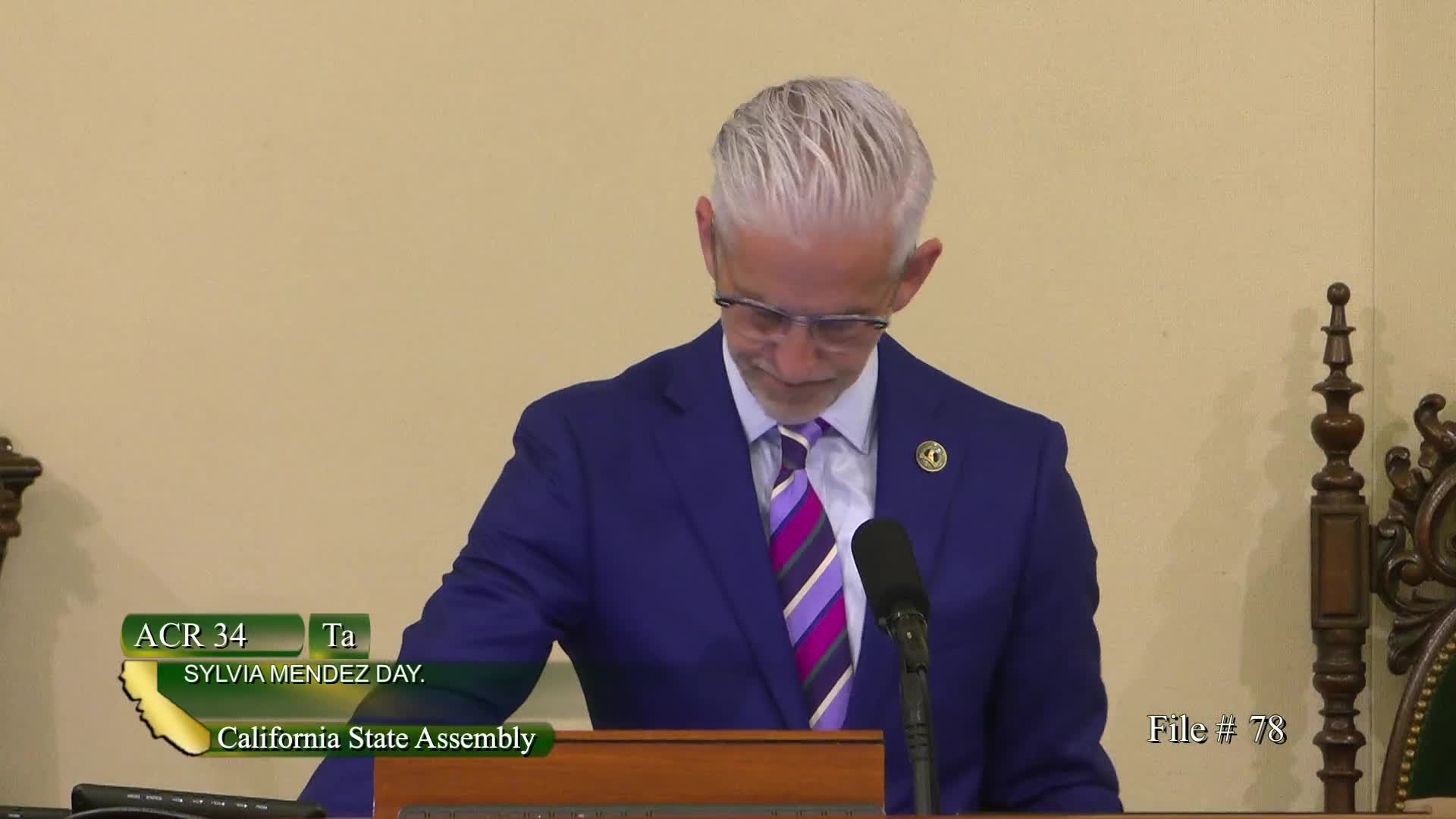
Summary
The Assembly approved Assembly Concurrent Resolution 34 recognizing April 14 as Sylvia Mendez Day, marking the Mendez v. Westminster decision’s role in the history of school desegregation. The measure passed 56–2 after members debated partisan framing, inclusion, and whether a different resolution was needed.
Assemblymember Janet Ta introduced Assembly Concurrent Resolution 34 on March 6, 2025, asking the Assembly to recognize April 14 as Sylvia Mendez Day to commemorate the Mendez v. Westminster case and its place in the history of school desegregation.
The resolution passed on a roll-call vote, Ayes 56, Noes 2.
Ta told colleagues she introduced the measure because of her connection to Westminster and her work to increase public awareness of the Mendez case, which she described as “a landmark moment in California and America’s civil rights history.” Supporters from both parties, including Assemblymember Jeff Gonzalez and Assemblymember Quirk Silva, said the resolution honored a local civil-rights figure whose family’s lawsuit helped set legal precedent before Brown v. Board of Education.
Gonzalez said, “Sylvia showed us that even the youngest voices can echo through the halls of history.” Quirk Silva noted she had worked with Mendez as a teacher and emphasized the case’s local roots in Westminster.
Several members tied the measure to broader civic and educational aims. Assemblymember Sanchez, co-chair of the California Hispanic Legislative Caucus, said recognizing Sylvia Mendez Day “reminds us of the importance of fighting for a quality education for all Californians.” Assemblymember Soria said the case “laid the legal groundwork for Brown v. Board of Education.”
Debate included objections that the resolution had been politicized. Assemblymember Jackson urged colleagues to “lay off this resolution,” while Assemblymember Bonta and others criticized what they called mixed messaging when members simultaneously advance measures honoring civil‑rights leaders while opposing policies they view as advancing diversity, equity and inclusion. Assemblymember Ortega rose in opposition and asked for a different resolution; Ortega’s objection was recorded during debate.
After debate concluded, the clerk opened the roll for coauthors; the transcript records 55 coauthors added during the proceedings before the final roll call. The final recorded vote on passage was Ayes 56, Noes 2 and the resolution was adopted.