Get Full Government Meeting Transcripts, Videos, & Alerts Forever!
Get email alerts on the Property Dispute topic
No spam. Unsubscribe anytime.
Judge takes under advisement motion to set aside verdict in Warner'Stearns property dispute; urges parties to seek negotiated access
Summary
After a weeklong trial, the presiding judge declined to set aside a jury verdict in a dispute over an access easement but asked the parties to explore negotiated solutions, including a gated-access agreement, before issuing a written ruling.
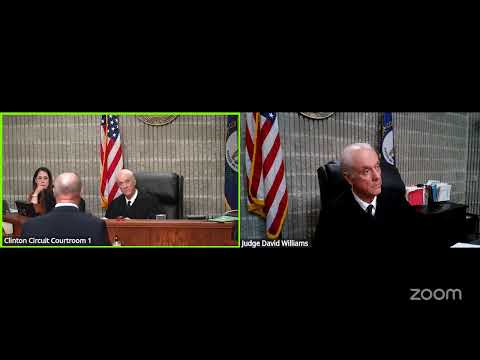
A Clayton County judge, hearing post-trial motions in Warner v. Stearns, declined at the bench to immediately set aside a jury's verdict in a contested property-access case and told both sides to attempt a negotiated resolution before the court issues a written ruling.
Nut graf: The dispute centers on whether a small parcel and a historical right-of-way provide the defendants legal access to an adjacent tract; the judge voiced concern about the short jury deliberation and about how a deed and sale history had been presented, but said those concerns did not on their face justify overturning a unanimous jury verdict. The judge asked the parties to meet and consider practical options such as a gate with restricted access or a sale of the disputed lower parcel before the judge issues a written decision.
In court the judge reviewed the parties' competing legal theories ' including apparent easement/quasi-easement and easement of necessity ' and noted that while the deed language and sale circumstances raised questions, the jury's unanimous verdict was supported by competing evidence presented at trial. The judge said he was troubled in part by the brief period the jury spent deliberating but acknowledged that the court's authority to set aside a verdict is constrained by the record and the governing instructions.
The judge specifically asked the parties to try to agree on a practical accommodation. One option the judge mentioned would limit access to an agreed gate that only the current parties could use, with notice procedures when access is needed. A second option would be a sale of the disputed lower portion of the parcel to remove the access conflict; the judge asked counsel to explore whether their clients would entertain such a change in ownership.
The court took the motion under advisement and told the parties: "I'll take this under advisement, and I'll enter a ruling in 10 days." The judge also invited the parties to report back if they reach a negotiated settlement before the ruling is issued.
Why it matters: The case highlights recurring tensions in rural property law where historic use, deed language and parcelization collide. The judge's encouragement of a negotiated gate or sale reflects a preference for practical, property-focused solutions where the record leaves room for competing legal interpretations.
What's next: The court said it will issue a written ruling within 10 days if the parties do not reach an agreement; the judge requested the parties attempt to resolve access arrangements in the interim and to notify the court if they reach a deal.