Get Full Government Meeting Transcripts, Videos, & Alerts Forever!
Get email alerts on the Criminal Justice topic
No spam. Unsubscribe anytime.
Clinton County court clears crowded docket with multiple pleas, diversions and sentences
Summary
A Clinton County judge handled a packed criminal docket, recording multiple guilty pleas, pretrial diversions into the county's specialty drug court and several prison sentences, including one totaling 12 years. Several cases were set for negotiation or trial dates in May.
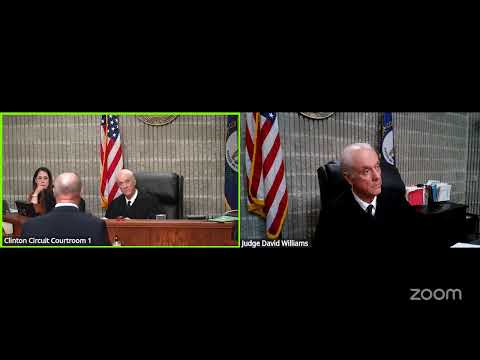
A Clinton County judge on a busy docket took guilty pleas, approved diversion placements and imposed sentences across a range of criminal cases, the court record shows.
The most severe sentence announced during the session came in Commonwealth v. Dale Perales (24CR0094). According to the prosecutor's recitation in court, Perales pleaded guilty to third-degree vulnerable victim and to two counts of first-degree abuse of a vulnerable victim. The Commonwealth asked for a 2-year sentence on the third-degree count and 10 years on the abuse counts, with the 2-year term to run consecutively to the concurrent 10-year terms for a total of 12 years to serve. The Commonwealth also requested that Perales have no contact with the victims; the plea and recommendation were recorded on the docket.
In another sentencing, the court accepted a plea and sentenced Corey Bard on multiple felony counts. The court ordered two 10-year sentences to run concurrently and to be probated for five years of supervised probation. The judgment included credit for 401 days credited to Bard's time served, and the entry on the record directed Bard to report to probation as required.
Several defendants pleaded to controlled-substance charges and were placed under the Clinton specialty drug court or given pretrial diversion. The Commonwealth repeatedly recommended diversion terms that generally included a custodial component or credit for time served followed by five years of supervised pretrial diversion, completion of the Clinton specialty drug court program, and conditions such as obtaining gainful employment or performing at least 30 hours of community service per week until employed. In one plea recitation the Commonwealth phrased the disposition as: "Upon a plea of guilty to possession of a controlled substance, first degree, first offense, methamphetamine, the defendant shall receive a sentence of [term], pretrial diverted for 5 years supervised. The defendant shall enter and complete the Clinton specialty drug court program." Those diversion recommendations were placed on the record by the Commonwealth and accepted by the court in multiple cases.
The docket also included pleas to other felony counts, arraignments and a series of scheduled negotiation and trial dates for May. Several attorneys and defendants asked for negotiation days or additional pretrial dates; the court repeatedly scheduled negotiation days and set follow-up appearances in May.
The grand jury returned indictments in multiple matters during the session; the judge instructed the clerk and bailiff to process the indictments and said bonds would be reviewed after records and any prior history were checked.
Why it matters: The mix of custodial sentences and diversion placements underlines how the county's court and probation system are using both incarceration and specialty-court diversion as tools in response to drug and vulnerable-victim cases. Many of the diversion orders include supervised terms and treatment obligations, which the court repeatedly emphasized during the docket.
What's next: The court set many negotiation and status dates in May; defendants placed into diversion programs were directed to meet with probation personnel or the specialty drug court for orientation. The grand jury indictments returned during the session will be processed by the clerk's office for service and bond review.