Get Full Government Meeting Transcripts, Videos, & Alerts Forever!
Get email alerts on the Water Utilities topic
No spam. Unsubscribe anytime.
Fort Smith water crews say aging equipment and meters are driving leaks, ask board to fund replacements
Summary
Waterline maintenance leaders told the board their crews are hampered by aging dump trucks, backhoes and failing AMR encoders; staff asked that the board place funding for equipment for two full leak-repair crews on an upcoming agenda and described ongoing problems with automated meters and billing.
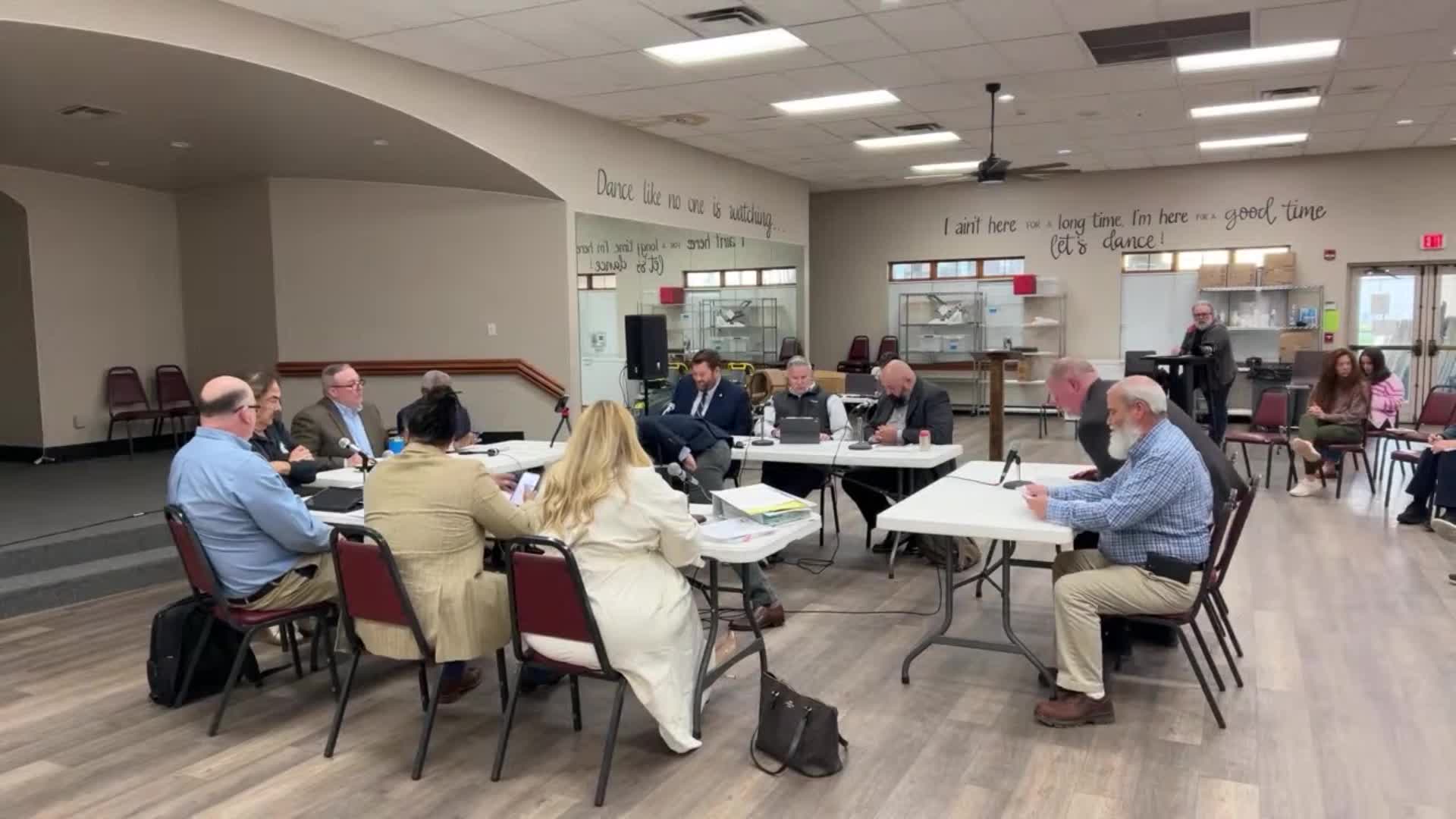
Water utilities staff told the Fort Smith Board of Directors their waterline-maintenance program is strained by worn equipment, staffing vacancies and failing automated meters that together are increasing response times and creating billing errors.
Lance McEvoy, director of water utilities, said a fully equipped leak-repair crew needs a one-ton service vehicle, a five-ton dump truck, a backhoe and a heavy-duty trailer — a package that yielded initial vendor quotes of roughly $361,116 per crew. "Lead times are anywhere from we could get it within a couple of weeks to, about 6 months," McEvoy said, citing supply and tariff volatility.
Kenny Hall, deputy director for waterline maintenance, said the utility currently runs five full-time leak crews of four people each, and that equipment failures are frequent. "Backhoes specifically… we've had them down 4 times this year... One of the service trucks has been down 3 times this year," Hall said, explaining that broken equipment can take crews out of service for days or weeks and that two dump trucks were down recently. He described reliance on rented dump trucks to maintain five active crews.
Staff estimates and needs. Managers told the board the department has eight crews covering all water functions, including fire-hydrant and transmission-line work, and has several vacant positions (staff cited eight vacancies in waterline maintenance). McEvoy and Hall said standardizing equipment models would reduce maintenance downtime and costs by simplifying parts, training and repairs.
Board direction and a budget move. During discussion board members encouraged staff to seek staged procurement rather than an all-at-once purchase. In the study session the board also agreed to place a request on the next meeting agenda for funding to purchase two crews’ worth of equipment; the motion was seconded and staff said it would be returned to the board for formal consideration. Administration noted potential short-term offsets: earlier staff work had identified about $1,100,000 in short-term cuts that could be reprogrammed to meet urgent equipment needs if the board chose that path.
Leaks, lines and replacements. Staff said some small-diameter distribution lines — especially older two-inch galvanized mains — produce a disproportionate share of service calls. Jimmy Johnson, deputy director of utility engineering, said three currently designed but unfunded projects would replace about seven miles of two-inch line at an estimated collective cost near $14 million; he added that a set of pressure-reduction stations downtown would also reduce failure rates but would cost about $4 million.
Meters and billing. The board also reviewed automated-meter-reading (AMR) and automated-metering-infrastructure (AMI) issues. Staff reported persistent failures with one vendor’s encoder transmitters (meters reading zero for months, followed by catch-up reads), producing billing adjustments that staff said totaled roughly $600,000 in reduced revenue last year. Jeff (city administration) and Lance explained that many failing ERT encoders are affected by wet meter boxes and plastic housings that are vulnerable in Fort Smith’s conditions. As a short-term remedy, staff said they could return to more manual reading and remove nonfunctional encoders from the automated network; staff indicated they could begin a staged manual-read process in May while the board considers a longer-term AMI/ultrasonic meter replacement program.
Why it matters: staffing and equipment affect how quickly crews can fix leaks, which affects unaccounted-for water, customer service and potential rate pressures. Board members repeatedly tied equipment reliability to response times and to customer-perception issues when leaks persist.
Ending: Staff will bring a formal purchase request (two crews’ equipment) to the next meeting agenda and continue the AMR/AMI evaluation. The board asked staff to include projected lead times, financing options and the impact of staged replacements when returning with recommendations.