Get Full Government Meeting Transcripts, Videos, & Alerts Forever!
Get email alerts on the Environment topic
No spam. Unsubscribe anytime.
Harris County adopts community-led Climate Justice Plan to guide resilience and equity work
Summary
The court approved the Harris County Climate Justice Plan, a community-driven blueprint that centers equity, cross-agency alignment and a five-theme set of actions; commissioners asked the Office of Sustainability to identify immediate, cost-effective actions for the FY2026 budget process.
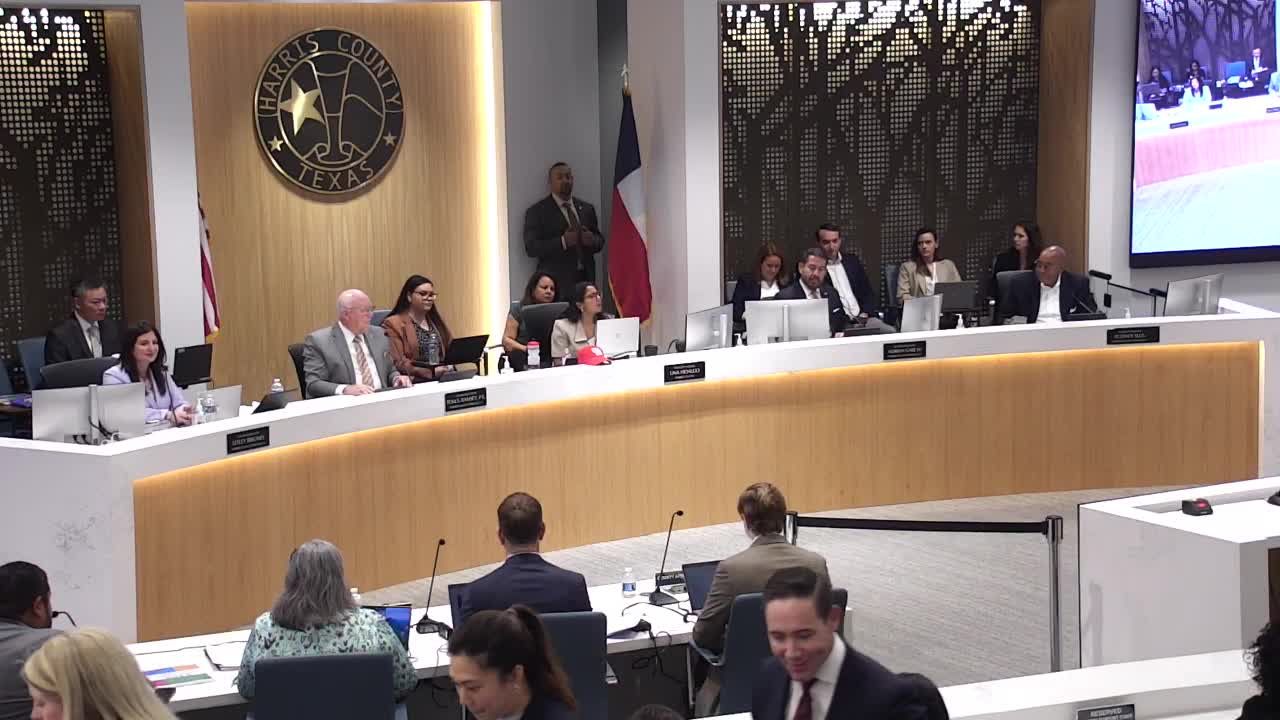
Harris County Commissioners Court on April 10 formally adopted the Harris County Climate Justice Plan, a community-designed roadmap that officials said will direct county policy and investments to reduce climate risks while centering equity.
The plan, developed over two years with more than 600 stakeholders and a 15-member advisory collaborative, lays out five thematic priorities — including community resilience, environmental stewardship and culture change — and a set of implementation actions. County sustainability staff and community partners said the plan was grounded in extensive outreach: community meetings, youth engagement, and stakeholder workshops in multiple languages.
"This plan is visionary and values-based," Lisa Lynn, director of the county Office of Sustainability, told the court. "It centers community input and sets a framework for data-driven, equity-focused actions." Community members and partners who participated in the planning process described goals such as tree canopy expansion, heat mitigation, flood-resilient infrastructure and food access.
Commissioners asked the Office of County Administration’s sustainability team to identify cost-effective, immediate actions from the plan for potential inclusion in the fiscal 2026 budget. The court’s adoption does not itself commit county capital or operating funds beyond existing authorizations; instead it instructs county staff to prioritize near-term steps and then return with proposals.
Why it matters: County leaders said the plan will align internal operations, leverage grant and federal opportunities and help direct scarce local dollars toward projects with measurable equity and resilience benefits. Several commissioners stressed urgency, given recent extreme-heat events, flooding and neighborhood-level environmental health concerns.
What’s next: Sustainability staff said they will return with potential budget items and metrics. Commissioners also signaled interest in coordinating the plan with other county efforts — including flood control and early childhood investments — to maximize shared benefits across health, housing and resilience goals.