Get Full Government Meeting Transcripts, Videos, & Alerts Forever!
Get email alerts on the Cup Expansion Review topic
No spam. Unsubscribe anytime.
DSAC to summarize public comments for planning commission as expansion review proceeds; subcommittee appointed
Summary
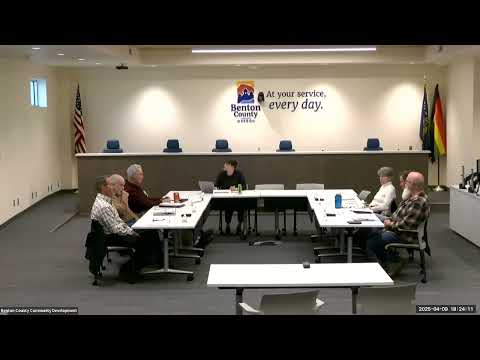
DSAC members debated whether the committee should submit a full position on the Coffin Butte conditional use permit and expansion proposal and instead appointed a three‑person subcommittee to prepare a short factual summary of public comments for the planning commission.
The Disposal Site Advisory Committee (DSAC) discussed how to respond to the Coffin Butte landfill's conditional use permit (CUP) and expansion proposal that is before the Benton County planning commission. The planning commission has opened a public comment period and will hold hearings; the commission's decision must be based on county land‑use criteria.
Committee members debated whether DSAC should submit a full committee opinion. Several members emphasized that the planning commission's review will be guided by two narrow criteria: whether the proposed use "seriously interferes with uses on adjacent property or with the character of the area," and whether the proposed use "imposes an undue burden on public improvements, facilities, utilities or services available to the area." Bailey (county staff) confirmed the planning commission is focused on the expansion request rather than routine past operations.
Members raised larger, long‑term concerns about regional waste flows, county identity and the eventual service life of the landfill. Paul Neufeld and other members reiterated that the 2020 franchise agreement currently defines an intake tonnage cap of 1,100,000 tons and observed that the franchise agreement mechanism would eliminate that cap if the expansion is approved. Other members noted that DEQ's 75,000‑ton threshold can trigger a regional designation that limits a landfill's ability to discriminate on source of waste.
After debate on scope and practicality, the committee agreed not to produce a full committee position letter this week but instead appointed a small drafting group to prepare a short, factual summary of the public comments DSAC has received that relate to the planning commission's criteria. The chair summarized the approach as producing a concise cover letter pulling together recent annual reports and examples of public comment relevant to "character of the area" and public burden issues. A volunteer group was named to draft that letter: David Hackleman, Charlie (last name not specified in the transcript) and the committee chair.
Committee members emphasized practical constraints: public‑meeting rules prevent the full committee from drafting the letter outside an open meeting, and DSAC lacks time to convene multiple special full‑committee meetings before the planning commission's deadline. The group proposed the subcommittee draft the letter, circulate it to the agreed reviewers (excluding any members who must recuse), and file it before the planning commission's comment deadline (noted in the meeting as April 17). The committee also discussed individual members submitting personal comments directly to the planning commission.
Clarifying details and points of fact from the discussion: - Planning commission criteria referenced: interference with adjacent uses/character of the area; undue burden on public infrastructure and services (per county land development code and comprehensive plan). - Intake tonnage cap in the 2020 franchise agreement: 1,100,000 tons; expansion would eliminate the cap if approved (as stated in the meeting). - DEQ's 75,000‑ton threshold was discussed as a regulatory distinction that can make a landfill regional and change service/discrimination rules. - DSAC decided to form a drafting subcommittee (members: David Hackleman, Charlie and the committee chair) to prepare a short factual summary and attach supporting annual reports; the subcommittee will aim to meet the planning commission's April 17 filing deadline.
Ending: The subcommittee will draft a concise summary of DSAC's public‑comment record and operational observations relevant to the planning commission's criteria, circulate it for review, and file before the planning commission's deadline. Individual DSAC members may still file personal comments; DSAC as a full committee will not file a formal position at this time.