Get Full Government Meeting Transcripts, Videos, & Alerts Forever!
Get email alerts on the Clean Energy Surcharge Revenue topic
No spam. Unsubscribe anytime.
Councilors propose 0.33-point increase to corporate clean-energy surcharge to raise general-fund revenue
Summary
Councilors discussed a proposal to raise the corporate clean-energy surcharge from 1% to 1.33% and to increase the city business-license exemption to $100,000, a change sponsors say could bring roughly $60 million a year in additional general-fund revenue.
Councilors on the Climate Resilience and Land Use Committee discussed a proposal April 10 to increase Portland’s existing corporate clean-energy surcharge from 1% to 1.33% and to raise the city business-license tax exemption from $50,000 to $100,000, with the sponsors saying the changes could generate roughly $60 million a year in new general-fund revenue.
Chair Nick Novick said he and Councilors Carmen Murillo and (Councilor) Dunphy introduced the concept to explore revenue options instead of deep program cuts in the face of an estimated general-fund shortfall. The administration’s February budget forecast identified a roughly $92.8 million deficit that includes expiring one-time funding and proposed new shelter spending, Novick said.
Peter Holzman, the city economist, and Thomas Lanham, revenue-division director, summarized the fiscal math: the current forecast for the clean-energy surcharge is roughly $200 million in the next tax year; raising the rate by one-third would increase that pool to about $266 million, producing roughly $66 million in additional receipts, and raising the business-license exemption to $100,000 would reduce revenue by about $3 million — a net increase in the $60–63 million range under current forecasts. Lanham said the proposal would affect roughly 400 firms that pay the surcharge and that an exemption increase would affect about 9,000 local businesses (a reduction in gross receipts from smaller firms).
Staff briefed the committee on timing and administration: the draft ordinance as described would apply to tax years beginning Jan. 1, 2025. Filings for most payers are not due until spring 2026; revenue staff said they would notify payers immediately after council action and that quarterly payments could rise in calendar-year 2025 with a final return due in 2026. Ruth Levine, director of the city budget office, advised that due to revenue volatility the council should consider placing a sizable portion of any new receipts into contingency in the first year rather than immediately funding ongoing general-fund commitments.
Sponsors said the increase would not divert the existing 1% that funds the Portland Clean Energy Fund (PCEF). Instead, their ordinance would expand the tax base and direct a new share of the enlarged total to the general fund while maintaining PCEF’s dedicated share. Novick said the intention is to preserve PCEF allocations while creating new general-fund revenue.
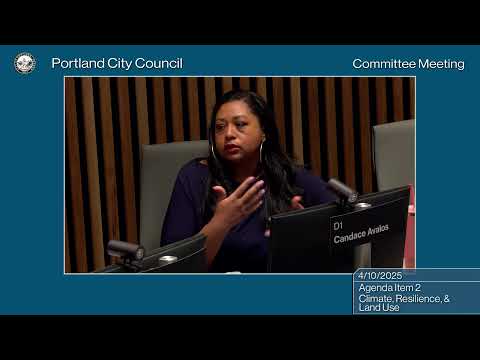
Councilors and others raised multiple concerns. Councilor Rene Avalos said even small changes to the surcharge mechanism could “weaken the firewall between PCEF and city budget politics,” citing the utility-license fee as a local example where a fund originally dedicated to streets was subsequently diverted. Avalos pressed staff and sponsors on legal risk, possible litigation, whether state preemption applies to new local gross-receipts style levies, and the feasibility of collecting revenue in time for the FY 2025–26 budget cycle.
Revenue staff answered that the Oregon Legislature preempted most future local taxes on “commercial activity” but exempted existing taxes and amendments to those taxes; sponsors framed the draft as an amendment to an existing tax rather than creation of a new one. Novick and co-sponsors also said they had done initial outreach to some community and environmental leaders; they reported conversations with Sierra Club and coalition leaders who were generally receptive and that 350PDX was not supportive. Andrew Hone, president of the Portland Chamber, was described as having a noncommittal, avuncular response to outreach.
Councilor Kunal and others asked whether large retailers would pass the charge through to Portland shoppers; Novick cited informal price comparisons showing little or no evidence that the existing surcharge produced local price differences, but councilors said they wanted more direct outreach to likely payers. Thomas Lanham said staff cannot unilaterally disclose specific taxpayer identities without their permission but can conduct outreach on the council’s behalf.
Several councilors emphasized that this is an initial concept rather than a finalized ordinance. Novick said he would withdraw the proposal if the mayor’s budget arrives without “unacceptable” cuts; he also said the idea could be considered in finance committee and might be moved quickly if council wished to incorporate revenue into the FY 2025–26 approved budget (the city budget office said it would be technically possible if council reached agreement before the May approval deadline, but recommended conservatism given uncertainty).
No committee vote was taken on April 10; the item was a staff briefing and initial policy discussion. Councilors deferred legal analysis and some technical questions to the city attorney and revenue staff, and multiple members asked for further legal review and broader stakeholder outreach before any ordinance would be advanced.