Get Full Government Meeting Transcripts, Videos, & Alerts Forever!
Get email alerts on the Landfill Expansion Methane topic
No spam. Unsubscribe anytime.
Benton County committee wrestles with Coffin Butte expansion, enforcement claims and methane monitoring
Summary
Residents, county staff and Republic Services representatives debated whether federal or state enforcement is active at Coffin Butte Landfill, the meaning of CarbonMapper flyovers and how much landfill gas is being captured ahead of an impending expansion application completeness review.
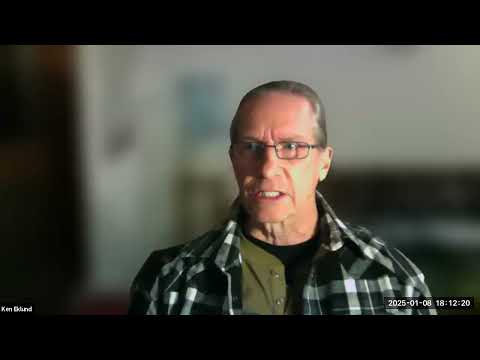
Ken Eklund, a Soap Creek Valley resident, told the Disposal Site Advisory Committee (DSAC) that public concern about Coffin Butte Landfill has increased after repeated CarbonMapper flyovers that recorded large methane plumes and a public exchange in which U.S. Sen. Jeff Merkley asked EPA Administrator Michael Regan about enforcement at the site.
Eklund urged DSAC to ask Oregon Department of Environmental Quality (DEQ) whether a file exists on the landfill and to use state statute ORS 459.325 to support community access to comment. "The state law specifies that DSAC be a forum for community comments. That's central to its mission," Eklund said during public comment.
The committee pressed county staff and Republic Services representatives for clarity. Brett Davis, speaking for Republic Services, said the company has not received formal notice of violation or notification of an investigation: "We have received no notice of violation, no notice of investigation, and no punitive measures have come our way," he said. Davis added Republic has submitted annual reports that include methane monitoring data and is working to address recorded permit exceedances.
County staff described the land-use review process and the timeline for the landfill expansion application. Committee members were told the operator and applicant may submit additional material to make the application complete; the county expects requested completeness documents to be submitted by the 15th of the month and said the statutory review clock will start when the application is formally deemed complete. County staff described the overall land-use review timeline as the 180-day process (initial completeness review followed by a 150-day final review after completeness determination), with subsequent opportunities for the planning commission, the board of commissioners and appeal to the Land Use Board of Appeals (LUBA).
Committee members also discussed methane capture and monitoring. Republic reported modeled gas-collection efficiency at roughly 70–73% (model years cited by the company), and said about 58% of the collected flow is delivered to a local power purchaser (PNGC) with the remainder flared. Republic representatives said they are evaluating additional wells and system improvements and are discussing expanded gas utilization with the power purchaser. "Our last gas model was completed in 2023. Our efficiency was estimated about 73% in 2023," a Republic representative said. They also said the company is testing site communications and detection systems as part of a larger effort to reduce uncontrolled emissions.
Committee members asked how point-in-time remote sensing results (CarbonMapper flyovers) compare with modeled generation and routine surface-emission monitoring (grid surveys with EPA-approved analyzers). County and Republic staff said the datasets are collected differently: CarbonMapper produces snapshots by aircraft and may show intermittent, high-concentration plumes, while on-the-ground surface-emission monitoring follows EPA methodologies and regular field remediation (adding cover, installing or repairing wells). Staff recommended comparing multiple flyovers over time and cross-referencing landfill gas models (e.g., EPA LandGEM-style approaches) with site collection data to understand discrepancies.
Why it matters: DSAC members and nearby residents say they need clearer, documented answers about enforcement status, methane emissions and how the committee can exercise its role. Committee members requested that county staff and Republic provide updated, written clarifications for the committee and include an update on methane monitoring and any planned capital steps (wells, engines or RNG options) in future agendas.
Ending — next steps: Committee members agreed to place methane monitoring, CarbonMapper comparisons and any fire-safety monitoring updates on future agendas and to request a written update from Republic on detection/mitigation progress. Staff also said they will report back on the expansion application completeness status once requested documents are submitted and the county makes a completeness determination.