Get Full Government Meeting Transcripts, Videos, & Alerts Forever!
Get email alerts on the Workplace Safety topic
No spam. Unsubscribe anytime.
Senate passes diver-safety measure for aquatic-plant work after amendments
Summary
The Minnesota Senate on April 10 passed House File 13 55, imposing equipment, training and permitting requirements for people who use scuba gear to remove aquatic plants; the bill passed 54–10 and will return to the House for concurrence.
ST. PAUL, Minn. — The Minnesota Senate on April 10 passed House File 13 55, a bill that imposes equipment, training and permitting requirements on companies and individuals who use scuba gear to remove aquatic plants, lawmakers said. The bill passed on a roll call of 54 ayes and 10 nays and will return to the House for concurrence before going to the governor.
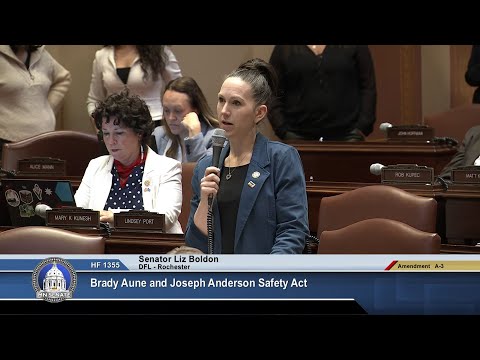
The bill was introduced on the Senate floor as a worker-safety measure prompted by the deaths of two young men, whom the author and family members described at length. "It's not every day that we have the opportunity to pass a bill that will save the lives of Minnesotans," the bill's floor author said, urging colleagues to support the measure.
Supporters said the bill closes gaps that contributed to the drownings. The enacted language requires people using scuba gear for aquatic plant management to hold at least an open-water scuba certification; it also sets a list of required equipment, requires an annual safety consultation before scuba use, and directs the Department of Labor and Industry (DLI) to provide an information sheet detailing applicable federal and state worker-safety standards.
Key equipment the Senate-approved language requires includes a buoyancy control device (BCD), a quick-release weight system, a primary regulator and compressed-gas cylinder, a breathing-gas monitor, and an audible emergency surface-signaling device. The bill also requires an illuminated dive beacon, a depth-monitoring device and other items when conditions make them appropriate, and authorizes requirements for fins, snorkel, alternate air sources, exposure protection and a dive computer or recreational dive planner depending on conditions.
The bill ties permit authority to safety enforcement: the Department of Natural Resources (DNR) must deny a permit to a company that has received a citation for a willful OSHA violation in the prior two years, and permits may be revoked if employers are found to have used scuba gear without completing the required safety consultation, supporters said.
Senators debated amendments on the Senate floor. Senator Lisky offered an A3 amendment that separated mandatory equipment from "recommended" items and enumerated minimum gear; after an oral amendment moved an illuminated dive beacon from the recommended list to the required list, the A3 amendment as amended was adopted. Senator Lehi offered an A2 amendment to delete a provision that would cite the statute by a commemorative name; that A2 amendment was not adopted.
Some senators raised questions about overlap with existing federal and state safety rules. "We've already got in statute the OSHA factors for diving," one senator said during debate, noting concerns about whether the bill duplicates existing requirements. The bill's author replied that fines and penalties issued after accidents do not prevent deaths; the statutory changes and permit conditions were intended to make requirements clear to businesses and workers in advance and to ensure proper training is provided.
Supporters stressed timeliness: colleagues noted lakes are opening for the season and said they wanted protections in place before contractors begin widespread aquatic-plant work.
Vote and next steps: The Senate roll call closed with 54 ayes and 10 nays; the bill will go back to the House for concurrence and, if affirmed, to the governor. Sponsors said the DLI and DNR will implement the consultation and permitting components once the bill becomes law.