Get Full Government Meeting Transcripts, Videos, & Alerts Forever!
Get email alerts on the Corrections And Reentry topic
No spam. Unsubscribe anytime.
Philadelphia prisons commissioner seeks staff, medical and reentry investments as council questions contractor care
Summary
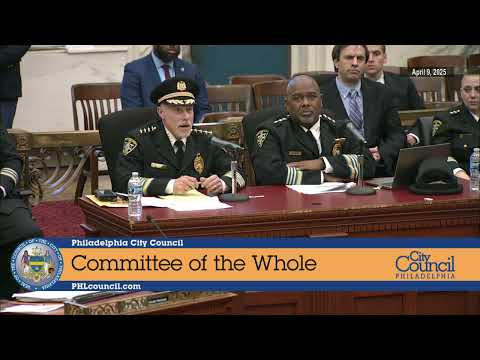
Commissioner Michael Resnick told City Council staff levels and programming are improving but councilmembers pressed him on medical care under the department's contractor, deaths in custody and reentry supports as the Philadelphia Department of Prisons presented its FY2026 operating budget.
Michael Resnick, Commissioner of the Philadelphia Department of Prisons, told Philadelphia City Council during a budget hearing that the department is increasing staffing, expanding training and piloting new medical monitoring as it prepares its fiscal 2026 operating plan.
The testimony and later questioning by councilmembers focused on three recurring themes: staffing and facility operations, the department's medical contract and care for people in custody, and reentry services and housing. Those issues matter to public safety, oversight and whether returning residents receive needed supports to avoid reoffending.
Resnick said the department has hired 230 correctional officers since April 2024 with a net gain of 74 staff and a reduced vacancy rate, down from about 47 percent to about 34 percent. "We have a brand new academy"," he said, noting the training site can run two classes of roughly 60 recruits simultaneously and that the next class, starting April 14, will be 74 — the largest yet. He added the administration changed civil service rules to allow people who left within the past five years to return; about 25 people have been rehired so far.
On facility operations, Resnick said inmate population has fallen from a recent high of about 4,800 to 3,678 and that increased staffing is allowing the jails to stay open for more of the day and provide more out-of-cell time and services. The department also expanded its canine contraband-detection unit, installed mail-scanning equipment and deployed airport-style scanners for staff and visitors, and created a security and intelligence unit "whose sole purpose is to interdict contraband."
Councilmembers pressed Resnick and his deputies about medical care. The department contracts medical and behavioral health services to a company referred to in testimony as YesCares. Resnick said that contractor employs more than 350 licensed clinicians and that the department is accredited by the National Commission on Correctional Health Care. He told the committee the functional vacancy rate for medical staff is near zero and that 95 percent of people leaving custody are enrolled in medical assistance with linkages to community care.
Still, several councilmembers raised concerns about delayed specialty appointments and deaths in custody. Resnick acknowledged a backlog in specialty external appointments reported by the federal monitor but said the department has reduced on-site appointment backlogs to levels below the monitor's targets and is using a vendor called USI to augment medical guarding for external clinic trips. He described several initiatives to reduce medical risk: immediate screening on intake, use of the Clinical Opioid Withdrawal Scale and starting medication for opioid use disorder for individuals who score positive, additional medical rounds in intake housing and a pilot to place newly admitted people on a wrist-style medical monitoring device during their first five days in custody.
Resnick also told council that officers now carry naloxone (Narcan) and the department is increasing supervision and deploying body-worn cameras in phases. "We are proposing to go to a body camera system," he said, adding the first rollouts would focus on receiving rooms and special management areas and later expand to general population.
On oversight, Resnick said he supports outside review once the department is declared in substantial compliance with court monitors. "I am committed to hiring independent experts that will come in and just review conditions and give us feedback," he said, and noted existing review by the Pennsylvania Prison Society and law-department medical monitors.
Councilmember questions repeatedly returned to YesCares. Councilmember O'Rourke said the contractor has been sued in other jurisdictions and pressed whether the department has ever imposed contract liquidated damages for missed performance targets. Resnick said fines are possible in the contract but attributed some delayed specialty trips to custody staffing limits and said the department is taking steps to reduce backlogs, including partnering with USI.
Reentry drew sustained attention. Resnick and Deputy Commissioners described a planned reentry services trailer set to open by summer 2025 on prison grounds to provide immediate postrelease linkages; the department also said it is reassessing its Restorative and Transitional Services Division to improve needs assessments, vocational programming and housing navigation. The department recently created a housing navigation position to identify housing and recovery-home options for people before discharge, but officials said specific outcome metrics are still being developed.
On deaths in custody, Resnick said the department recorded six deaths in 2024, including one natural death and one suicide; several remain under investigation. He said the department's mortality rate is lower than the city's overall mortality rate but reiterated the population's medical fragility: roughly 70 percent have substance-use comorbidity and about 40 percent have chronic illnesses such as diabetes or hypertension.
The committee concluded by moving to recess. Councilmember Gilmore Richardson moved that the hearing and related meetings stand in recess until April; the motion was seconded, the committee took a voice vote and the ayes carried.
The hearing included repeated requests for follow-up data — including specialty-appointment backlog counts, more complete race and language-access statistics, details on professional-service spending and the exact number of people enrolled in workforce or certification programs — and several councilmembers sought a written response or callbacks from the Office of Reentry Partnerships and the department's medical leadership.