Lifetime Citizen Portal Access — AI Briefings, Alerts & Unlimited Follows
Mendocino board approves animal‑resistant street trash cans after public debate
Loading...
Summary
The Mendocino Historical Review Board voted to allow the Department of Transportation to replace the town's existing street trash receptacles with a new animal‑resistant model, with a secondary preference for an alternate style.
The Mendocino Historical Review Board voted to allow the replacement of existing street trash receptacles with the Department of Transportation's preferred animal‑resistant model, with a secondary preference for a second style that staff described as an acceptable alternative.
The board's action adopted staff's recommendation that the county broadly approve DOT's requested change in receptacle style and allow the department to proceed pending final coordination on siting and specifications. Staff told the board DOT had supplied written answers to seven questions asked at an earlier hearing and that DOT indicated options 2 and 3 fit within the program budget.
Why it matters: Residents and business owners said the change aims to reduce trash scattered by birds, raccoons and other animals and to ease the extra cleanup performed by county and volunteer crews, particularly during summer tourism peaks. Opponents and some residents said aesthetics matter in Mendocino's historic district and urged either repairing the existing cans or redesigning a new model that better matches the town's appearance.
Staff and public input Staff described DOT's submittal and said the department proposed three options; DOT recommended option 3 as its first preference but asked for flexibility to use option 2 in places. Staff also said public comment included at least one written message supporting the replacement and one opposed.
Ted Williams, who identified himself at the hearing as a district supervisor, urged the board to treat trash pickup as part of the county's service burden for a revenue‑generating tourist area, saying maintenance is expensive and regular complaints reach his office. "This town generates a lot of revenue...part of generating that revenue [is] maintaining sidewalks, picking up trash," Williams said.
By contrast, Paul Kemper, introduced himself as a former board member and written commenter, urged caution on changing the receptacle design. "I don't see the need to change the receptacles," Kemper told the board, arguing the traditional style fits Mendocino's historic character and that repairs or more secure lids might be preferable to wholesale replacement.
Practical questions and constraints Speakers pressed staff on cost and siting. Staff said DOT provided per‑unit pricing for option 1 (about $1,464 per unit) and that DOT indicated options 2 and 3 were within funds designated for the program; staff did not provide a full per‑unit price for option 3 at the hearing. Staff also said DOT has budgeted funds specifically to replace existing receptacles rather than to pay for extra trash pickups.
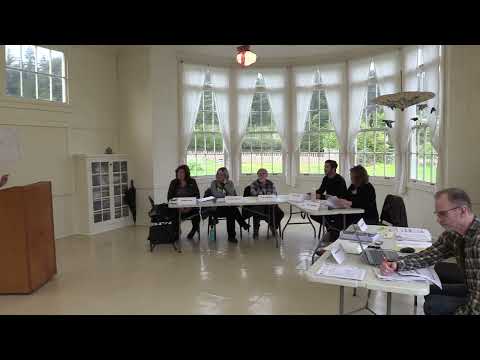
Board discussion and outcome After public comment and board discussion, a motion to approve option 3 as the board's primary preference, with option 2 as secondary, passed on a roll call. Board members asked staff to follow up with DOT to provide a site plan showing where replacements would be located and to invite DOT to appear if necessary so the board and community can confirm siting and finish options.
Clarifying details - The project references an earlier permit (NHRP/permit 02/2015) that allowed up to 40 receptacles in town; staff said roughly 27 of those 40 were actually installed. - Staff said DOT supplied answers to seven questions raised at the board's prior meeting and that two pieces of public comment (one supportive, one opposing) had been provided to the board. - Staff and public raised operational concerns: animals (birds, raccoons), household dumping into small openings, and overflow during high‑visitor periods.
Next steps The board directed staff to request from DOT a site plan showing where replacements would be placed and to return if the placement or any additional conditions would require modifying the permit. The board's approval allows DOT to proceed with the designated models within the scope of the existing program funds, subject to further coordination on siting and final finishes.