Get Full Government Meeting Transcripts, Videos, & Alerts Forever!
Get email alerts on the Appropriations topic
No spam. Unsubscribe anytime.
Appropriations hearing opens on deficiency bill as agencies warn of rising costs, staffing shortfalls
Summary
Lawmakers heard a wide-ranging briefing on House Bill 6863, the annual deficiency appropriations bill, with agency leaders and the comptroller describing shortfalls driven by health-care spending, drug costs, utility and commodity inflation, and staffing-related overtime.
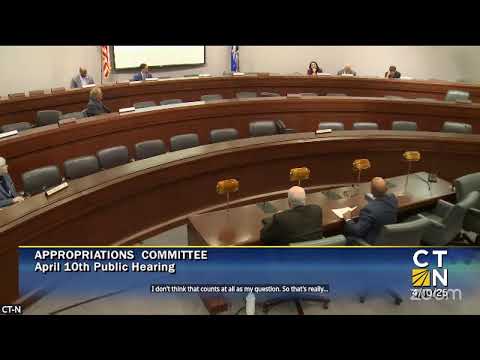
The Appropriations Committee opened a public hearing on the deficiency appropriations bill, House Bill 6863, saying the measure will be updated before final enactment to cover shortfalls across state agencies.
The bill, which the committee is treating as a rolling document, will be revised as agencies submit updated deficit letters and the governor’s office and Office of Policy and Management (OPM) update projections. “We’re here to talk about our deficiency appropriations bill, which happens to be, House Bill 6 8 6 3,” said a state official opening testimony. Committee members heard agency-by-agency briefings and questions about major cost drivers and mitigation steps.
Why it matters: The deficiency bill provides supplemental authority for spending required before the fiscal year ends June 30. Lawmakers use the bill and administrative transfers to keep programs running and to attempt to remain under the state spending cap.
Most agencies described multi‑factor shortfalls rather than a single cause. Common themes included rising prescription drug costs and pharmacy trends, unanticipated utilization of health-care services, higher utility and commodity prices, and staffing shortages that increase overtime and workers’ compensation costs. The comptroller and several agencies described pharmacy-track problems that affect both retiree and active-employee plans and the Medicaid program.
Testimony and administrative actions: Witnesses told the committee they are updating projections monthly and that Finance Advisory Committee (FAC) transfers and administrative holdbacks have reduced but not eliminated many shortfalls. Agencies repeatedly said more monthly letters will follow and that final numbers will be set before the session ends. The Department of Administrative Services and other agencies said they are trying to contain costs through hiring pauses, reorganization, cross-training, and limited use of third-party vendors.
What’s next: Agency leaders will deliver updated deficiency letters and the committee will consider whether the deficiency bill’s appropriation levels and FAC transfers are sufficient. Several speakers urged caution in assuming future federal funding and asked legislators to consider longer-term budget adjustments.
Ending note: Committee members pressed agencies on the details of their forecasts and the extent to which shortfalls represent structural changes (for example, sustained drug trends or long-term shifts in Medicaid enrollment) versus one-time items. The committee did not take votes at the hearing; it received testimony and will meet again as updated projections arrive.