Get Full Government Meeting Transcripts, Videos, & Alerts Forever!
Get email alerts on the Public Health topic
No spam. Unsubscribe anytime.
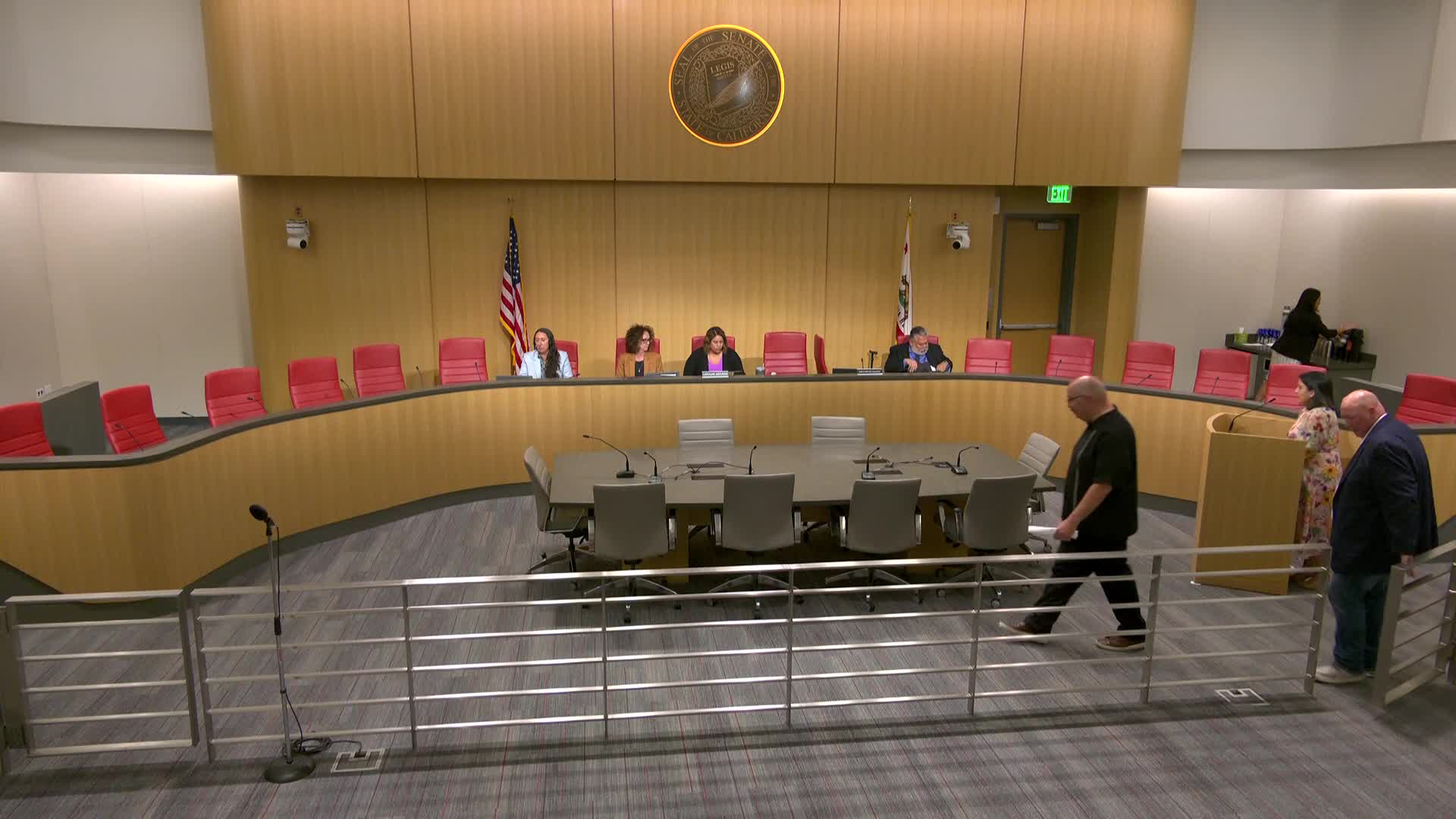
Senate panel advances bill to expand valley fever screening, reporting and no-cost coverage
Summary
Senators advanced a bill aimed at improving detection and insurance coverage for valley fever, a fungal infection that public health officials say is spreading beyond traditional hot spots.
Senators advanced a bill aimed at improving detection and insurance coverage for valley fever, a fungal infection that public health officials say is spreading beyond traditional hot spots. SB 297 would require local health departments to report confirmed cases annually to the California Department of Public Health, expand screening in high-incidence areas when medically appropriate, and require health plans, including Medi‑Cal, to cover screening costs with limited exceptions under federal law.
Senator Anna Hurtado, the bill's author, told the Senate Health Committee the Central Valley faces a growing burden of valley fever. “I spoke with a group of farm workers in the Central Valley. Many shared stories of feeling sick for weeks — persistent cough, fevers and fatigue that made it difficult to work,” she said. Hurtado said inconsistent testing and reporting make it difficult for public health agencies to understand the disease’s scope and that climate changes are broadening the fungus’s geographic reach.
Physician witnesses described cases they said could have been detected earlier if screening were routine in high‑risk settings. “If he had been caught earlier, his recovery would have been smoother, his family less burdened and his medical costs much lower,” said Dr. Brian Cruz, clinical director of family practice and specialty medicine at a federally qualified health center. He said the bill “equips us with better tools to apply our judgment earlier in the diagnostic process, especially in high incidence areas.”
A patient witness told lawmakers his 2012 diagnosis of disseminated coccidioidomycosis (valley fever) led to lifelong treatment needs and substantial financial loss. “Every patient that is diagnosed earlier that you prevent becoming a patient like me is a savings of a million dollars over their lifetime,” Rob Purdy said, describing hospitalizations, prolonged treatment and long‑term disability in severe cases.
Medical groups urged caution about a screening mandate that could constrain physician judgment and lead to unnecessary testing. Dr. Anna Yap, speaking for the California Medical Association, said current clinical guidance focuses testing on symptomatic patients and raised concerns about overtesting, unnecessary treatment and antifungal resistance. “Testing people who don’t need it may not only strain laboratory resources and delay results for patients who are truly sick, it can cause unnecessary anxiety,” Yap said.
Committee members questioned whether SB 297 would require testing of asymptomatic people. Dr. Cruz and other supporters said the bill references clinical practice guidelines and that, in practice, testing would be targeted to symptomatic patients and those meeting guideline criteria — for example people presenting with community‑acquired pneumonia, certain radiographic findings, or erythema nodosum in a high‑incidence area. Senator Weber Pearson and others reiterated a longstanding caution about embedding clinical practice rules in statute, saying statutes change slowly while clinical guidance evolves.
Supporters said the proposal would remove a financial barrier to testing by prohibiting cost sharing for screenings except as required by federal law for certain high‑deductible plans. Witnesses added the bill would require culturally and linguistically appropriate screening outreach in vulnerable communities, such as agricultural workers who may be less likely to seek care early.
The committee voted to pass the bill as amended and refer it to the Judiciary Committee. The committee record shows the motion carried; the clerk recorded the bill as approved by the committee and referred for further review.
Key details from the hearing: between 10,000 and 20,000 valley fever cases are officially reported annually in the U.S., witnesses said, but many public health experts believe the true number is higher due to underdiagnosis and inconsistent reporting. The bill would direct local health departments to submit confirmed case counts to the California Department of Public Health each year and require insurers, including Medi‑Cal, to cover screening when medically indicated without cost‑sharing other than limited federal exceptions.
The bill’s supporters said it would improve surveillance, reduce diagnostic delay in high‑risk populations such as outdoor workers, and remove financial barriers to testing; opponents argued it risked unnecessarily broad testing, collateral harms from treatment and erosion of physician discretion. The author and allies said committee amendments and cross‑agency work were intended to address several of those concerns.
The bill now moves to the Judiciary Committee for additional consideration.