Get email alerts on the Community Crisis Response topic
No spam. Unsubscribe anytime.
County update: mobile response team expands; 988, 911 and dispatch integrations increase referrals
Summary
Douglas County Emergency Communications and Bert Nash presented an update April 9 on the Mobile Response Team (MRT). Agencies report rapid growth in MRT deployments, integrated dispatching via ECC and a statewide funding mix that includes county subsidy and declining state support.
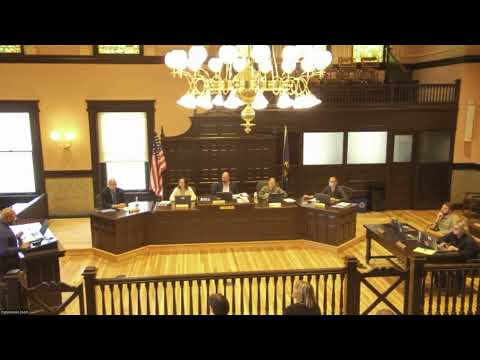
Douglas County Emergency Communications (ECC) and Bert Nash Crisis Services gave the county commission an update April 9 on the mobile response team (MRT), a civilian crisis response unit dispatched via 988, non‑emergency lines and 911.
Sonia Baeza, deputy director for ECC, described a phased rollout that began in July 2024 with the Lawrence Police Department and later expanded to other law enforcement agencies and fire/EMS partners. She said ECC and partners implemented triage protocols and began equipping MRT with radios in March 2025 to streamline on‑scene communications with first responders.
Ryan Storch, crisis services senior director with Bert Nash, described deployment growth: the program has conducted more than 1,272 total contacts across the crisis continuum, with about 743 deployments in 2024 to 327 unique individuals, showing repeat deployments to some clients. Storch said the program is on pace in 2025 to surpass 800 referrals for the year. The team conducts follow‑up outreach within three and 14 days of an initial deployment.
Baeza summarized operational hours and staffing: MRT operates roughly 8 a.m. to 2 a.m., seven days a week, with a team of about seven to eight full‑time staff plus PRN support; staff roles include clinicians, case managers and peer support. Storch said deployments are being made from multiple access points—988, non‑emergency transfers and 911 dispatch—and that integration with ECC improves the ability to stage and coordinate responses.
Commissioners and staff asked about transport and diversion outcomes. Storch and Baeza said MRT sometimes provides rides to the Treatment and Recovery Center (TRC) when clinically appropriate; law‑enforcement drop‑off times at the TRC average about seven minutes, they said. Program leaders told the commission they are tracking cost‑of‑care savings and reductions in emergency department and county‑jail utilization; county staff supplied an estimate of county subsidy reported later in the meeting.
County staff said the county currently provides about $445,000 in subsidy for MRT (drawn from the mental‑health sales tax), with other funding coming from state sources that are declining. Speakers and first‑responder partners praised the rapid growth and positive feedback from patrol officers; the commission received the update as an informational item.
AI generated
The text on this page is AI generated. Summaries, highlights, analysis, and video transcripts are all produced from the original source material.
AI can make mistakes, so if you spot one, and we will fix it for everyone.
Note: the source content is unaltered by us. Any content source we link to, be it a video, an audio recording, or a document, is presented exactly as its publisher released it. That publisher is usually a government body, sometimes an individual official or another organisation.