Get Full Government Meeting Transcripts, Videos, & Alerts Forever!
Get email alerts on the Parking Policy topic
No spam. Unsubscribe anytime.
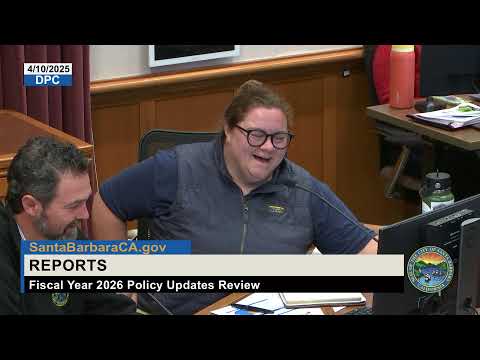
Santa Barbara committee directs staff to limit daily courtesy period, approve on‑street timing changes and defer fee schedule
Summary
The Downtown Parking Committee voted to adopt a one‑courtesy‑period‑per‑lot rule to curb repeated short‑term re‑entries, agreed to standardize 0‑block short‑term parking (green/loading/accessible), and asked staff to return with the detailed FY26 fee schedule at a later meeting.
The Downtown Parking Committee for the City of Santa Barbara on a motion Tuesday directed staff to implement a policy limiting the 75‑minute courtesy period to one use per vehicle per lot per day and supported staff’s recommendation to standardize 0‑block on‑street short‑term parking while preserving loading and accessible spaces.
Committee members said the changes are intended to reduce the so‑called “75‑minute shuffle,” the repeated practice of exiting and immediately reentering lots to renew a free courtesy period, and to make enforcement and customer expectations clearer.
Staff described the proposals as an operational “tune up” designed to improve customer service, better match short‑term on‑street parking with longer‑term off‑street supply, and reduce misuse that erodes revenue available to the parking enterprise fund. “Our goal is for our system to work most effectively,” said Mr. Frantz, a staff presenter, explaining the committee’s role in shaping recommendations before a council finance committee hearing next week.
Key changes discussed included a pilot of pay‑by‑plate technology at the Helena lot to allow pay‑on‑foot or pay‑by‑plate operation without returning to the vehicle; pilot discounts for employee and 24/7 resident permits in the Ortega Garage (Lot 10); a proposed increase in some lot hourly and daily maxima; and adjustments to special event and facility‑use fees. Staff said the Ortega monthly commuter permit proposal would cut its current price by more than half and that preliminary budget estimates show a potential loss of about $65,000 from that single reduction, and about $15,000 from lowering a 24/7 permit option — figures staff presented as conservative planning assumptions.
Committee members and staff reviewed three scenarios for addressing courtesy‑period misuse: (1) one courtesy period per lot per vehicle per day; (2) an aggregate courtesy period across the system; and (3) a timed reset (for example after several hours). The committee voted to direct staff to pursue scenario 1 — one courtesy period per lot per vehicle per day, with a maximum of 75 minutes per lot — citing simpler implementation and clearer public messaging.
The committee also voted to standardize 0‑block timed parking to short‑term (green) zones with remaining blue (accessible) and loading zones preserved. Committee members and staff said standardization will simplify enforcement and make it easier for officers to patrol core blocks rather than tracking multiple short‑term limits on the same block.
Public comment urged clearer public education about the new rules and recognition that some downtown workers must park in several different lots for hour‑long meetings. “I am encouraging you to do a bit of public education around some of the discussion today,” said Lucille Boss, identified as a city resident and planning commission liaison, who asked the committee to consider people who have multiple short meetings across different lots.
The committee postponed a motion to adopt the full FY26 fee schedule; staff asked for additional time and will return with detailed fee proposals at a subsequent meeting. Staff said many changes discussed are administrative and can be adjusted quickly if operational issues arise, but fee reductions would generally remain in effect for about a year once adopted.
The committee’s direction will be incorporated into staff’s presentation to the council finance committee next week as part of the FY26 budget review process. Staff highlighted that the Parking and Business Improvement Area (PBIA) contributes to covering courtesy‑period costs and that eliminating all courtesy periods would materially change the fund’s revenue picture — a reason staff emphasized a cautious, phased approach.
What the committee approved: staff was directed to implement a one‑courtesy‑period‑per‑lot‑per‑vehicle rule (scenario 1) and to proceed with standardizing 0‑block short‑term on‑street parking while preserving loading and accessible zones. The fee schedule and detailed rates were deferred for a future meeting and further public outreach.
Less critical details: staff said downtown has roughly 1,200 on‑street spots and about 3,000 off‑street public parking spaces. Specific item examples discussed included Lot 5 (Victoria Parking) and Lot 12 (Seville Plaza) construction outages; Lot 13/Amtrak passenger parking rules (staff will continue to require proof of train/bus travel for discounted passenger rates); the Helena lot’s operating proposal (about 39 spaces and an operations model aligned with waterfront lots); removal of the Dakota commuter permit location from the fee schedule; an increase to facility user fees for special lot uses (proposed $200 per day); and a proposed lower price for the “locals weekender” permit moving from $100 to $80 every six months.
Committee members asked staff to prioritize clear signage, curb painting and a public education campaign before or concurrent with enforcement changes. Staff estimated a one‑time curb painting program across the core would cost well under $50,000 and could be done in‑house or contracted depending on timing and scope.
The committee’s direction is advisory; the final fee changes and related ordinance or resolution language will be submitted to the City Council through the finance committee as part of the FY26 budget review.
Votes at a glance: The committee recorded three formal committee actions related to this item — adoption of scenario 1 for courtesy periods; direction to standardize 0‑block timed parking; and deferral of the detailed FY26 fee schedule for a later meeting — all motions carried during the meeting.