Get Full Government Meeting Transcripts, Videos, & Alerts Forever!
Get email alerts on the Hhs Omnibus Bill topic
No spam. Unsubscribe anytime.
Senate Health and Human Services committee advances HHS omnibus after wide amendment debate, approves provider tax increase
Summary
The Senate Health and Human Services Committee on April 9 advanced Senate File 2669, the HHS omnibus bill, adopting a series of technical and policy amendments including a 0.2 percentage-point provider tax increase and new coverage items while rejecting some proposals such as a facility-fee ban and a premium-subsidy deletion in committee votes.
The Minnesota Senate Health and Human Services Committee advanced Senate File 2669, the department's HHS omnibus bill, after a lengthy floor session of technical fixes and policy debates that included a narrowly framed increase to the provider tax and a package of adopted amendments and deletions.
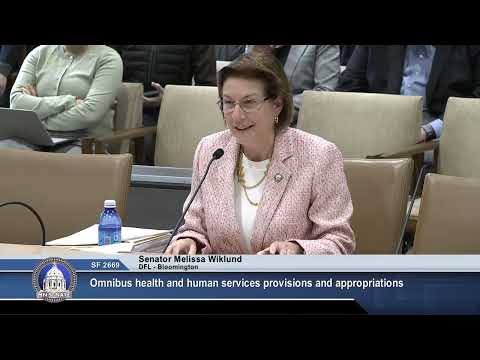
Senator Wicklund, chair of the committee, told members the bill “strengthens access to health care” and said the package “does utilize, a point 2% increase in the provider tax” to preserve coverage and meet the committee's budget target while adding targeted services such as reimbursement for home-birth services and investments in the Statewide Automated Child Welfare Information System (SSIS).
Why it matters: The committee judgment to restore the provider tax to 2.0% (from 1.8%) and to pursue other revenue and program measures was presented as a budget-stability move to avoid cuts to basic coverage. Members debated that change at length; supporters said it preserves services and prepares for federal uncertainty, while opponents warned a higher provider tax is passed on to patients and can disproportionately affect smaller providers.
Major actions and adopted provisions
- Provider tax: Committee discussion acknowledged the tax's history (originally set in 1992, adjusted in 2019) and adopted budget language that increases the provider tax by 0.2 percentage points as part of the bill's finance package. Senator Wicklund described the increase as a way to “maintain the stability of our health care system.”
- Coverage and program changes adopted: The bill as amended preserves existing coverage levels, adds a reimbursement path for home-birth services (with an earlier effective date adopted in a later amendment), includes funding to proceed with the SSIS replacement project (the committee adopted the governor's proposal to allocate an additional $10,000,000 for SSIS), and includes other behavioral-health and mental-health policy provisions moved in via omnibus technical amendments.
- Technical and conforming amendments: The committee adopted a large series of technical, aligning and reviser-suggested changes (amendments A6, A7, A44, A31, A37, A39, and others). Committee counsel and staff walked through the A44 package, which consolidated numerous technical edits, conforming fixes, and moved certain policy sections to match the committee spreadsheet.
- Optometry/scope-of-practice provisions: Committee debate over optometrists' authority to perform injections was extensive. Senator Wicklund explained she sought a middle path and proposed an amendment (A30) that would have required a collaborative-practice arrangement with a physician; that amendment was later withdrawn. A subsequent amendment (A10) that reinserts broader injection authority as drafted by optometrists was adopted by voice vote. Members raised concerns about rural access, patient safety, and the appropriate training and oversight model; proponents argued the change would expand access in areas with few ophthalmologists.
- Dental carve-out timing: The committee adopted an amendment (A36) to delay implementation of the single-administrator/dental carve-out timeline from the shorter statutory transition to a longer four-year delay. A roll-call showed the amendment passed (6 yes, 4 no). Supporters said more time is needed to allow stakeholders and agencies to prepare; opponents argued the shorter transition and two-year timeline was sufficient.
- Facility-fee prohibition not adopted: A proposal to repeal facility-fee authority (A28) failed in committee after members debated patient-price transparency versus potential revenue losses and operational impacts for clinics and hospitals. Supporters of the repeal said facility fees sometimes surprise patients and reduce affordability; opponents warned that removing those fees outright could destabilize provider finances and reduce access in rural areas. The roll-call on A28 did not pass.
- Premium subsidy and reinsurance debate: Members also debated a premium-subsidy alternative to a traditional reinsurance model. An amendment (A25) to delete sections establishing a premium-subsidy program and related assessment language did not pass. Committee proponents of the subsidy model described it as a targeted way to help consumers who do not qualify for premium tax credits; opponents worried the assessment mechanism could be broad and would ultimately raise costs for consumers.
Votes at a glance (committee-level outcomes)
- A6 (DE amendment, technical): adopted (voice vote) - A7 (appropriations article conforming): adopted (voice vote) - A44 (comprehensive technical/conforming package): adopted (voice vote) - A31 (appropriation amounts to match spreadsheet; technical): adopted (voice vote) - A37, A39 (technical licensing/fee conforming changes): adopted (voice votes) - A30 (optometry with collaborative-practice requirement): withdrawn - A10 (optometry language reinstating injection authority): adopted (voice vote) - A36 (delay dental carve-out to 4 years): adopted (roll call; 6 yes, 4 no) - A28 (facility-fee prohibition repeal): not adopted (roll call; failed) - A12 (rider transparency/base riders to appropriation article): adopted (voice vote) - A32 (move start date for MA reimbursement for home-birth services from 2027 to 2026): adopted (voice vote) - A35 (technical change to International Medical Graduate bill language): adopted (voice vote) - A17 (birth-center facility fee change): adopted (voice vote) - A16 (ambulance placeholder language): withdrawn - A25 (delete premium subsidy sections): not adopted (voice vote) - Final committee motion: SF 2669 as amended recommended to the Committee on Taxes (adopted by committee voice vote)
Substantive concerns and committee context
Committee members repeatedly emphasized two recurring trade-offs: protecting and expanding access to care (especially in rural Minnesota) versus upstream cost and budget constraints. Supporters of the provider-tax restoration and the package of investments argued the changes preserve coverage and make targeted, lower-cost improvements; opponents warned tax increases are ultimately borne by patients and smaller clinics and urged narrower approaches.
On optometry, some members pressed for training or certification pathways (citing other states' models) while others said collaborative agreements already exist for other professions and the proposed changes are a measured step to improve rural access.
On facility fees and the dental carve-out, committee members asked for more data and enhanced transparency. The committee adopted language and appropriations to improve data collection and reporting so future deliberations can rely on clearer fiscal and patient-impact information.
Where things go next
Committee staff and counsel will coordinate technical language and conforming changes; the committee voted to refer SF 2669, as amended, to the Senate Tax Committee. The bill will face further review in finance and on the Senate floor, and multiple members cautioned that floor and conference negotiations could change many of these provisions.
Ending note: Committee chair Senator Wicklund thanked staff and members for their work; the committee adjourned after adopting the recommendation to send the amended bill to the taxes committee.