Get Full Government Meeting Transcripts, Videos, & Alerts Forever!
Get email alerts on the Bail Bonds Regulation topic
No spam. Unsubscribe anytime.
Committee advances bill to create statewide board to oversee bail bondsmen; industry advocates and critics debate scope
Summary
House Bill 5 76, which would establish a Board of Professional Bondsmen under the Department of Commerce and Insurance and change discipline and filing requirements for bail agents, moved to government operations after testimony from sheriffs, prosecutors, bondsmen and critics.
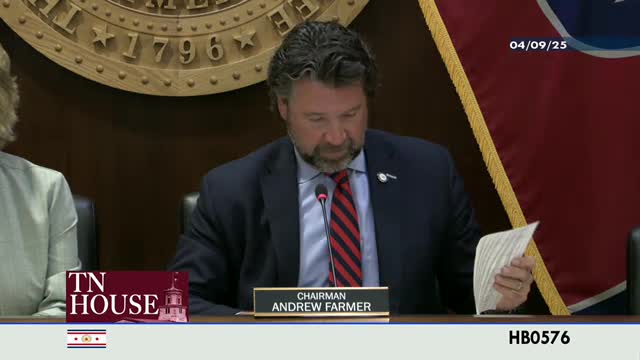
A House committee voted to advance House Bill 5 76 to government operations after a debate over whether oversight of professional bail bondsmen should be centralized under a Department of Commerce and Insurance board.
The bill would create a seven‑member Board of Professional Bondsmen, require biannual filings from bonding companies and agents, and transfer investigative and disciplinary authority over licensing from the courts to the board while preserving judicial authority in individual jurisdictions. The bill also would bar a bondsman from simultaneously owning a GPS monitoring company and prohibit withdrawal from a bond because of a contract breach in some circumstances.
Supporters argued the board would create consistent oversight across judicial districts and allow better tracking where a bonding business has had disciplinary issues in another county. Rick Nagel, representing a bonding company, told the committee that centralized filings and a single regulatory point would improve transparency and reduce data fragmentation.
Opponents, including representatives of the Tennessee Association of Professional Bail Bond Agents, said the bill risks squeezing smaller, locally based bail firms and creating overlapping regulators. Nathan Ridley of the agents’ association warned the board could create conflicts with judges and judicial districts that currently handle bond approval and discipline; he said the industry already returns large numbers of defendants to custody and that the locally administered system works in practice.
Sheriffs and district attorney representatives supported a measured reform. Mike Donovan of the District Attorneys’ Conference said the bill would “streamline” authority and help identify problematic operators that move across county lines. Sheriff representatives said bondsmen are critical partners in returning defendants who jump bond and praised many agents for their cooperation.
After testimony, the committee voted to send House Bill 5 76 as amended to government operations (14 ayes, 3 noes, 1 present not voting).