Get Full Government Meeting Transcripts, Videos, & Alerts Forever!
Get email alerts on the Human Smuggling And Harboring topic
No spam. Unsubscribe anytime.
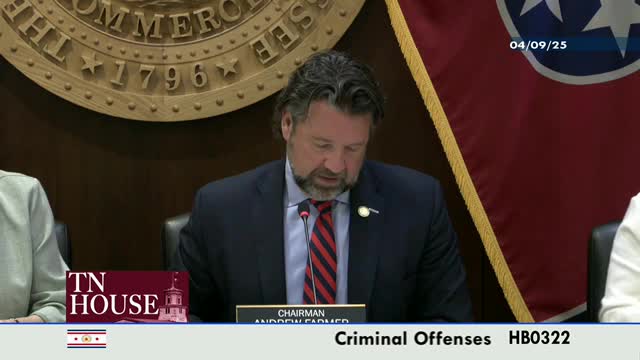
Committee advances bill creating human smuggling crimes and a misdemeanor for harboring; witnesses warn of vagueness and school impacts
Summary
House Bill 3 22, creating human smuggling offenses and a misdemeanor for harboring or hiding unlawfully present individuals, moved to finance after extended public testimony. Supporters framed it as targeting traffickers and smugglers; opponents warned the bill is vague and could criminalize routine acts by hospitals, schools and family members.
The House Judiciary Committee voted to advance House Bill 3 22 to the finance committee after a long hearing that included testimony from law enforcement, legal counsel and multiple public witnesses who said the bill's broader language risked criminalizing routine assistance.
Sponsor Representative Todd said the measure would create the criminal offense of human smuggling — with a class E felony for smuggling and a class A felony for aggravated smuggling involving victims under 13 — and a separate misdemeanor for harboring or hiding an unlawfully present individual. The bill also includes an exclusion for licensed attorneys and health‑care providers acting at licensed facilities.
Supporters included prosecutors and former prosecutors who said the bill fills gaps in existing trafficking laws by focusing on cross‑border smuggling methods and the commercial motives behind forced labor, sexual exploitation and other trafficking. Legal counsel for the committee explained that the harboring provision criminalizes ‘‘harboring or hiding or assisting another in harboring or hiding’’ someone the person knows or should have known is unlawfully present, while listing limited exceptions for attorneys and medical settings.
Opponents urged caution and sought clarifications. Johanna Cohen, a Robertson County resident, said she opposed the bill on moral grounds and recounted a household example in which an undocumented woman stayed with her family when her parents were unable to care for her; Cohen said the bill could criminalize that help. Ashley Warbington, who said her husband is undocumented, said the law’s vagueness could turn ordinary acts — driving a spouse to a doctor’s appointment, translating school forms, letting a child’s friend into one’s home — into crimes.
Legal staff told lawmakers the bill’s exceptions apply to attorneys licensed in Tennessee and to health‑care providers in licensed facilities or practice sites; the committee discussed the limits of those exceptions, including whether school staff, counselors or out‑of‑state attorneys would be protected. Counsel also said the harboring offense is a class A misdemeanor punishable by a fine of $1,000 per person harbored, and the smuggling offenses are felonies.
After testimony, the committee voted to send the bill, as amended, to finance and ways and means. Sponsors said prosecutions would still be fact‑specific and courts would have discretion; opponents warned the bill could chill routine community and faith‑based assistance and produce constitutional preemption questions.
Committee action: House Bill 3 22, as amended, moved to finance and ways and means by recorded vote (16 ayes, 6 noes).