Get Full Government Meeting Transcripts, Videos, & Alerts Forever!
Get email alerts on the Tribal Jurisdiction topic
No spam. Unsubscribe anytime.
Cherokee Nation moves to intervene in federal suits over criminal jurisdiction after state court decisions
Summary
The Cherokee Nations attorneys office told the Rules Committee the Nation intervened in consolidated federal litigation challenging state prosecutorsclaims of jurisdiction over crimes by nonmembers on tribal land; the U.S. has supported Cherokee Nations intervention and the Nation is preparing responses to motions to dismiss.
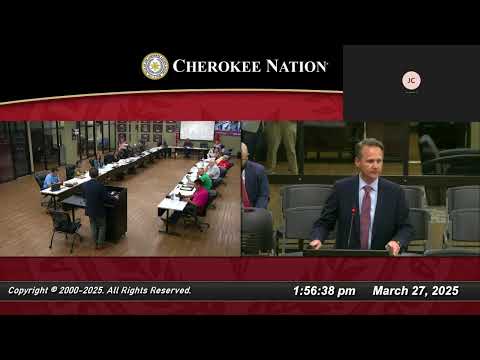
Chad Harsha, from the Cherokee Nation Office of the Attorney General, told the Rules Committee on March 27 that the Nation moved to intervene in a federal civil action brought by the United States that challenges actions by two Oklahoma district attorneys.
Harsha said the United States filed a civil action against District Attorney Matt Ballard in the Northern District of Oklahoma and District Attorney Carol Iskey in the Eastern District of Oklahoma, and that Cherokee Nation moved to intervene to represent its interests in criminal jurisdiction. "The United States has weighed in in support of us, entering into the case," Harsha said. He added that briefing schedules have been consolidated and aligned with a similar action filed by the Muscogee Nation.
The attorneys office also flagged a recent opinion from the Oklahoma Court of Criminal Appeals in the Stimpy Tulsa case. Harsha said that opinion, like the earlier O'Brien decision, "pronounc[es] that the state has concurrent jurisdiction with tribes for non member Indians that commit crimes within a tribe's respective reservation." He said Cherokee Nations legal team continues to believe those state-court conclusions are not consistent with the law and that federal court is the appropriate forum to resolve the dispute.
Harsha reported the named defendants filed a motion to dismiss and said the Nation is preparing a response. He invited questions from the committee; none were recorded in the made-for-the-record update.
The update provides procedural context but did not announce any new court rulings, deadlines, or changes to on-the-ground enforcement. Harsha described the litigation as ongoing and procedural: consolidated briefing is under way, a motion to dismiss has been filed by the defendants, and Cherokee Nation is responding in federal court.
The committee did not take any formal action on the litigation update during the March 27 meeting.
Looking ahead, Harsha indicated the Nations litigation team will continue to file responses and participate in the consolidated briefing schedule in federal court.