Get Full Government Meeting Transcripts, Videos, & Alerts Forever!
Get email alerts on the Language Revitalization topic
No spam. Unsubscribe anytime.
Cherokee Nation language department outlines teacher‑training grant, digital dictionary and large audio archive project
Summary
Howard Paden described a new teacher-support grant launching in August, a Saving the Voices audio archive of 936 recorded speakers being transcribed and time‑stamped, and work on an online dictionary and immersion teacher proficiency program aimed at raising classroom Cherokee proficiency.
The Cherokee Nation Language Department presented a multi-pronged plan for language revitalization on April 3, including a teacher-support program set to begin in August, an extensive audio‑archival transcribing effort and work toward an online dictionary.
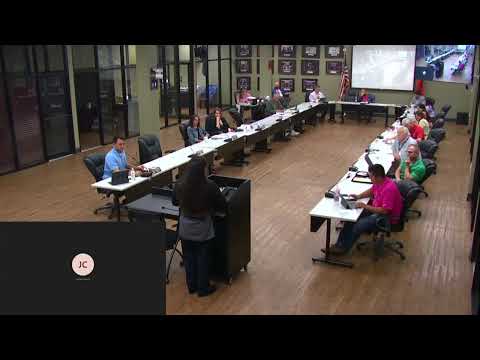
"We got a new a new grant that will allow us to come in and hire a couple of of substitute teachers that's also graduates from Master Apprentice and, circulate them in our school or put them in the classroom where we can pull teachers out to work on their language," said Howard Paden, speaking for the language department. He told the council the program will rotate teachers out of the classroom for language and curriculum coaching and will start in August.
Paden described archival and app work that the department calls the Saving the Voices program. "We recorded. It was 936 speakers thus far," he said, and staff are transcribing interviews and time‑stamping individual words so app users can hear a speaker say a word and also hear the sentence in which it appears. Paden said the department is currently time‑stamping the four gospels of the New Testament recordings to capture variant usages — he said there may be "about 24,000 different nuances" within those recordings.
The department also reported improvements to case management and tracking through Salesforce, which Paden said helps staff coordinate follow‑up with speakers and other participants. He noted work on a 50th‑anniversary edition of a Cherokee‑English dictionary (2,000 copies produced) and described early‑childhood immersion gains, including a two‑year‑old in the program who speaks Cherokee as a first language.
Council members asked whether the monthly speakers meetings are always held in Tahlequah; Paden said they are generally in Tahlequah but the department is considering rotating locations and provides transportation support for elders when needed.
Paden said the teacher‑support program and the dictionary/app projects aim to strengthen classroom proficiency and preserve audio examples of fluent speakers for future learners.