
Lancaster ISD special education update: 854 students served, staffing described as fully supported with contract staff
Get AI-powered insights, summaries, and transcripts
Sign Up Free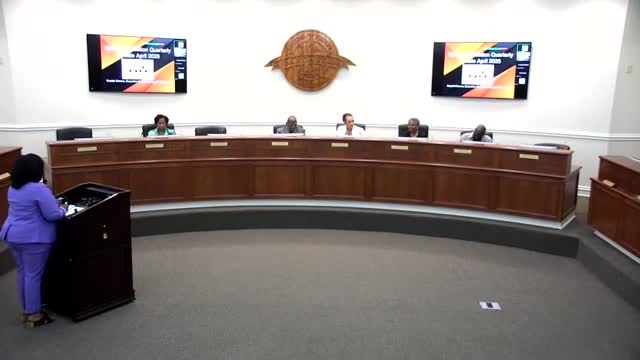
Summary
Executive Director of Special Education reported staffing levels, caseloads and program highlights, noting 854 students receiving services, growth in autism counts, monthly parent engagement and new 18-plus transition programming.
Ms. Cromer, executive director of Special Education for Lancaster ISD, gave the board a quarterly update on March 27, reporting current caseloads, staffing and recent program work.
Ms. Cromer said the district served 854 students receiving special education services (figure reported as of the Monday before the meeting). She told trustees that 98 initial requests for full and individual evaluations (FIEs) were made this school year, that 91 students were determined eligible for services following evaluation, and that 15 referrals came from Early Childhood Intervention (ECI), of which 12 were eligible for services.
Staffing numbers presented by Ms. Cromer included six central-office administrative staff, 13 instructional-support staff (coordinators, instructional specialists and behavior specialists), eight service providers for therapies (speech, occupational, physical, adaptive PE), 15 evaluation staff (diagnosticians and related specialists), 48 special education teachers and 60 paraprofessionals. She said the district counts 38 staff in the evaluation/related-services group when contracted staff are included.
On disability categories, Ms. Cromer provided the district head-counts she used for planning: 291 students with a learning disability (including students served for dyslexia), 172 students identified with autism, 109 with speech impairment, 103 with intellectual disability and 98 listed as other health impaired.
State-reported monitoring metrics were described as improved in most areas: Ms. Cromer said Lancaster raised its child-find accuracy for SPP 11 to 99 percent and had strong outcomes in several state performance-plan indicators. She also reported six special-education complaints during the year; three were fully investigated and corrective action was required, two were not investigated because no noncompliance was found or a parent withdrew the complaint.
The special education office has increased parent engagement from about three meetings last year to a monthly parent meeting schedule this year and held a first annual transition fair that included colleges, workforce and health resources for families. Ms. Cromer highlighted professional learning for staff in standard-based IEPs, accommodations, STAR readiness, co-teaching and inclusive practices. She described new and continuing programs such as the 18-plus transition program, sensory supports for campuses, an annual transition resource fair and expanded Special Olympics activities.
Board members asked for comparative trend percentages for autism and other categories so the board and public can see multi-year changes; Ms. Cromer said she can supply prior years' data. Trustees also asked whether special education was fully staffed and whether services were up to date; Ms. Cromer said the district is fully staffed including contracted personnel and that services are current, with summer services planned.
Ms. Cromer closed by noting the reduced reliance on attorneys for complaint resolution this year and by thanking campus and central-office staff for the work on services and engagement.