Get Full Government Meeting Transcripts, Videos, & Alerts Forever!
Get email alerts on the Bond Survey topic
No spam. Unsubscribe anytime.
Consultant survey shows initial voter support for possible Combs Unified bond; safety and HVAC top priorities
Summary
High Ground Public Affairs presented a 300-sample telephone survey showing pretest support for a potential bond at about 58% and a post-education support level of about 62%; safety, HVAC and CTE upgrades scored highest among tested projects.
The J O Combs Unified School District governing board heard results of a community bond survey conducted by High Ground Public Affairs that found initial viability for a proposed facilities bond and identified safety, heating/air conditioning and career-technical upgrades as the highest-priority items among likely voters.
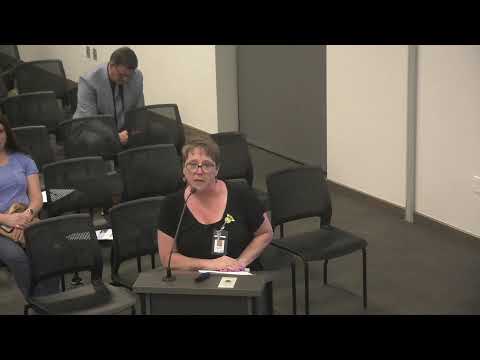
Paul Bence, senior vice president of research and strategy for High Ground, told the board the survey was a live-operator telephone poll of 300 likely voters conducted Feb. 25–27 and balanced by age, party and precinct. In the firm's ballot-language pretest the measure drew about 58% "yes" to 30% "no." After reading project information and reasons to support the bond, the post-test rose to roughly 62% yes and 27% no.
Why this matters: the survey gives district leaders an early read on whether to place a bond question before voters and which project descriptions will resonate most during public information efforts.
Methodology and key findings - Sample and fielding: High Ground used live callers to both landlines and cell phones; sample N=300; the data were weighted for age, partisanship and geographic precincts to reflect likely turnout in an off-cycle election. - Baseline and post-education support: Baseline (ballot-style pretest) was roughly 58% yes/30% no; after randomized exposure to project descriptions and reasons to support, the post-test moved to about 62% yes/27% no. Bence described that rise as an encouraging sign of viability. - Priority projects: Voters rated school safety and security, heating and air conditioning, and career and technical education upgrades among the highest priorities (mean scores in the 4.3–4.5 range on a 1–5 importance scale). Synthetic turf and exterior improvements scored lower. - Opposition themes: The strongest negative themes were general anti-tax sentiment and fixed-income concerns for older voters. Bence recommended messaging that clearly explains the tax-rate implications because some voters treat a bond that preserves the current rate as effectively a tax increase.
Quotes from the presentation - Paul Bence (High Ground): "This type of survey research shows us that, certainly if it was below 50% that would be a problem. In this case, you see we have a good deal of viability." Bence added that safety and CTE "rise to the top as priorities." - Board member Shelley (Governing Board member) cautioned public messaging: "When you guys say that it's not gonna raise the taxes, that's a little deceiving ... I think that we need to educate and be just put it out there." That line of questioning prompted staff to say the bond committee will include explanations in a public pamphlet.
Next steps discussed by the board - The district bond committee will present proposed project groupings and budgets at a special meeting on April 23; staff said the committee is considering an approximate $80,000,000 package as a working figure. - The board indicated it would likely decide whether to place a bond question on the May 14 ballot after reviewing the committee's recommendation and communications materials. Staff emphasized that the ballot language itself is what voters will see and that campaigning and education typically affect post-test results.
What the survey did not determine - The survey measures current attitudes of likely voters and cannot guarantee a final election outcome; Bence stressed the difference between pretest/post-test survey results and an actual ballot count.
Ending: Board members and staff agreed to use the survey results to refine project priorities and communications materials and to schedule further public education and bond-committee work ahead of the next meeting where a decision could be taken.