Get Full Government Meeting Transcripts, Videos, & Alerts Forever!
Get email alerts on the Bond Expenditures topic
No spam. Unsubscribe anytime.
Board reviews $60 million in bond spending; members press for transparency on Atkinson event center and security upgrades
Summary
Board members received a district presentation outlining how the voter‑authorized $60 million bond has been spent, including security fencing at every campus, cafeteria and restroom renovations, athletic field work and the Atkinson event center. Several members pressed staff for clearer timelines, cost breakdowns and documentation of outcomes and
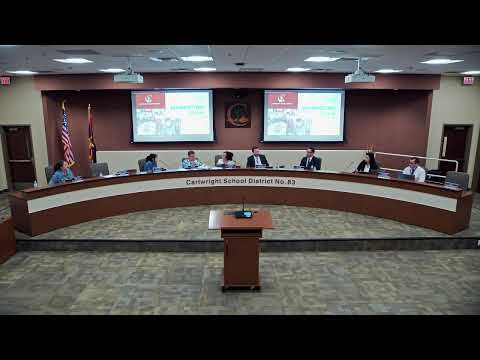
Cartwright Elementary District governing board members received a detailed presentation April 9 summarizing expenditures and projects funded from the voter‑authorized bond program and pressed staff for greater transparency about specific projects, cost increases and community communication.
Superintendent Watson and Dr. Medrano presented a slide deck and supporting spreadsheets (included in the public board packet) showing the bond sale and spending timeline and a per‑school breakdown of capital project amounts. Staff said voters authorized $60 million; bond sales were phased and the district has spent roughly $57.6 million to date with approximately $2.5 million unencumbered at the time of the presentation. The projects cited included upgraded perimeter fencing and safety measures at all campuses, restroom renovations, cafeteria remodels, a new or renovated athletic field with a rubberized track, several new gymnasiums at middle schools and an event center at Atkinson.
Dr. Medrano explained the safety upgrades were undertaken after the May 2022 Uvalde school shooting and described the district'7s process: a school safety task force made up of administrators, staff, SROs and parents reviewed campus vulnerabilities and recommended raising perimeter fencing to a minimum of six feet at schools with additional iron fencing and privacy screening where needed. Dr. Medrano said every school received perimeter security fencing as part of the program.
Board members asked for more granular documentation and historic context. Vice President (Ms.) Cantu and others requested a future presentation quantifying the operational impact of the improvements (for example, whether renovated cafeterias increased lunch participation or produced other measurable student outcomes) and the return on investment for solar and other energy-related projects. Members also asked for clarity about how project priorities were set; staff said needs were identified through superintendent listening tours, the parent advisory council and other stakeholder input and then prioritized as part of the bond planning process prior to the election.
Project amounts by site (figures presented by staff)
- Atkinson (event center included): $7,000,000 - Borman: $8,000,000 - Downs: $5,500,000 - Desert Sands: $4,400,000 - Spitalny: $2,800,000 - Castro: $2,000,000 - Palm Lane: $2,400,000 - Pena: $1,700,000 - Peralta: $1,300,000 - Starlight Park: $1,500,000 - Harris: $6,600,000 - Estrella: $1,600,000 - Jonathan Long: $1,000,000 - Berry (Head Start facility): $537,000 - CECC: $600,000 - District office: $400,000 - Office annex: $66,000 - Training center: $1,446,000 - Transportation: $509,000 - Additional schools and projects listed in the presentation bringing the total expended to about $57,600,648
Staff described specific causes for increases on some projects, including unforeseen infrastructure work discovered during construction. As an example, staff said a buried sewer line at the Atkinson gym required a more extensive replacement than anticipated, and the project'7s audiovisual scope expanded after the remodel plans changed; those factors contributed to costs rising above initial line‑item estimates. Dr. Medrano and Dr. Etheridge said the additional infrastructure and audio‑visual work did not exceed the guaranteed maximum price for the construction contract but that extra audiovisual components and separate equipment funds were added to the site budget and coded outside the core construction scope.
Several board members said they hear from taxpayers who want clearer public notice and easy access to bond spending records; one member noted a constituent who expected a project at her child'7s school and was surprised to learn that priorities or project phasing had changed. Staff said bond project lists, expenditures and carry‑forward amounts are available in the publicly posted board documents and that project spending is tied to the bond categories presented to voters.
Board members requested further follow‑up materials: a full timeline of bond sales and expenditures by year, documentation of the process used to determine project priority, an explanation of any increases versus original estimates and, at a later date, evidence on how renovated facilities affect student or staff experience. Dr. Medrano and staff agreed to return with deeper briefings and to include metrics where possible (for example, participation data for updated cafeterias and energy‑savings documentation for solar installations).
Ending: The presentation closed with staff confirming remaining unencumbered bond funds of roughly $2.5 million and a commitment to return with project‑level timelines, explanations for cost changes and a public‑facing summary the community can consult.