Get Full Government Meeting Transcripts, Videos, & Alerts Forever!
Get email alerts on the Digital Taxation topic
No spam. Unsubscribe anytime.
Minn. committee adopts A1 amendment to social-media excise tax bill and lays House File 31-17 over for 2025 tax package
Summary
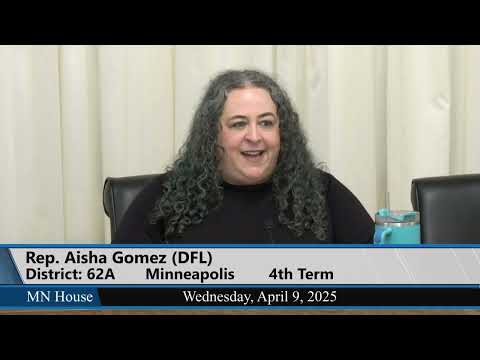
The Minnesota House Taxes Committee voted to adopt an A1 amendment clarifying covered platforms and laid over House File 31-17, a proposal by Chair Gomez to impose a per-user excise tax on social media platforms that mine Minnesota users' data.
House File 31-17, carried by Chair Kelly Gomez, would create a monthly excise tax on social media platforms based on the number of Minnesota residents whose data the platforms collect and process. The House Taxes Committee adopted an A1 amendment clarifying that the text refers to social media platforms and then laid the bill over for possible inclusion in the 2025 omnibus tax bill.
The bill’s sponsor, Chair Kelly Gomez (Representative), told the committee the measure “imposes an excise tax on social media companies based on the number of Minnesota residents who use their services in a month and whose data they are mining.” Gomez said the tax is intended to make platforms that profit from data mining “paying for some of the social costs” linked to their services.
Under the version described in committee, the proposal sets a graduated monthly excise schedule as explained by Chair Gomez: no tax for platforms with fewer than 100,000 Minnesota users in a month; for 100,000–500,000 users, a rate described as “10¢ a person over a $100,000”; for 500,000–1,000,000 users, “$40 plus 25¢ per head”; and for platforms with more than 1,000,000 Minnesota users, “$165,000 plus 50¢ times the number of consumers.” Those numbers were presented by Gomez during her floor description of the bill.
The committee first took up and approved the A1 amendment. Committee leadership announced the amendment came from the Minnesota Chamber of Commerce and that it provides “brief clarifying language” identifying social media platforms as the entities covered. The committee voice-voted the A1 amendment; the chair declared the amendment adopted.
Public testimony split along familiar lines. Pastor Julie Thompson of St. Stephen Lutheran Church in White Bear Lake urged support, saying the tax would allow Minnesota to “take back a small amount of the profit that these companies have derived from our suffering” and invest it in the state. Wendy Paulson, president of the Minnesota Broadcasters Association, warned the bill’s definitions are broad and could unintentionally sweep in local broadcasters that use digital tools and cross the 100,000-user threshold. Paulson said the association is continuing to evaluate the bill’s potential impact on medium and large local broadcasters.
Labor and community groups testified in favor. Tanner Fritzinger, political affairs coordinator at the Minnesota Association of Professional Employees, said the excise tax is “an innovative and reasonable proposal to increase Minnesota’s revenue” amid uncertainty in federal funding. Eric Bernstein, director of We Make Minnesota, called the measure a type of Pigouvian tax on harmful side effects of mass data collection and urged lawmakers to expand the tax base into fast-growing, lightly taxed industries.
Opponents included Deb Peters, speaking for Americans for Digital Opportunity, who said the bill could harm Minnesota consumers and small businesses that rely on online advertising. Peters also raised legal concerns, telling the committee the proposal “risks violating the permanent Internet Tax Freedom Act” and may be vulnerable under the Commerce Clause. Committee members asked the Department of Revenue’s revenue estimate questions about administrability; the department’s analysis in the committee packet estimated 14 platforms would be subject to the tax in fiscal 2026 but did not list specific taxpayer names in committee testimony.
Committee members expressed a range of policy views during member discussion. Representative Mike Swadzinski urged parental responsibility as a response to online harms and warned of costs passed on to small businesses. Chair Jamie Stevenson framed the bill as a public-health funding mechanism, likening social media’s societal impacts to other regulated products and saying platforms should “foot their share of the bill.” Representative Terry Johnson questioned administrative and privacy implications for tracking Minnesota users; Chair Gomez pointed to the Department of Revenue estimate and its stated administration plan. Several members noted Minnesota’s recent consumer data privacy law when discussing technical feasibility; Representative Elkins referenced that law as evidence firms already know users’ states from IP and device location data.
The committee took two formal actions recorded on the transcript: adoption of the A1 amendment to House File 31-17 and a motion by Chair Gomez to lay the amended bill over for possible inclusion in the 2025 taxes omnibus bill. The chair announced the bill was laid over.
The bill will be eligible for consideration during omnibus tax bill negotiations. Committee testimony, questions to revenue staff and the split in public comment indicate the measure faces substantive legal, administrative and policy debate as it moves forward.