Get Full Government Meeting Transcripts, Videos, & Alerts Forever!
Get email alerts on the Local Option Sales Tax topic
No spam. Unsubscribe anytime.
Lawmakers debate framework to allow local-option sales taxes; cities and counties urge refinements
Summary
Chair Gomez presented HF3027, a bill proposing a framework to allow certain cities to adopt local-option sales taxes without special legislation; municipal and county associations supported the principle but raised concerns about strict ballot requirements, required interjurisdictional approvals and a 15% revenue-sharing formula.
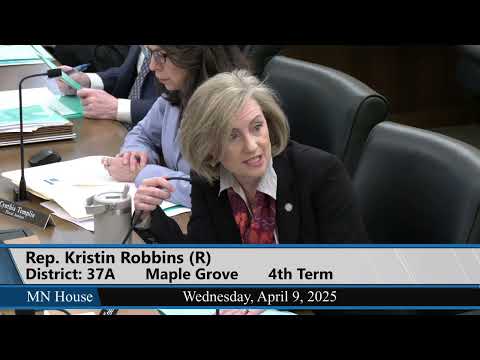
Chair Gomez presented House File 3027 to the House Taxes Committee on April 9 as a framework intended to permit certain local-option sales taxes for capital projects without requiring special legislative authorization each time.
Gomez said the bill seeks to balance local tools for financing capital projects with statewide equity concerns, arguing that a patchwork of ad hoc local taxes can create "winners and losers" where access to retail tax base determines whether a locality can fund public amenities. The framework would allow cities to propose voter-approved local sales taxes for enumerated capital projects and include an equalization mechanism to provide revenue sharing to jurisdictions with smaller retail bases.
Testimony from local government associations acknowledged the need for clearer rules but asked the committee to revise multiple provisions. The Association of Minnesota Counties urged adding correctional facilities and county jails to the list of eligible projects, noting large capital needs in some rural counties. The Coalition of Greater Minnesota Cities said provisions requiring "resolutions of support from surrounding communities" could create a de facto veto and expressed concern the proposed revenue-sharing rate would render many projects financially infeasible. The Minnesota Association of Small Cities and Metro Cities both supported clearer rules and equalization but sought lower required sharing rates and less prescriptive community-support requirements. The League of Minnesota Cities said it supported broad authority for voter-approved local sales taxes without special legislation but asked to work on ballot-language and commingling technicalities.
Committee members asked about the bill's intent and mechanics; supporters emphasized the goal of providing a predictable path for cities to use a tool that many places already seek by special authorization. Several witnesses said the bill as drafted contained a number of procedural hurdles that would push some local governments back to asking the legislature for special bills instead of using the general framework.
Chair Gomez said the bill is intended as a starting point for conference negotiations and asked stakeholders to continue working with the committee. HF3027 was laid over for possible inclusion in the 2025 taxes omnibus bill.