Get Full Government Meeting Transcripts, Videos, & Alerts Forever!
Get email alerts on the Historic Preservation topic
No spam. Unsubscribe anytime.
Historic arastra at Old Iron Town highlights early iron-processing technology
Summary
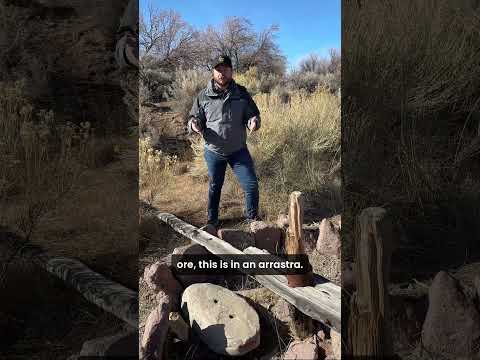
At Old Iron Town in Iron County, Utah State Historic Preservation Officer Chris Merritt described an arastra — a 19th-century European ore-grinding device used in the Intermountain West — and its role in early iron production tied to the settlement of Cedar City and surrounding communities.
Chris Merritt, Utah State Historic Preservation Officer, described an arastra on-site at Old Iron Town in Iron County as an early ore-processing device brought from Spain and used across the Intermountain West.
“This is an arastra,” Merritt said, explaining that the shallow basin would have been filled with powdered sand, limestone and iron ore and that a horse or a person would walk in a circle on a wooden beam to grind the mix with a large stone pivot. Merritt said the grinding made the ore easier to use in furnaces that produced iron for settlements in the area.
Merritt said Old Iron Town was a primary reason Cedar City and nearby settlements were established: settlers sought local iron to supply the Utah Territory. He described the arastra on display as more than a century old, saying it has “been sitting out here for a hundred and 50 years or more.”
The description tied the technology to broader regional history, noting that the arastra represents an example of European equipment adapted to local mining and smelting practices in the 19th century. Merritt characterized the artifact as a visible trace of how early industrial technology and Utah settlement history overlapped.
The site demonstration did not include policy proposals, votes or formal actions. It was presented as interpretation and historic context for the public and visitors to Old Iron Town.