Get Full Government Meeting Transcripts, Videos, & Alerts Forever!
Get email alerts on the Teacher Pay Nbct topic
No spam. Unsubscribe anytime.
Board funds state‑defined low‑performing schools for $7,000 NBCT incentive; broader proposal fails
Summary
After divided debate on fiscal sustainability, the Board of Education approved funding only the state‑defined low‑performing schools for the $7,000 nationally board‑certified teacher incentive and declined to add the wider set of locally‑identified schools.
The Howard County Board of Education voted Wednesday to fund the $7,000 incentive pay required by the Maryland Blueprint for state‑designated low‑performing schools and to continue payment to teachers already receiving the adjustment, but it rejected a proposal to extend the incentive to an expanded roster of additional local flexibility schools.
Mary Clive, coordinator of data literacy and coaching, told the board the Blueprint requires the $7,000 payment at two state‑defined schools and identifies six additional local‑flexibility schools where the district may choose to provide the incentive. Board members exchanged questions about long‑term cost and whether a broader list would lock the district into future permanent obligations.
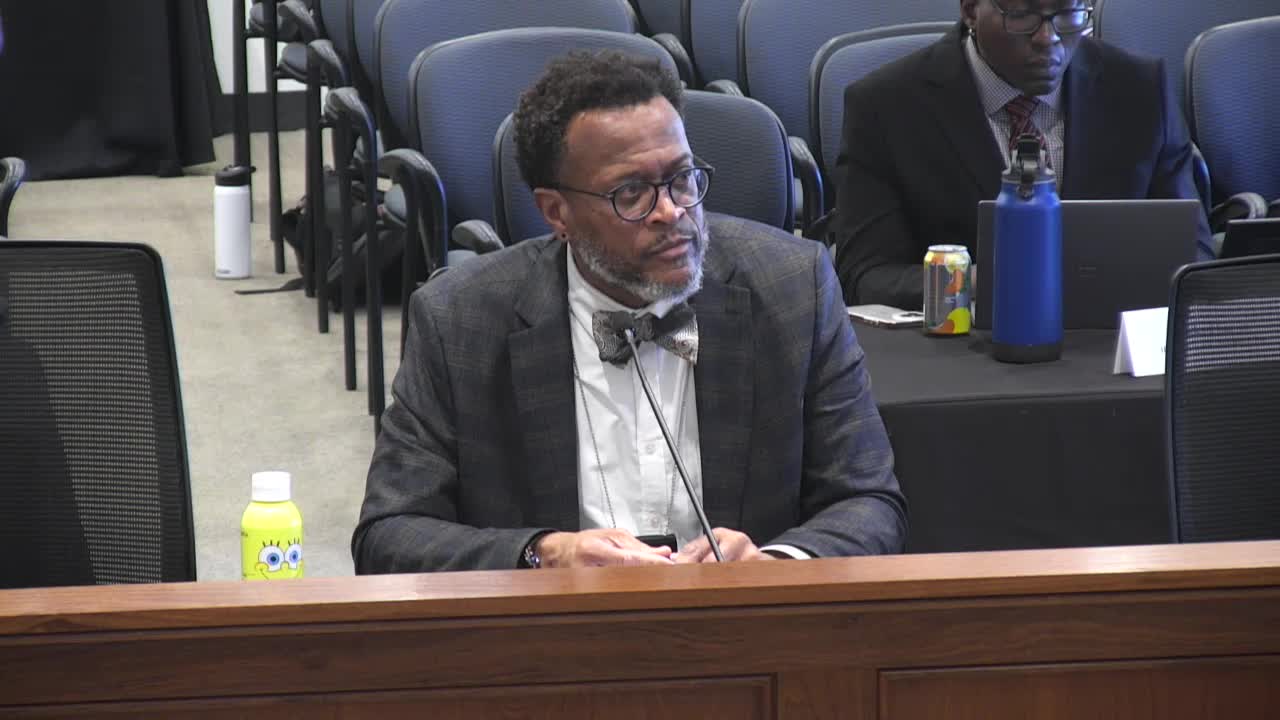
Board Member Malo (appearing in the record as Miss Mallow in roll calls) moved to fund all eligible schools, arguing that the modest additional investment would bring highly accomplished teachers into the schools facing the greatest challenges. “These nationally board certified teachers have undergone rigorous professional development that research shows directly improves student outcomes,” she said. The motion failed on a 1‑5 vote.
Board Chair Mosley then moved the narrower option — funding only the state‑required schools (and continuing payments for teachers already receiving the incentive at archived schools). After discussion clarifying that teachers who already receive the larger national board stipend would continue to receive existing compensation, the board approved the narrower motion 4‑1‑1.
Board members who opposed expanding the incentive cited uncertainty in state and federal budgets and the district’s fiscal constraints. “This is a decision. This never goes away,” Board Member Watts said, meaning the additional pay would persist as an ongoing expense. Supporters said the relatively small additional local cost could be a targeted equity investment to keep experienced teachers in high‑need schools.
The board did not change the statewide designation process; it exercised local discretion on whether to supplement the mandated funding at additional schools. Staff will communicate the list to the Maryland State Department of Education by the April 16 deadline, as required by Blueprint implementation guidance.