Get Full Government Meeting Transcripts, Videos, & Alerts Forever!
Get email alerts on the Food Security topic
No spam. Unsubscribe anytime.
WFP warns South Sudan faces catastrophic hunger as violence displaces communities
Summary
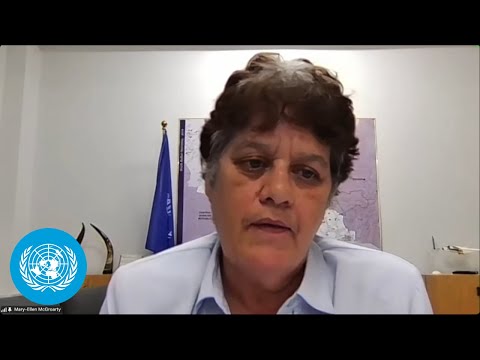
World Food Programme Country Director Mary Ellen McGorty told a United Nations Association briefing that renewed fighting and displacement in South Sudan have pushed more than half the country into crisis-level food insecurity and left critical aid unreachable; WFP says it needs $396 million to reach 4.5 million people through December.
Mary Ellen McGorty, the World Food Programme country director in South Sudan, told a briefing hosted by the United Nations Association that renewed violence in parts of the country is driving people from their homes at a time when the annual "lean season" is already pushing hunger to its peak.
"Nearly 7,700,000 people, that's over half the population, are already facing crisis, emergency or catastrophic levels of hunger here in South Sudan," McGorty said, describing what she called among the worst levels of food insecurity the country has seen since independence.
McGorty said the renewed fighting and fragmentation of armed groups in the Greater Upper Nile region have compounded cyclical food shortages, climate shocks and supply-chain disruptions. She said about 40 percent of the 7.7 million people are in the Greater Upper Nile and that "over 60% of the population in the Greater Upper Nile Region are acutely food insecure. They cannot secure a meal a day for their family." WFP has paused operations in areas it cannot safely reach, she said.
The WFP official said teams are unable to reach more than 213,000 people in six counties because of active fighting, and that looting has taken a toll on relief supplies. "In the last few weeks... over a hundred metric tons of food, particularly nutrition supplies, have been looted in the midst of the conflict," she said, noting that the supplies were intended in part for children in regions where malnutrition rates are already high.
McGorty also warned that a cholera outbreak and the approaching rainy season increase the risk to displaced and isolated communities. She said the war in neighboring Sudan has driven more than 1,100,000 people into South Sudan, many arriving with nothing, and that food prices in states bordering Sudan have risen sharply because of disrupted supply chains.
To maintain and expand operations through December, McGorty said WFP needs $396,000,000 to reach 4.5 million people; she said that amount represents a shortfall and that funds had not yet been secured. She emphasized the need to preposition food stocks ahead of the rains so communities cut off by flooding can still be reached. McGorty added: "The people of South Sudan, they deserve freedom from the prison of conflict. They deserve freedom from the prison of hunger, and they deserve our attention and support."
Journalists in the briefing asked about deaths linked to the inability to deliver aid, and McGorty said public-health impacts are already occurring, including deaths related to cholera, and that the situation will worsen if access remains limited.
There were no formal actions or commitments recorded in the briefing. McGorty called on local leaders and the international community to support humanitarian response and to pursue peace and stability so relief operations can reach those in need.