James Island presents draft FY2025–26 budget featuring new emergency response department and $1.2M in capital projects
Loading...
Summary
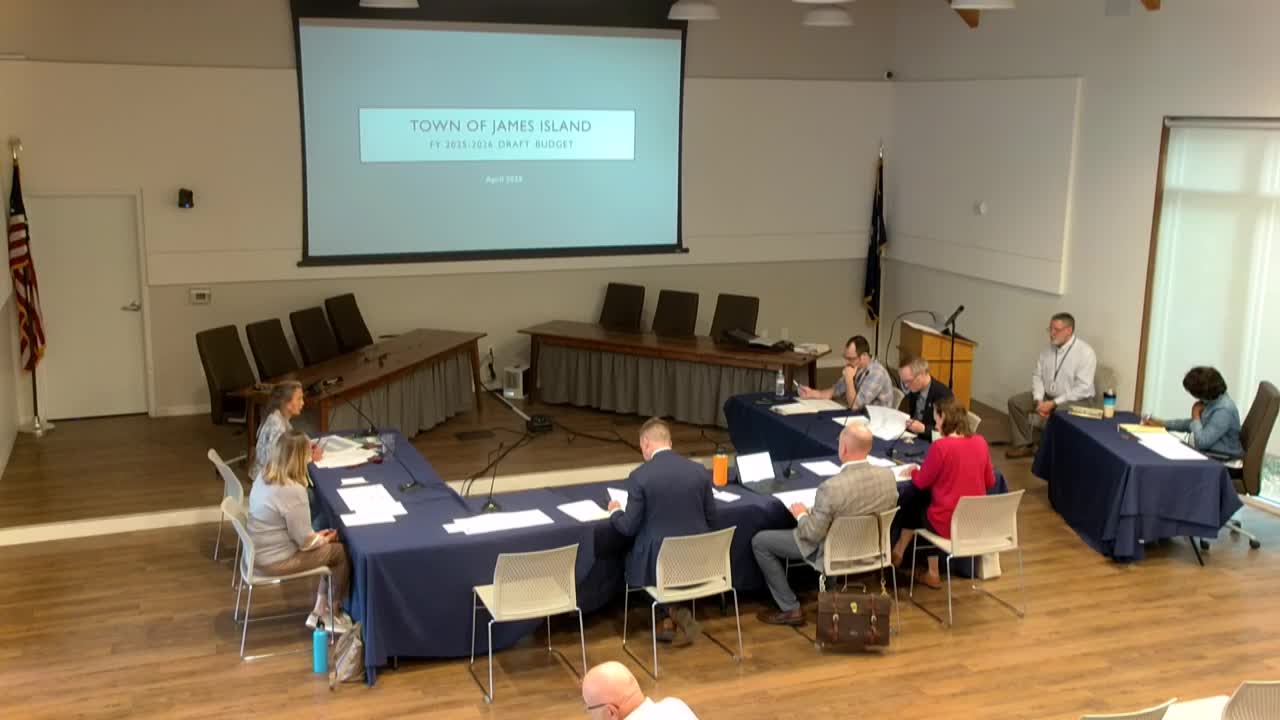
Town of James Island officials on April 9 reviewed a draft town budget for fiscal 2025–26 that staff said will be refined before a public hearing on May 15 and second reading on June 19.
The presentation, led by Mike Hammer (staff member, budget presenter), laid out estimates for four primary funds — general, hospitality (H tax), accommodations (ATAX) and stormwater — introduced a new emergency response department in the operating budget and identified $1,239,000 in capital‑project allocations, of which about $1,153,000 are currently committed to ongoing or previously authorized projects.
Why it matters: the draft ties near‑term spending to several multiyear commitments and restricted revenue streams. Staff warned that if several committed projects draw funds in the same fiscal year, the town may need to use reserves or reprogram restricted funds.
Most important figures and program changes - General fund: staff estimated a rough general‑fund balance of about $2.5 million; an initial page in the draft showed a $730 surplus with revenues and expenditures laid out for the coming year. Hammer noted earlier assumptions included a potential $600,000 legislative grant that, according to a later update in the meeting, has been cut for the current year. - Capital projects: total proposed capital allocations of $1,239,000, with $1,153,000 identified as committed. Specific commitments called out in the presentation include $58,800 for Honey Hill paving, $223,000 for Dills Bluff phase 4 (listed as a larger, multi‑phase project), a $235,000 CTC commitment for a neighbors phase 1 project, and approximately $1.5 million anticipated as a pass‑through for Public Service District (PSD) sewer/septic connection work. Staff said another $444,000 was currently being drawn by PSD and might be paid this year. - Hospitality and accommodations taxes: Hammer described the hospitality tax fund as holding operating and capital sides. He noted approximately $715,000 in estimated hospitality tax revenue and described a $400,000 commitment to rethink Folly Road phase 1 (sidewalk work), a multi‑year Millpointe annual payment of $661,176 through 2029, and capital support for the proposed James Island Arts & Community Center (JIAC) spread across budget years. - New operating grouping: staff proposed creating an “emergency response” department in the operating budget to consolidate items such as crime‑watch materials, radio contracts, generator maintenance, PPE and public‑outreach costs tied to emergency preparedness. Hammer said the change is a budget‑presentation reorganization rather than a proposal to hire additional staff. - Public works and parks: public works and parks maintenance budgets reflect added responsibilities, including Hillman Lot, Millpointe Park, town hall maintenance, the dog‑station replacement/maintenance program and contracted maintenance at Millpointe (Johnny Miller). Groundskeeping was noted at roughly $65,000 in estimates.
Notes on restricted funds and the town tree fund Staff discussed the town’s tree fund, which Hammer said was created by ordinance in the zoning code and is locally restricted to tree mitigation and maintenance. The fund shows an irregular history of receipts; staff said a prior Dominion settlement had produced a large deposit (discussed as an earlier item in the record) that was mostly spent on legal and expert fees, leaving a relatively small net. Council members and staff asked finance staff to locate settlement documentation and to confirm whether any balances could be moved to the general fund (journal entry) and used for legal fees or other purposes; staff agreed to research the matter further.
Project planning and potential purchases Hammer identified several projects that could affect cash flow: replacement of large equipment (a vac truck was discussed at an estimated $600,000), ongoing sidewalk and drainage projects, Dock Street Park and Millpointe Park improvements (pavilions and restrooms were listed at $250,000 and $350,000 respectively in the hospitality tax capital list), and potential land acquisition for Dills Bluff (about $400,000 noted). He warned that if multiple large items come due in one fiscal year the town may need to use reserves or reprogram restricted funds.
Staff direction and next steps The council scheduled its first budget hearing for May 15 and the second reading of the budget ordinance for June 19. Staff said they would make the minor revisions discussed at the workshop, refine revenue and reserve estimates (including removal of the cut legislative earmark), and circulate updated documents before the public hearing. Hammer said the presentation was designed for the public and invited council members to suggest clarity improvements.
Direct quotes from the presentation and meeting Mike Hammer (staff member, budget presenter): “This is our draft. It’s gonna change.”
Context and process notes No formal votes were recorded during the workshop; the session was a staff presentation and council discussion of the draft budget, allocations and project timing. Several topics raised during the meeting — including the tree‑fund restrictions, whether hospitality tax proceeds may be used for land acquisition tied to hospitality uses, and the timing of PSD pass‑through payments — were flagged for staff follow‑up rather than immediate council action.
Ending Staff will circulate a revised draft incorporating the changes discussed, confirm documentation related to the tree fund settlement, and return for the public hearing on May 15. The council adjourned at the end of the workshop.