Get Full Government Meeting Transcripts, Videos, & Alerts Forever!
Get email alerts on the Measure W topic
No spam. Unsubscribe anytime.
Measure W implementation: staff outlines allocations and Desert Recreation District transition
Summary
Staff outlined how Measure W revenues would be split among five pillars and described the Desert Recreation District (DRD) annexation, quarterly billing, and reporting requirements. Council was reminded that LAFCO approves annexation and the county assessor handles tax collection.
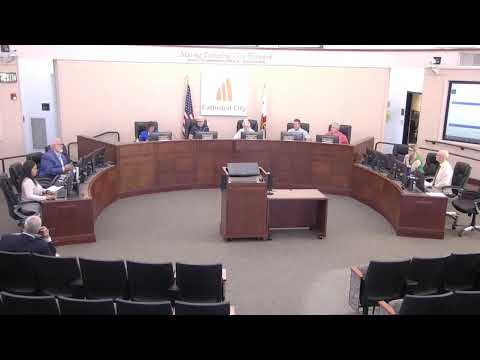
City staff presented a high‑level distribution plan for Measure W proceeds and the early operational steps tied to the Desert Recreation District (DRD) transition at the April 9 study session.
Kevin Biersack, Financial Services Director, told council staff modeled $5 million in annual Measure W revenue after the half‑cent use tax passed, with the first fiscal quarter (April–June) of the first year yielding roughly $1.25 million if full‑year estimates hold. Staff allocated Measure W into five pillars: ambulance services, community center programs and operations (and associated debt service), parks operations, and road improvements. The presentation showed planned expenditures for the initial quarter were about half of estimated first‑quarter revenue as staff phased in programs.
Biersack and staff discussed the DRD services agreement and transition timeline. The council was reminded that the city approved the fourth ambulance earlier (December) and that some firefighter/paramedic positions are funded by Measure W. DRD’s contract is scheduled to begin July 1; DRD will bill the city quarterly for contracted services and must submit annual accounting. Biersack said, “we will get a credit for the next year” if DRD spends less than budgeted, and that DRD must submit a budget by March 31 each year under the services agreement.
City staff reviewed the annexation and tax collection mechanics: the Local Agency Formation Commission (LAFCO) approves annexation of Cathedral City territory into DRD; the county assessor collects the property taxes and distributes them according to the tax‑sharing agreement. Staff also pointed to the possibility of pairing Measure W reserves with grant funding, development impact fee funds, and a future city bond to finance a community center’s capital costs when feasibility and financing details are finalized.
The council was told DRD will provide periodic reporting and a quarterly billing mechanism; staff said that if DRD’s costs run below estimates early in the program, the city may defer some quarterly payments or use the unspent funds as a reserve. Assistant city managers and finance staff planned follow‑up coordination meetings with DRD finance staff and the city’s Finance Advisory Committee to finalize billing processes and accounting timelines ahead of the July transition.
There was no council action at the April 9 study session; staff presented implementation steps and monitoring points and will return with budget details and further service agreement oversight language as needed.