Get Full Government Meeting Transcripts, Videos, & Alerts Forever!
Get email alerts on the Early Education Literacy topic
No spam. Unsubscribe anytime.
Sacramento Literacy Foundation urges county action after data shows most third graders behind
Summary
The Sacramento Literacy Foundation presented county supervisors with local third-grade reading data and requested county support for evidence-based “science of reading” interventions, classroom libraries and expanded book distribution to low-income children.
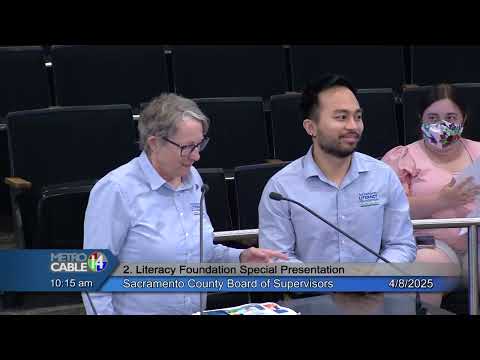
The Sacramento Literacy Foundation told the Sacramento County Board of Supervisors on April 8 that 62% of third graders in the county are not reading at grade level and asked the board to include literacy in future initiatives and municipal budgeting.
Messiah Malaris, with the Sacramento Literacy Foundation, told supervisors, "62 percent of third graders in Sacramento are not reading at grade level." He and the foundation’s staff outlined programs that give five culturally relevant books to under-resourced children and advocated adoption of the "science of reading," a set of instructional practices the foundation says can get most children to grade-level reading.
The foundation said it has delivered about 100,000 books over the past four years to Title I and high-poverty elementary schools and has served about 16,000 children through book giveaways. Presenters described planned efforts including putting a book in every child’s hand during clinic visits to the county’s "WellSpace" program and creating classroom libraries in Twin Rivers Unified School District first- through third-grade classrooms.
Messiah Malaris and April Javist emphasized the foundation’s tutoring and summer reading investments, and noted the group’s convening role with the Sacramento Literacy Coalition. Malaris said the group is tracking district-level outcomes — incorporated Sacramento third graders were reported at about 40% grade-level reading, unincorporated areas about 35% — and asked supervisors to consider local investments if state and federal education funding is reduced.
Supervisors asked about coordination with early-childhood programs and refugee and Head Start services. Supervisor Serna asked whether the foundation works with First 5; the presenter said she had reached out and recommended deeper coordination. Supervisors also suggested outreach to SETA and Head Start and offered to assist with connections to regional efforts and refugee services.
The presentation did not request a specific county appropriation at the meeting; presenters asked supervisors to "consider, you know, municipal budgeting" that prioritizes evidence-based literacy interventions. Several supervisors praised the foundation’s outreach and recommended follow-up to coordinate county programs with the foundation’s distribution and tutoring proposals.