Get Full Government Meeting Transcripts, Videos, & Alerts Forever!
Get email alerts on the Lifeline Program topic
No spam. Unsubscribe anytime.
Committee advances bill to let Californians apply for Lifeline without Social Security number, limits data sharing with immigration enforcement
Summary
The Assembly Communications and Conveyance Committee gave AB 1303 a do-pass recommendation, removing a Social Security number requirement for California Lifeline applications and adding restrictions on sharing subscriber data with immigration enforcement without a California judge-issued warrant.
AB 1303, a bill authored by Assemblymember Valencia that would allow people to apply for the California Lifeline program without providing a Social Security number and would restrict sharing subscriber information with immigration enforcement, was given a do-pass recommendation by the Assembly Communications and Conveyance Committee.
The measure would clarify that a Social Security number is not required to apply for Lifeline and would prohibit the California Public Utilities Commission (CPUC) from sharing personal subscriber information with immigration enforcement agencies absent a California judicial warrant or subpoena. The committee voted to refer AB 1303 to the Committee on Judiciary with a do-pass recommendation.
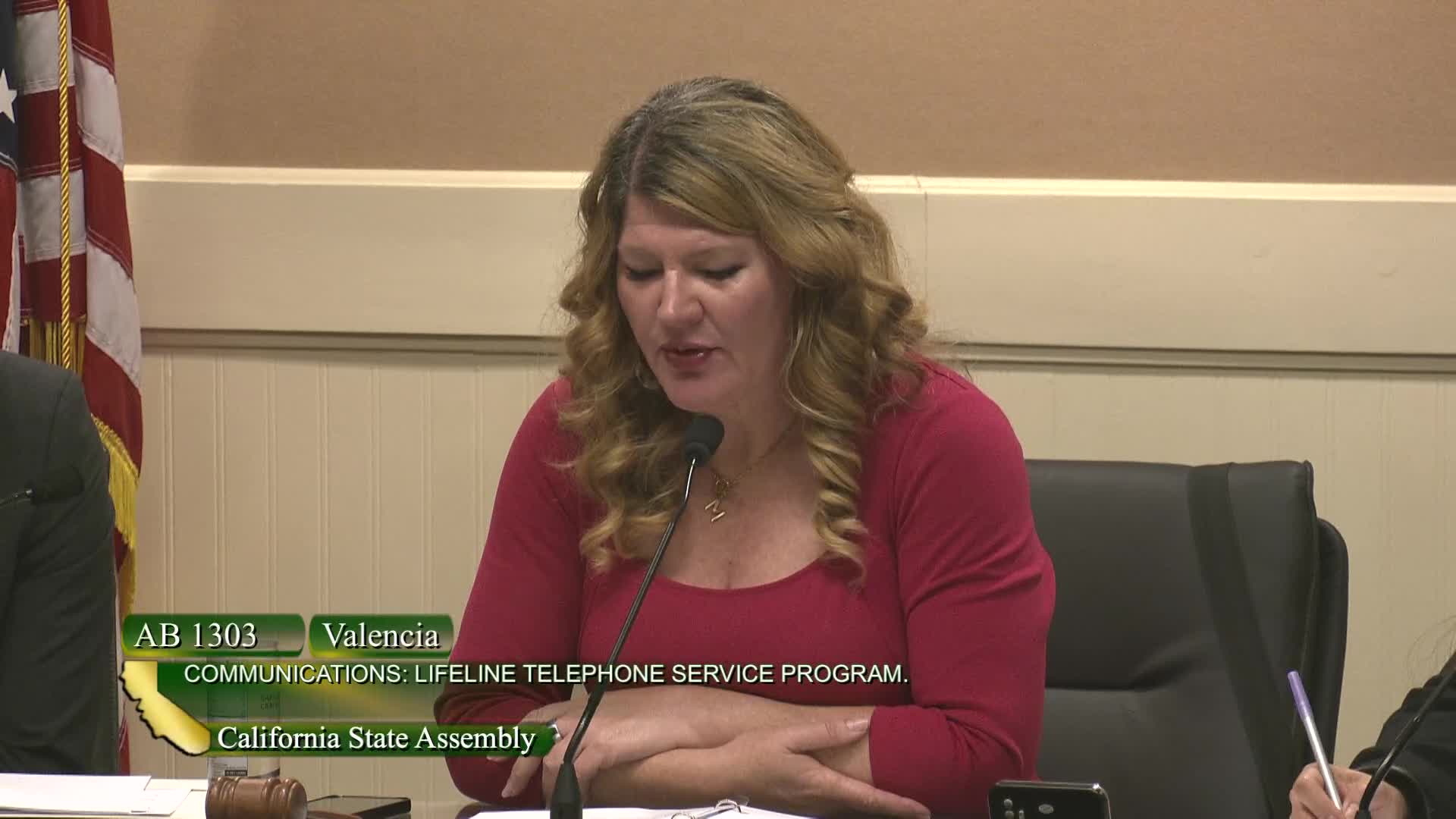
Assemblymember Valencia, the bill’s author, told the committee AB 1303 “aims to increase participation in the California Lifeline program by specifying that a Social Security number is not needed to apply.” Valencia said the measure also “protect[s] program subscriber privacy by prohibiting the CPUC from sharing any personal information with immigration enforcement without a court issued warrant or subpoena.”
Adrienne Tinnan, director of Race, Equity and Legislative Policy at TURN (The Utility Reform Network), testified in support and told the committee that although a CPUC decision in February 2014 said Social Security numbers were not needed to verify Lifeline applicants, “the Commission has not implemented this decision to date, meaning eligible people are being denied access to the program.” Tinnan also emphasized that Lifeline is funded by surcharges on California phone lines rather than state general fund dollars and argued that people who have helped pay into the program are being prevented from enrolling.
Supporters described the bill as targeting multiple vulnerable groups who might lack or not want to provide a Social Security number, including people fleeing domestic violence, people experiencing homelessness, and victims of identity theft. Ignacio Hernandez of the Communications Workers of America District 9 also registered support.
Valencia and witnesses emphasized public-safety and access reasons for the change, saying reliable phone and internet access can help users call 911, receive emergency notifications and rebuild stability. The bill would also add language intended to keep the program compliant with federal law where applicable (the Personal Responsibility and Work Opportunity Reconciliation Act of 1996 was cited during testimony).
The committee recorded a 8–2 final margin in favor of advancing the bill. The committee’s do-pass recommendation sends AB 1303 to the Judiciary Committee for further consideration.
Votes at a glance: motion to do pass AB 1303 (mover: Assemblymember Lowenthal; second: Assemblymember Aarons) — outcome: passed; tally 8 ayes, 2 no.
The bill remains subject to further committee consideration in the Judiciary Committee, where more detailed legal and implementation questions may be addressed.