Get Full Government Meeting Transcripts, Videos, & Alerts Forever!
Get email alerts on the Voter Protections Elderly topic
No spam. Unsubscribe anytime.
Committee advances AB 919 to let power‑of‑attorney request confidential voter status for voters with cognitive impairment
Summary
The committee passed AB 919, a bill allowing a person with power of attorney for an adult with a documented cognitive impairment to apply for confidential voter status on that person's behalf, after testimony from disability advocates, county officials and the Secretary of State.
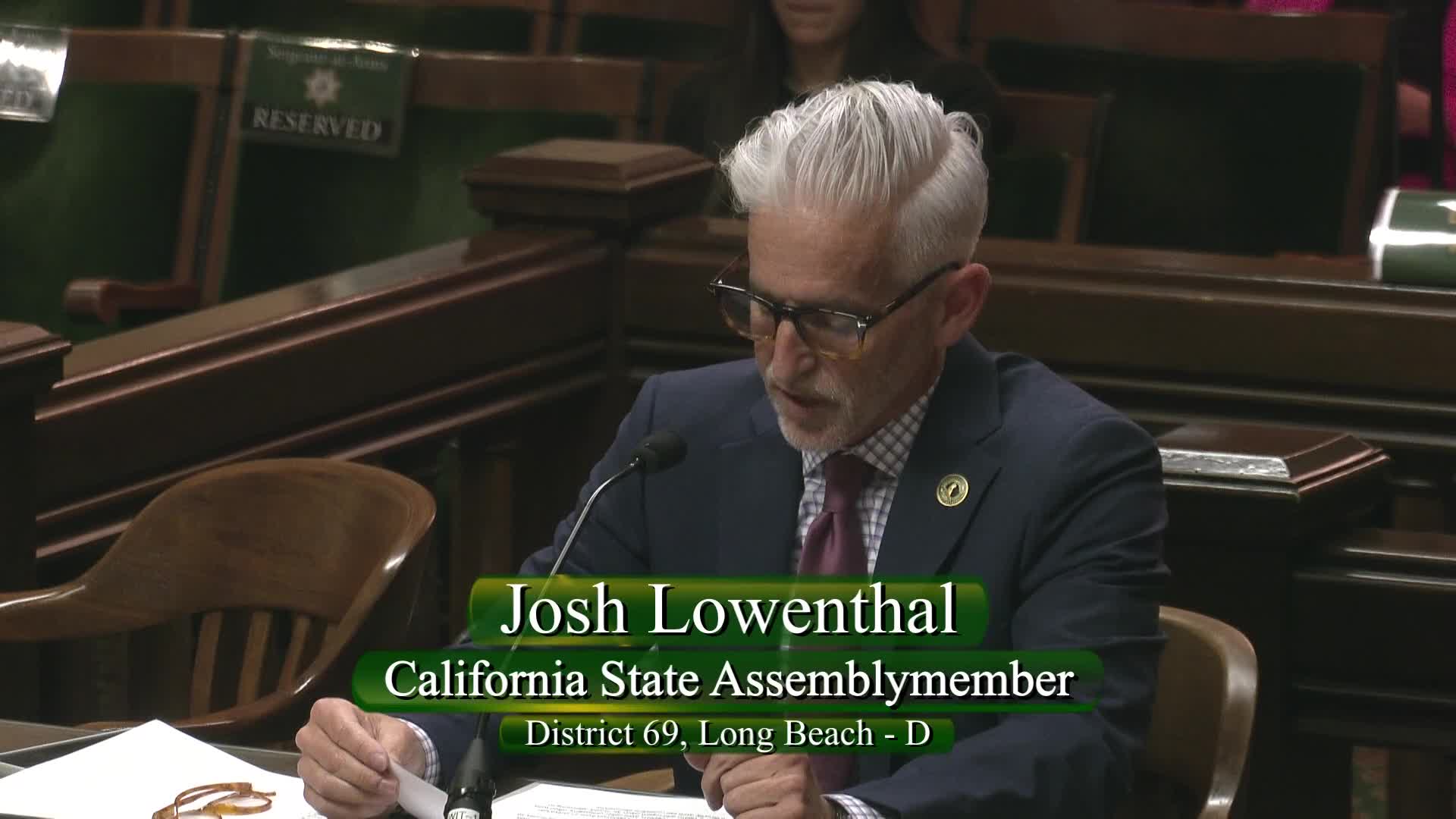
The Elections Committee voted to pass AB 919, authored by Assemblymember Alan Lowenthal, and referred it to the Appropriations Committee after discussion and agreement to work on technical refinements.
AB 919 is intended to protect seniors and people with cognitive impairment from predatory political solicitations and inadvertent depletion of retirement savings through repeated or automated contributions. The bill allows an individual who holds a valid power of attorney for a voter with a documented cognitive impairment (for example Alzheimer’s or dementia) to apply to county elections officials for confidential voter status on the voter’s behalf. Confidential status hides certain contact information from public view and limits direct campaign contact lists; proponents said the status helps stop campaign solicitations while preserving the individual’s right to vote.
Supporters, including the author and advocacy groups, described multiple cases where elderly voters with cognitive impairment made repeated small donations that cumulatively consumed life savings. The author and several members said the measure addressed a growing problem of misleading political solicitations targeting seniors and those with cognitive decline.
Opponents raised implementation concerns. The Election Integrity Project California and Disability Rights California cautioned the committee that confidential voter files are ordinarily for people whose safety is at risk and that broadening confidential status could impede transparency and investigations into potential wrongdoing. Disability Rights California urged clearer legal standards and safeguards to ensure the person with power of attorney acts in the voter’s best interest; the Secretary of State’s office said it would work with the author to identify appropriate medical or legal determinations and noted the agency lacks current IT capacity to process new complex workflows without funding.
Committee members praised the bill’s purpose and asked the author to work with Disability Rights California, the Secretary of State, and county elections officials to tighten definitions and add safeguards. The committee passed AB 919 6-0 and re‑referred it to Appropriations with the author’s commitment to technical amendments.
Vote (committee): Pellerin — aye; Macedo — aye; Berman — aye; Salace — aye; Stephanie — aye; Tongapha — aye. Outcome: passed and referred to Appropriations.