Get Full Government Meeting Transcripts, Videos, & Alerts Forever!
Get email alerts on the Housing Rhid topic
No spam. Unsubscribe anytime.
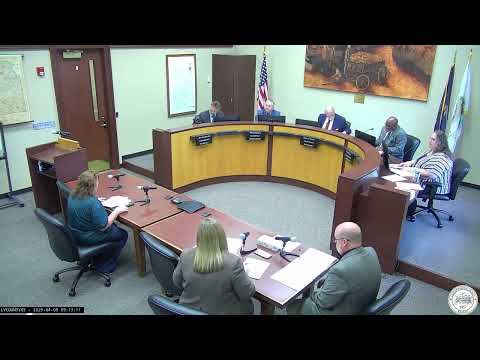
Residents and developer debate Lansing RHID before Leavenworth County commissioners
Summary
Public commenters and a developer presented opposing views on a proposed Residential Housing Investment District (RHID) for a large Lansing subdivision, raising questions about lost tax revenue, school capacity and the infrastructure costs the developer says require a 20-year RHID.
At a Leavenworth County Commission meeting, residents and representatives for a proposed Lansing subdivision discussed a request tied to a Residential Housing Investment District (RHID) that would capture incremental property tax revenue over the life of the district rather than immediately flow to taxing jurisdictions.
The debate centered on competing analyses of the RHID's fiscal effects, the infrastructure cost of the project and whether county officials should adopt a policy for reviewing such requests before formal proposals arrive. Resident John Redden said a developer spreadsheet updated for current mill levies shows the RHID would capture $23,160,000 over its term, and that Leavenworth County’s share of foregone tax revenue would be $7,435,000. He urged the commission to “pass a resolution to reject this RHID because there's no benefit to ... Leavenworth County.”
Joe Oakes, an attorney with Polsinelli representing Ad Astra Development, told commissioners the developer has the property under contract and is requesting a 20-year RHID to offset substantial infrastructure costs. Oakes said the infrastructure need “comes to the tune of $27,000,000” and argued that without incentives the project “is not feasible.” He also urged commissioners not to conflate RHIDs with grants or debt, saying RHIDs are a pay-as-you-go reimbursement mechanism and that “taxing jurisdictions never receive less than they do with an RHID or with a TIF.”
Other public commenters echoed both positions. One commenter (identified only as Paul) raised concerns about errors in feasibility materials and cited state statutes, saying the calculation of property taxes and mill levies in the feasibility study was incorrect; he cited KSA 72-5142 and KSA 76-6b in his remarks. Redden and other speakers also expressed concerns about school capacity, saying the three proposed developments could generate thousands of housing units and put pressure on Lansing Unified School District enrollment.
County leadership said the commission is not acting on any RHID request at the meeting. Chairperson Smith and county staff said a work session later in the day would discuss a draft policy for how the county will review RHIDs when/if proposals come forward. County staff reiterated that individual development proposals would come to the commission only after any city approvals and that the current meeting was a forum for comment and preliminary briefing rather than a decision point.
The commission did not take formal action on the RHID at the meeting. Commissioners and staff said they will continue work on a policy and will review concrete proposals if and when they are routed to the county for review.