Get Full Government Meeting Transcripts, Videos, & Alerts Forever!
Get email alerts on the School Budget topic
No spam. Unsubscribe anytime.
Georgetown ISD trustees review $3.7 million gap, consider campus and department cuts
Summary
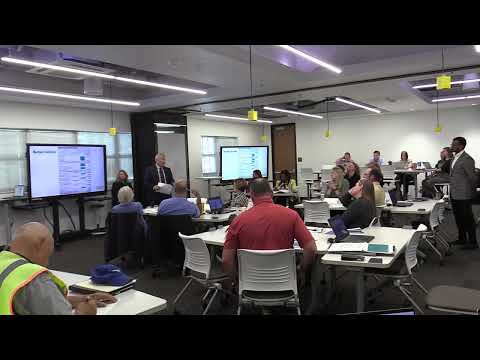
At an April 7 board workshop, Georgetown ISD officials presented a preliminary $3.7 million budget shortfall for 2025–26 and recommended department- and campus-level reductions, while trustees pressed staff for details on potential impacts to class size, interventions and gifted-and-talented services.
Georgetown ISD trustees and staff on April 7 spent a workshop session modeling next year’s budget and reviewing preliminary recommendations to close a roughly $3.7 million projected deficit for 2025–26.
District Chief Financial Officer Jennifer (CFO) told trustees the district is using a demographer projection of 14,060 students and an adjusted attendance factor of about 93% to estimate average daily attendance. Using current law assumptions the district’s preliminary revenue and expenditure exercise produced a projected shortfall of about $3,700,000, she said.
The district presented a package of recommended reductions and revenue assumptions intended to bring the budget into balance. Those recommendations include asking all departments to reduce their budgets by a minimum of 5% and campuses to reduce overall campus budgets by about 10%. District staff said the combined set of proposed savings and revenue adjustments totals roughly $3.73 million in cost reductions and revenue changes.
Why it matters
Board members and staff said the district’s options for increasing local revenue are limited because of state tax rules and recapture. The board discussed the tax ratification election (TRE) process but were told a TRE large enough to close the gap would require a substantial rate change and likely would send a significant share of any increase to the state through recapture. As one trustee summarized after the modeling exercise: increasing revenue locally is “incredibly limited,” so the district must focus principally on reducing expenditures.
Key details from the workshop
- Revenue and assumptions: Staff listed a preliminary certified property valuation in the tens of billions (preliminary figure cited: about $24.6 billion, subject to protest and revision), a projected basic allotment of $6,160 per student under current law and an assumed tax rate of 0.6682 for planning. The district noted certified values and collection rates remain subject to protest and final county certification.
- Projected shortfall and savings: The staff estimate used current-year expenditures as a baseline and projected roughly $2.2 million in additional personnel costs for growth (new schools and enrollment-driven needs). After applying the recommended reductions — 5% at department level and 10% at campus level along with program changes — staff reported about $3.73 million in identified reductions or revenue adjustments to narrow the gap.
- Targeted program changes: Staff proposed specific adjustments that would affect multiple program areas, including: reducing some paraprofessional positions at smaller elementary campuses; moving to a hybrid model for gifted-and-talented (GT) services (fewer full-time GT teachers with some shared positions across campuses and more classroom-based enrichment); revising delivery of certain intervention services and special education residential placements; and changes to athletic staffing, random drug testing, and CTE coding to generate revenue. Child nutrition was explained as a separate, self-supporting fund that can legally pay partial payroll for staff who work in cafeterias.
- Tradeoffs and board concerns: Trustees repeatedly pressed staff for clarity on how cuts would affect class size, special rotations (for PE and specials), interventionists, and GT services. Several trustees said interventionists should be the first priority to restore if additional revenue becomes available; principals’ feedback identified intervention staffing as the top priority to reinstate. Trustees expressed concern that reducing dedicated GT staff and paraprofessionals shifts additional workload onto classroom teachers and could increase class sizes or reduce targeted supports.
- Attendance and state funding mechanics: Staff and a consultant, Pedro Kim, emphasized Texas’ attendance-driven funding (average daily attendance) and the sensitivity of district revenue to small changes in attendance. The board noted that raising attendance back toward historical levels (95% or higher, versus the adjusted ~93%) would materially improve state funding the district receives. Staff also explained how local property-value increases often affect the district’s debt service (I&S) capacity but do not necessarily increase per-student state funding because the state’s funding formula and recapture rules can redirect local gains.
- Legislative prospect: Staff reviewed a House committee amendment under consideration that would raise the basic allotment by an amount mentioned in the workshop; staff said a portion of any state increase is typically expected to be used for compensation and would not fully erase the projected local shortfall.
Board direction and next steps
Trustees did not take any formal votes during the workshop. The board asked staff to return to a regular board meeting with a clearer, itemized list showing programs and positions considered in earlier iterations of reductions (items staff said they had “zeroed out” during earlier work). Trustees requested additional detail about how schools would schedule specials and interventions if paraprofessional or GT staffing is reduced and asked staff to be prepared to show which cuts would be restored first if new revenue arrives.
Staff said principals and affected staff had begun conversations with individuals whose positions might be impacted and emphasized the need to communicate potential changes to employees and the community in a timely way given the school calendar. District leaders said they would continue to refine budget consolidations and return with updated numbers as county certified values and any legislative changes become final.
Context and limits
Staff framed the workshop as a modeling exercise using current law assumptions and a tool provided by consultant Pedro Kim to let trustees test scenarios. Staff repeatedly cautioned that projections could change before final budget adoption and that the district must adopt a budget before the fiscal year begins (July 1). No formal budget adoption or vote was held at the April 7 workshop.
Ending
District staff said they will continue to refine the numbers, provide more detailed schedules showing how class rotations and interventions would operate under proposed cuts, and return to the board with documentation of items considered and those retained. Trustees asked staff to make the trade-offs transparent to the community so residents could understand what services are at risk if state funding does not change.