Get Full Government Meeting Transcripts, Videos, & Alerts Forever!
Get email alerts on the Comprehensive Plan Outreach topic
No spam. Unsubscribe anytime.
Benton County adopts Inclusive Outreach plan for comprehensive‑plan update; commissioners asked to serve as 'ambassadors'
Summary
County staff presented an Inclusive Outreach Plan and hard‑to‑reach maps, said a project website and survey are under development, and asked planning commissioners to volunteer as local ambassadors for in‑person meetings and targeted outreach before the project's June funding deadline.
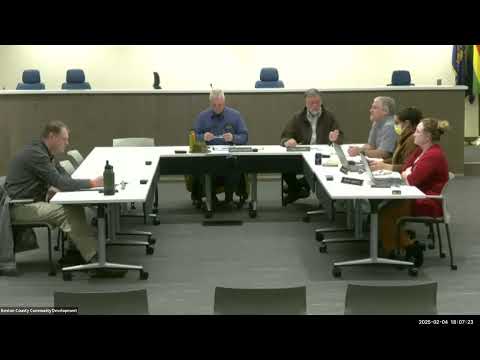
Staff presentations at the Benton County Planning Commission work session described an outreach strategy for the county’s comprehensive‑plan update and asked commissioners to help publicize and host neighborhood meetings.
Shannon Marshall, program coordinator in Community Development, reviewed a package of documents that include a DLCD technical advisory (TA) grant agreement (the TA grant that provided $50,000 for the project), a contract with Cascadia Partners to run the planning‑process outreach, an Inclusive Outreach Plan and an Excel “menu” of engagement options. Marshall said the outreach work is at an early stage and that the project website has recently been made available to staff for content development; she estimated a website and survey may be ready within roughly two weeks for internal review and testing.
Marshall described “hard‑to‑reach” maps the consultants produced. The maps overlay census tracts with existing Citizen Advisory Committee (CAC) boundaries; darker colors indicate areas with lower historical response rates to tools such as the American Community Survey and are the areas staff recommends receiving extra outreach attention. Marshall asked commissioners to consider which CAC areas they could serve as ambassadors for — helping get the word out, attending a local meeting, assisting with sign‑in and offering a familiar, local face for residents.
“Some of this is going to actually get woven into the website…so those key messages…will become a series of things that you might, like, hover over. You know? So, like, FAQs,” Marshall said while describing draft website content and outreach materials.
The staff materials ask commissioners to respond within about a week with two items of homework: (1) which CAC(s) they are willing to represent as ambassadors, and (2) whether there are hyper‑local outreach channels — newsletters, community lists, physical bulletin boards or community centers — staff should use in that commissioner’s area. Marshall said modest print flyers (for example, 20 per CAC geography) would be available on request and that larger print runs would require additional resources.
Commissioners and staff discussed outreach scope and jurisdictional complexity. Staff advised prioritizing in‑person outreach in unincorporated areas that lack existing city planning processes while still making the website and survey broadly available to city residents; staff explained that an online survey would collect geographic information (address, ZIP or census track) so responses can later be analyzed by area. Commissioners raised logistics questions — meeting size, evening versus daytime scheduling, and how to estimate turnout — and requested confirmation that staff will provide basic materials and support; staff said they will.
Staff said the immediate outreach phase is constrained by the DLCD grant schedule and current project budget, which runs through June 30; the plan’s public‑workshop phase should be completed in time to feed into the project’s March planning milestones. Marshall and staff asked commissioners to return their ambassador preferences by email promptly.
What happens next: staff will finalize the website and survey content, schedule at least one in‑person meeting per CAC geography (with the option to combine CACs where appropriate), supply outreach materials on request and synthesize responses for use in the county’s next round of plan drafting and the consultant’s March milestones.