Get Full Government Meeting Transcripts, Videos, & Alerts Forever!
Get email alerts on the Waste Management topic
No spam. Unsubscribe anytime.
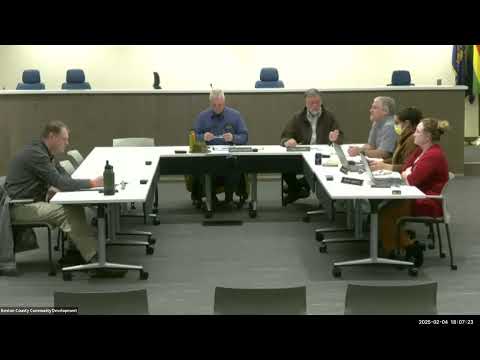
Coffin Butte landfill history, capacity and regulatory concerns outlined to Benton County Planning Commission
Summary
At a Benton County Planning Commission work session, Bailey Payne summarized Coffin Butte landfill history, rising tonnage and regulatory context and said a land‑use application is expected in the coming weeks; commissioners and staff discussed DEQ oversight, past CUPs and monitoring efforts.
Bailey Payne, surveys coordinator for Community Development, told the Benton County Planning Commission at a work session that the Coffin Butte landfill has a long operational history, rising incoming tonnage in recent years and pending land‑use paperwork the commission can expect to see in March.
Payne reviewed a timeline from the 1940s through the present that included military and early municipal disposal uses, a conditional‑use permit (CUP) approved by the county in the 1970s, the emergence of liners and other modern environmental controls after passage of the federal Resource Conservation and Recovery Act (RCRA) in 1976, later franchise and ownership changes (Valley Landfills, Allied Waste, Republic Services) and intermittent state review for groundwater concerns. Payne said a CUP for a 2.2 megawatt gas‑to‑energy station was granted in the 1990s and that a 2021 CUP to expand over Coffin Butte Road was denied by the planning commission.
“This is looking at how many tons of material have been recovered…our recovery rate’s about as low as it’s ever been since we began keeping records,” Payne said, noting county records show recycling and composting rates have dipped while disposal volumes and per‑capita consumption have increased.
Payne and commissioners discussed the DEQ definition of a regional landfill — 75,000 tons a year accepted from outside an immediate service area — and how closures elsewhere (for example the Riverbend facility in McMinnville) and events such as wildfires and large construction projects shifted waste flows to Coffin Butte beginning around 2016. Payne said the county’s Sustainable Materials Management Plan work (SMMP) is intended to identify upstream strategies to reduce disposal demand over time.
Planning commission members and staff also discussed the procedural path ahead. Payne and staff said state agencies and environmental consultants (identified in the meeting as contacts who will provide technical review) will be in the record when the land‑use application is filed. The Disposal Site Advisory Committee (DSAC) offered to submit its annual community concerns report into the land‑use record when the public comment period opens.
The presentation framed several ongoing points of regulatory and public interest: historic compliance reviews by DEQ, monitoring and methane‑gas controls at the site, previous franchise and MOU terms between the county and site operators, and the public visibility of any expansion proposal. Payne said that if an expansion is approved, existing caps on disposal could be altered and that impacts beyond the county would follow.
A separate, procedural motion at the start of the meeting to approve the Planning Commission’s Jan. 21, 2025 minutes passed; the transcript records several online “yes” votes and the chair announced the minutes were approved.
Planning staff told commissioners they expect the pending land‑use application to be docketed in March; staff also said they will include agency letters and consultant reviews in the planning record and will coordinate how to handle ex parte contacts during the application process.
What happened next: commissioners moved on to outreach and comprehensive‑plan items; staff asked committees and advisory volunteers to gather more historical material and to prepare to submit the DSAC community concerns report when the public comment period opens.