Get Full Government Meeting Transcripts, Videos, & Alerts Forever!
Get email alerts on the Homelessness Outreach topic
No spam. Unsubscribe anytime.
Lancaster Police outline updated homelessness plan, Measure A programming and new outreach steps
Summary
Lancaster Police said they are updating the city's homelessness plan to comply with county funding rules, rolling out public and employee surveys, piloting community mini‑grants and reporting about two to three shelter placements per week as Measure A funds become available.
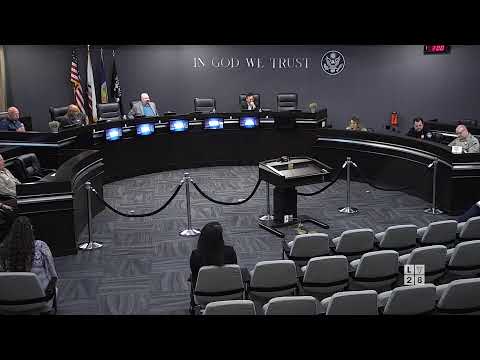
At a meeting of the Lancaster Criminal Justice Commission, Christie Malta, manager of the Core Division at the Lancaster Police Department, said the department is updating the city's homelessness plan and expanding outreach and placement efforts as new Measure A funds become available.
Malta said the department is conducting public outreach and running five different surveys to better understand how residents encounter people experiencing homelessness and what solutions the public would like to see. "We're not asking the standard questions of do you think homelessness is a problem because we already know the answer to that," she said. The police department will also survey city employees about training and referral resources and work with service providers to identify funding and service gaps.
The update is tied to county funding rules. Malta said Measure H, a quarter‑cent sales tax, was repealed and Measure A (a half‑cent sales tax) now provides local homelessness funding. She told commissioners the city will prioritize the least‑restrictive Measure A funds initially and will partner, when required, with county initiatives such as La Casa to access housing construction dollars. "Part of Measure A, there's about 35, I wanna say, 35.6% that is dedicated to building affordable housing that the county will run," Malta said, noting La Casa is newly formed and still standing up a board and staffing.
Malta described operational steps the department is taking: targeted homeless interviews to identify barriers to shelter and treatment, closer coordination between the homeless outreach team and the department's Community Outreach, Resource and Education (CORE) unit, and a planned community mini‑grant program for small local organizations. She said the department is seeing increased placements into shelters and housing: "We're starting to see about 2 to 3 placements per week," Malta said, and added outreach teams are placing some of the most vulnerable individuals, including people with severe medical, mental‑health or substance‑use needs.
Malta and commissioners also discussed the paperwork and multi‑agency processes that can delay placements. To reduce losses when clients are transient, the department said it is exploring a shared first‑responder contact database that would identify high‑utilization individuals and their last known locations so outreach workers can follow up quickly.
Malta said the department will continue some Measure H programming and incorporate new Measure A resources, and emphasized the plan update is intended to help the city target limited dollars and bridge gaps between short‑term outreach and longer‑term services. No formal action or policy change was taken at the meeting; the department presented its update and took questions from commissioners.
The consent calendar (approval of minutes) was adopted without objection during the meeting.