Get Full Government Meeting Transcripts, Videos, & Alerts Forever!
Get email alerts on the Veterans Benefits Consumer Protection topic
No spam. Unsubscribe anytime.
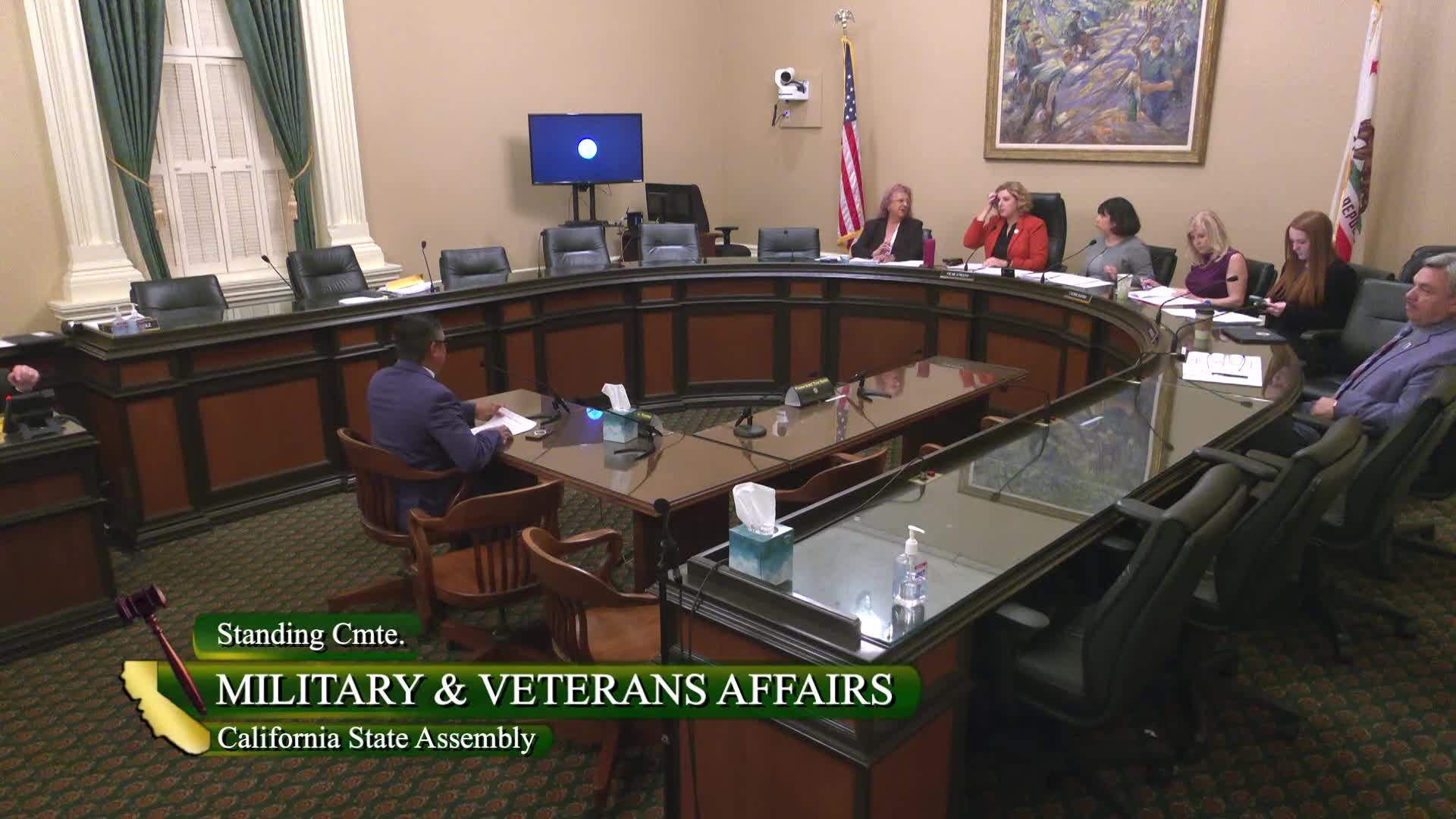
Committee advances bill to bar unaccredited filers from charging veterans for VA claims and sets civil penalty
Summary
Assemblymember Jeff Gonzales told the committee AB 826 would ban unaccredited individuals or businesses from charging veterans fees to file claims with the U.S. Department of Veterans Affairs and would impose a $2,000 civil penalty per violation.
Assemblymember Jeff Gonzales told the committee AB 826 would ban unaccredited individuals or businesses from charging veterans fees to prepare or file Department of Veterans Affairs (VA) benefits claims and would impose a $2,000 civil penalty per violation, with fines split between the veterans service office fund and the filing district attorney.
"These businesses and individuals have been operating freely and are unregulated, unlicensed, and operate with no oversight or obligation to prioritize the veteran's well-being," Gonzales said, arguing the bill closes an enforcement gap left when federal enforcement tools were removed in 2006.
County veterans service officers and several statewide veterans organizations testified in support. Yolanda Benson, representing the California Association of County Veterans Service Officers, said CVSOs are trained and certified to help veterans and described an "unregulated industry that profits from veterans while evading all ethical and professional standards." Multiple organizations represented by Seth Reeb also supported the bill.
Opponents and concerned witnesses — including veterans, private-benefits firms and trade representatives — urged amendments rather than a full ban. Joshua Prado, a veteran and nonprofit board member, opposed the bill as written, saying it could "unintentionally harm veterans by limiting access to trusted and effective help." Representatives of Veteran Benefits Guide and private claims firms described using contingent-fee models and urged consumer-protection approaches such as fee caps, required written disclosures about free VSO services, bans on upfront nonrefundable fees, and restrictions on overseas processing.
Committee members acknowledged the tension between protecting veterans from predatory actors and preserving choice for veterans who seek paid assistance. The author said he was open to working with opponents on targeted amendments.
The committee approved a motion to pass AB 826 and re-refer it to the Assembly Committee on Judiciary. The vote was recorded as 8 yes, 0 no. The committee indicated the bill will be further refined in subsequent committees and legislative drafting.