Get Full Government Meeting Transcripts, Videos, & Alerts Forever!
Get email alerts on the Amusement Ride Safety And Fees topic
No spam. Unsubscribe anytime.
Committee hears second testimony on overhaul of amusement-ride fees; industry backs lower charges for inflatables
Summary
House Bill 433, brought for a second hearing, would restructure inspection and licensing fees for amusement rides to match inspector time; industry witnesses and the Ohio Department of Agriculture said the proposal is revenue-neutral and aims to reduce disproportionate costs on small inflatable-rental businesses.
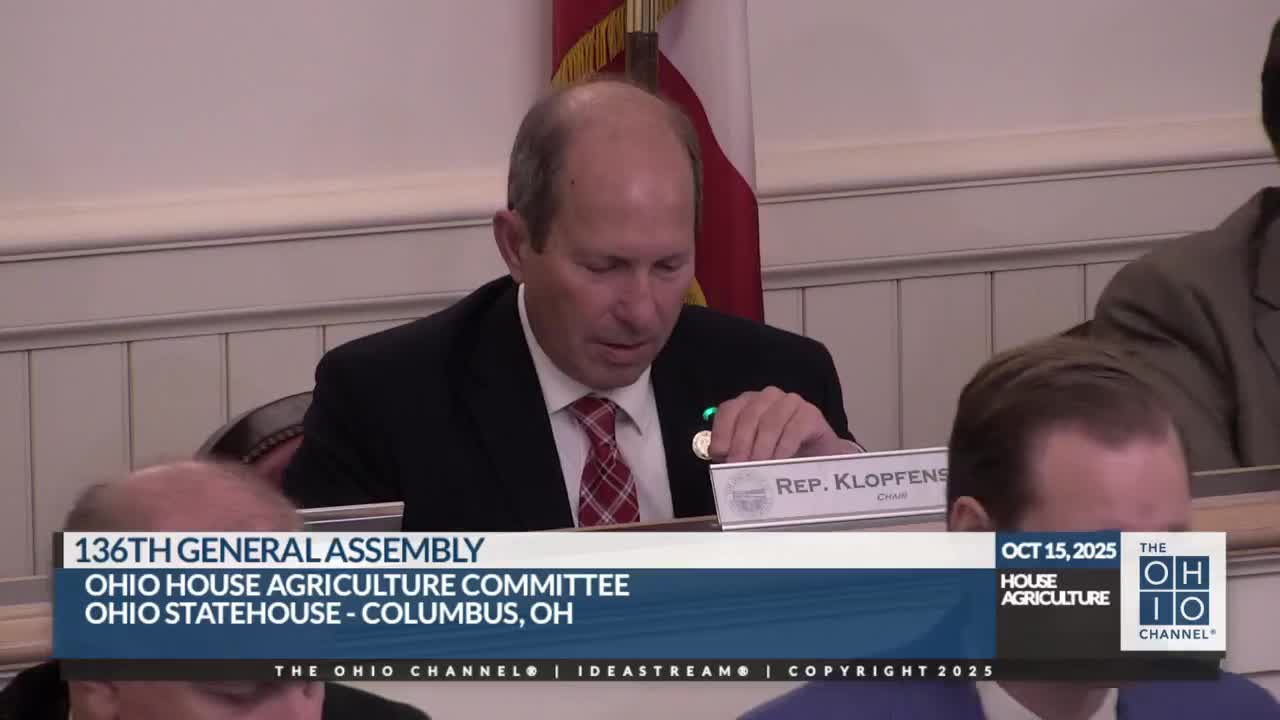
The Ohio House Agriculture Committee held a second hearing on House Bill 433, a bill that would revise the Ohio Department of Agriculture’s amusement-ride licensing and inspection fee schedule to better align fees with estimated inspector time. Director Baldridge of the Ohio Department of Agriculture described a multi-year review by an industry-staff subcommittee and said the proposed structure is revenue-neutral for the department.
“[W]e evaluated hours spent on every different level of rides,” Director Baldridge told the committee, describing a process that ranged from quick inspections of inflatable units to multi-day reviews of large mechanical rides. He said the review was unanimous in the subcommittee and in the full amusement-ride safety committee, and that the department aims to keep “safety first” while realigning fees.
Industry witnesses argued that the current fee structure disproportionately burdens small inflatable operators. Kevin Weiging, representing the Inflatable Operators Association, said a typical vinyl inflatable costs $3,000 to $5,000 to purchase and may take 15 to 20 minutes to inspect, while larger mechanical rides can cost more than $100,000 and require hours or days of inspection work. He told the committee the department’s 2024 study reassigned fees based on actual inspection time and recommended a lower licensing fee for inflatable units.
Small-business owners who testified described financial strain under the current fee framework. Tammy Chapman, owner of A and S Party Rental, said she pays more than $50,000 a year to license inflatables in Ohio and contrasted that with Kentucky ($7,000), Indiana (no charge), and Pennsylvania (self-inspection option). "For 2 decades, we have subsidized the larger corporations," Chapman said, adding she has served on the amusement-ride safety board since 2018.
Other witnesses from the industry described how the change would encourage compliance and reduce incentives for out-of-state operators to work in Ohio without inspection. Steve Kallmeyer of Super Games said inspections create a substantial share of the division’s revenue and that a time-based fee better reflects inspection burden. Corey LaRue, representing safety-focused operators, said the revision would reduce a disincentive for small operators to become compliant, improving overall safety.
Committee members pressed the department on specifics: Representative Semmes asked where large increases in fees originated for some rides (noting a jump “from just under $2,000 to about $8,000” in the proposed scale); Director Baldridge said the adjustment reflects measured hours for higher-complexity inspections. Representative Cockley asked whether the fee schedule accounts for differences between inspecting new rides and older rides; industry witnesses and department staff said inspection time varies by condition and that safety—not a fixed hourly cap—determines inspection work.
Director Baldridge and multiple witnesses described the proposal as revenue neutral for the Ohio Department of Agriculture’s ride-safety division and said the reclassification followed multi-year work by subject-matter experts, fair managers, insurers and engineers. Several committee members urged that the industry-led committee continue periodic reviews; the director said the department will react to the governor-appointed committee’s recommendations and industry concerns.
The hearing concluded with testimony but no reported committee vote. Supporters asked the committee to advance the bill to make inspections more affordable for small businesses while maintaining safety oversight.